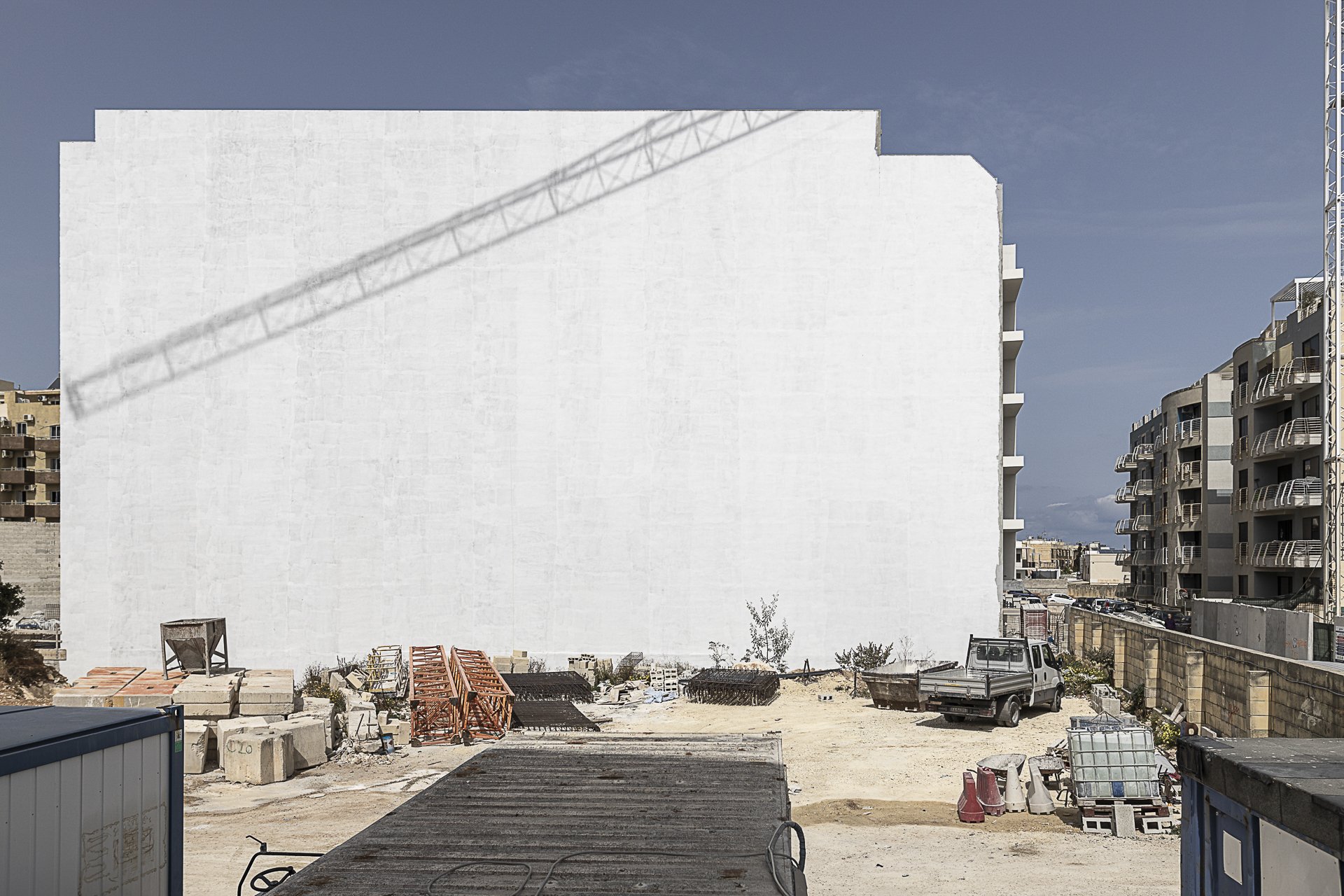
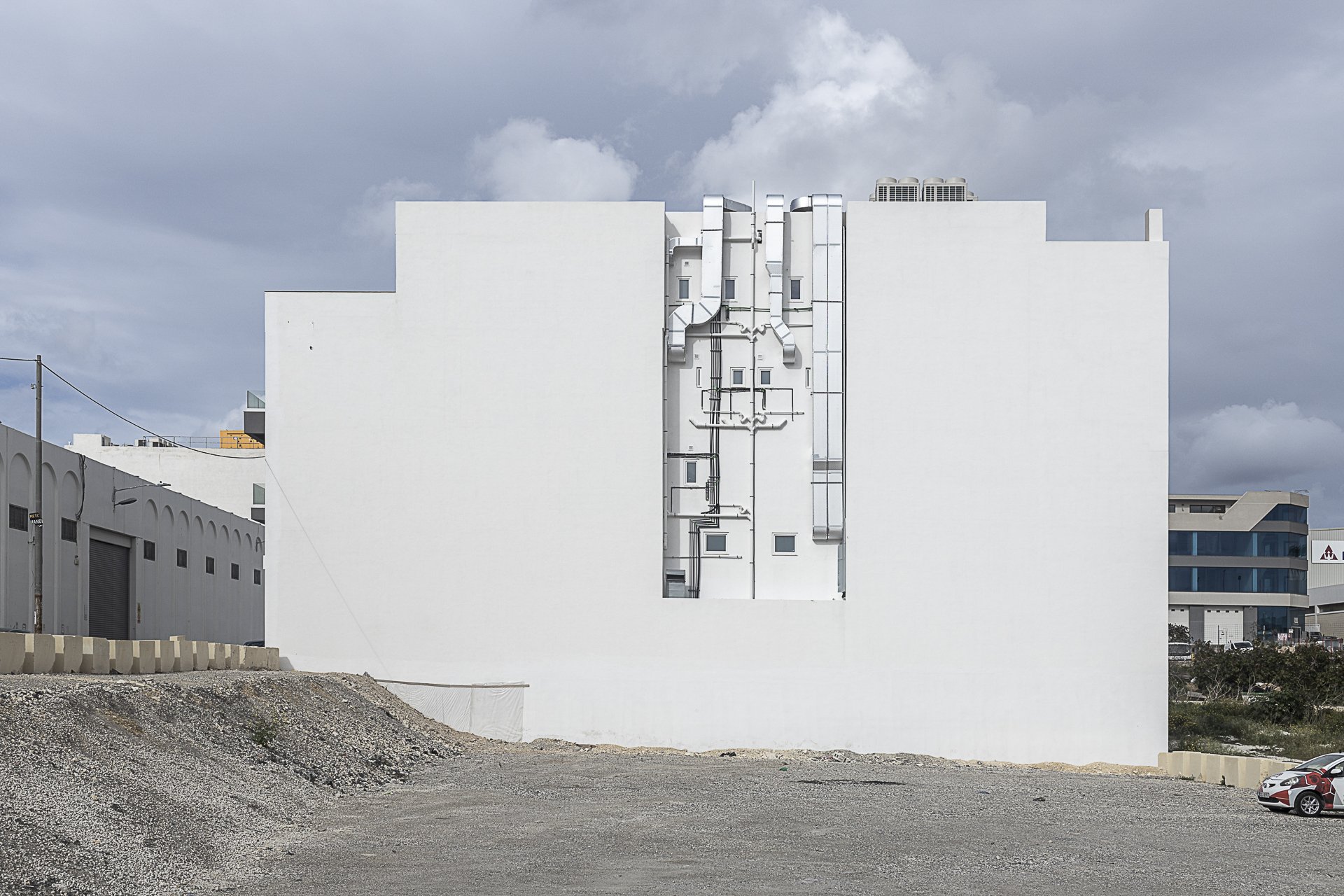
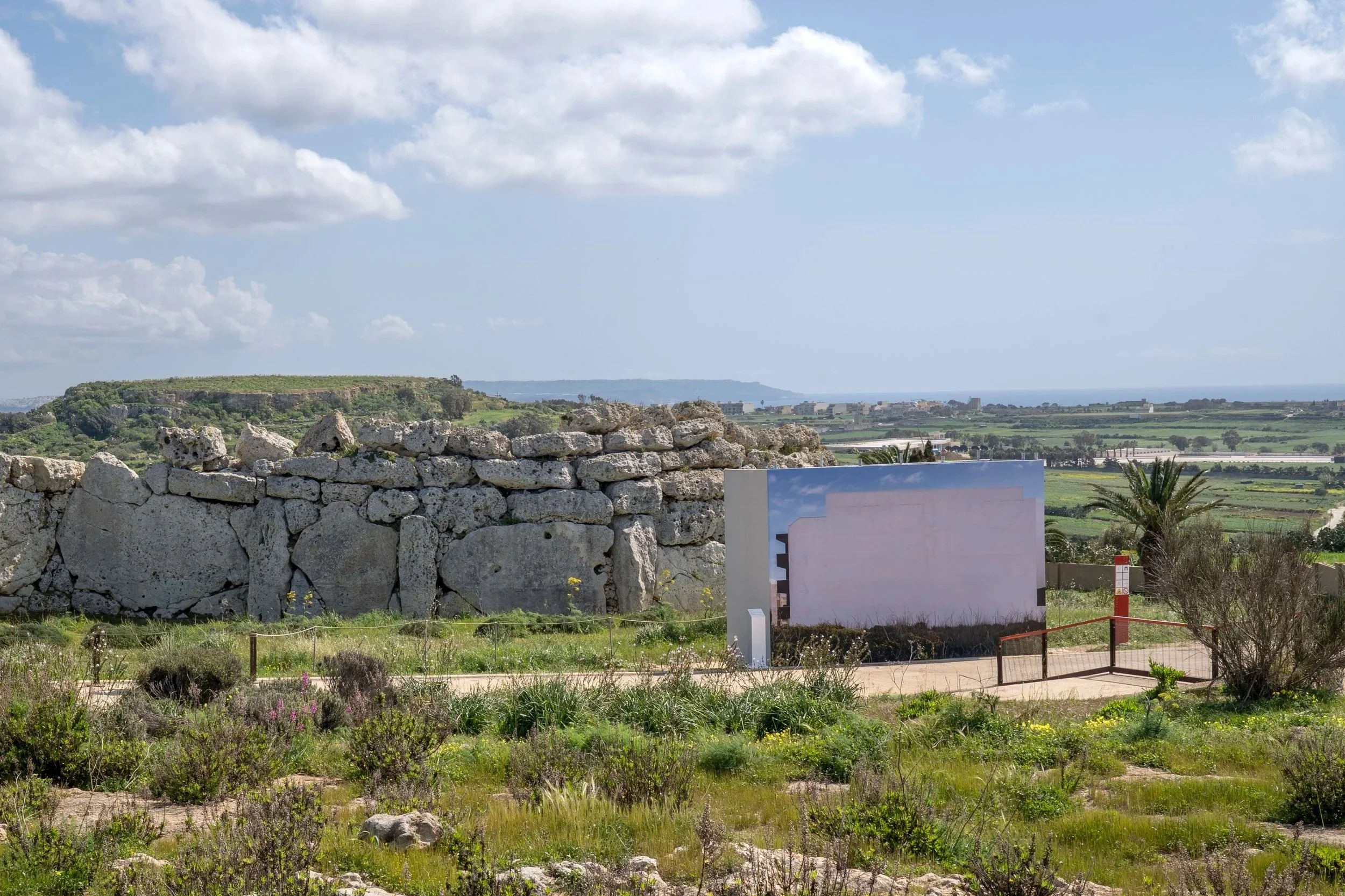
Blank currently exhibited for the Malta Biennale 2026 at the Ggantija Temples in Gozo, examines the exposed party walls that emerge across Malta when houses are demolished and replaced by new apartment blocks. These white surfaces, usually temporary yet visually striking, reveal the hidden outlines of former homes and the lives once contained within them.
Photographed with restraint and distance, the walls appear almost neutral. Yet they function as architectural indexes of absence. Their smooth surfaces carry the shadows of staircases, rooflines, and internal rooms that no longer exist, transforming ordinary urban spaces into quiet traces of erasure.
These walls are not simply by-products of construction. They mark moments of rupture within the urban fabric. As homes disappear and new developments rise beside them, the exposed surfaces become visible records of a form of spatial violence embedded within rapid urban transformation.
Rather than documenting demolition directly, Blank focuses on what remains after the act. The project observes how the built environment absorbs change, allowing these surfaces to stand as indexes of transition, memory, and loss within Malta’s evolving landscape.
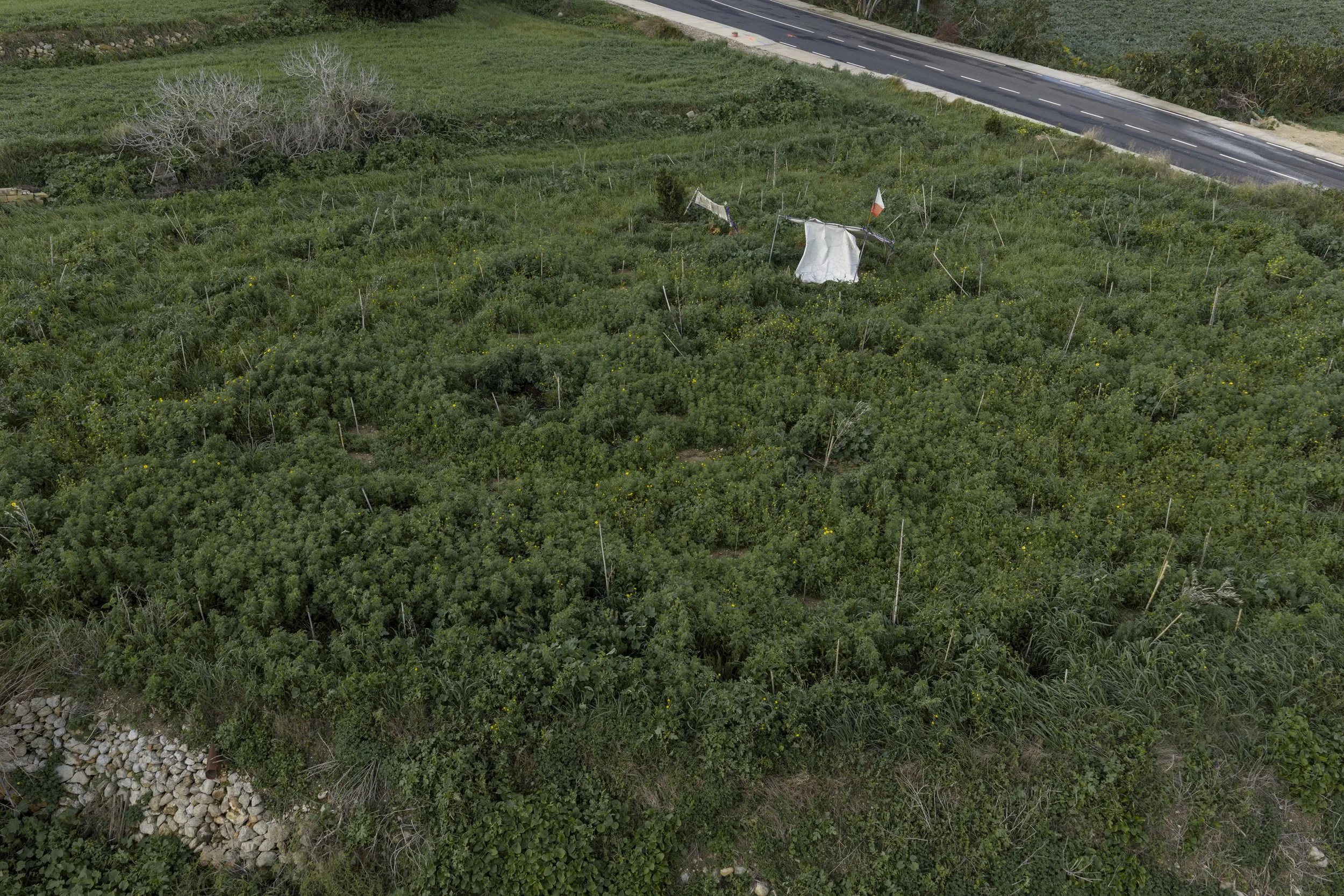
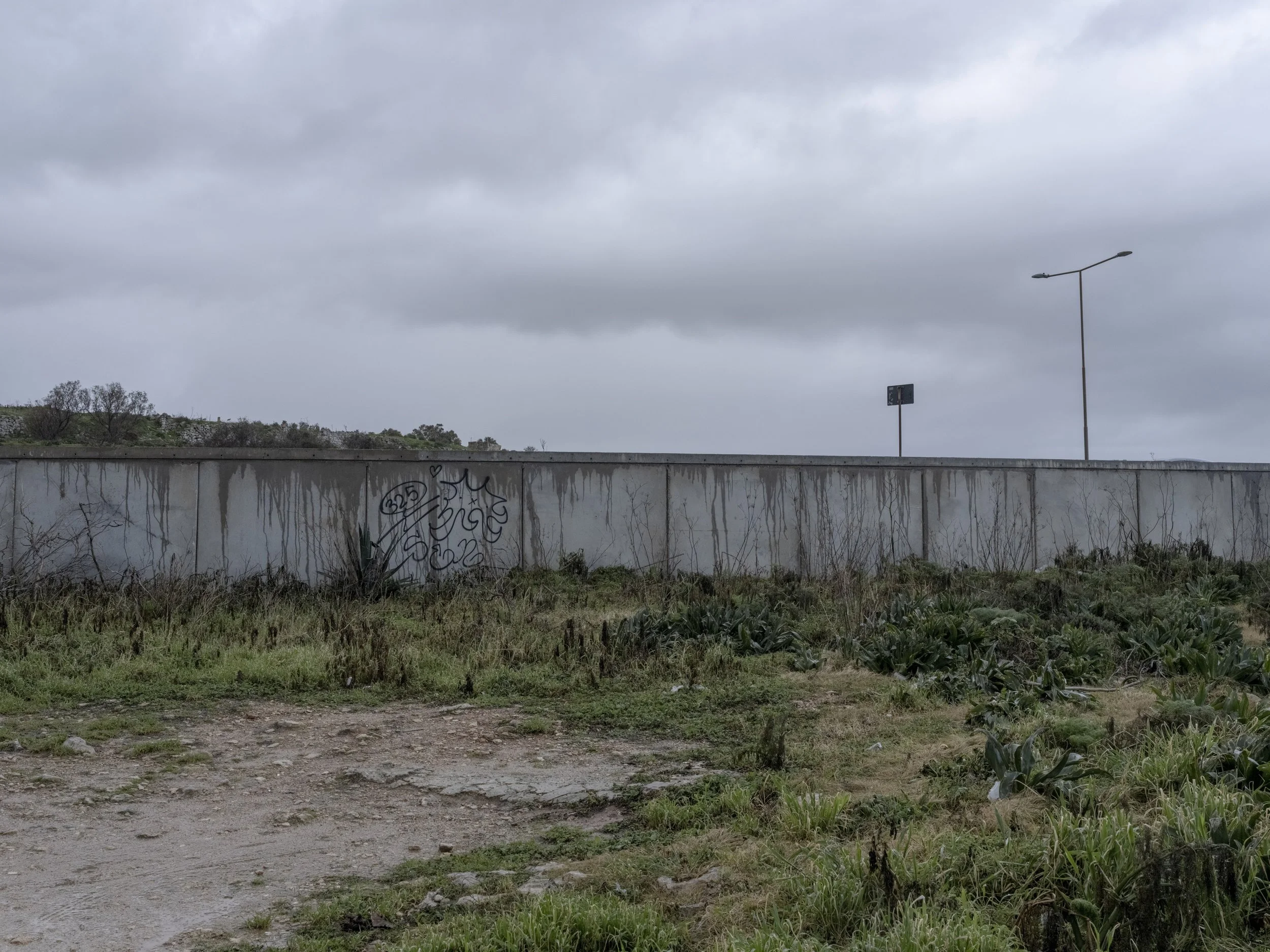
Currently exhibited at Malta Biennale 2026 at Muza, Valletta, In Place. Where the Land Holds is a photographic investigation that examines how landscapes retain traces of violence long after the event itself has disappeared from view. The project documents sites across Malta where femicides have occurred, returning to these locations years later to observe how the ordinary fabric of the built environment continues to exist alongside the memory of profound rupture.
The research underpinning the project combines visual investigation with archival and contextual inquiry. This process involved consulting newspaper archives, court documentation, and journalistic reports, as well as engaging with neighbours, journalists, photojournalists, and, where possible, families connected to the events. These sources helped reconstruct the spatial context of each case and identify the precise locations where the incidents occurred.
At first glance, the places appear unremarkable: residential streets, buildings, doorways, and fragments of the everyday landscape. Nothing in the present moment visibly indicates the events that once took place there. Life has continued, architecture remains, and the spaces have been reabsorbed into the rhythms of daily life. Yet the knowledge of what has occurred alters how these places are perceived. The landscape becomes charged through absence.
The methodology of In Place is grounded in restraint and observational distance. Rather than reconstructing the events or employing symbolic gestures to represent violence, the work focuses on the actual locations where these acts occurred. The camera returns to the site without intervention, staging, or dramatization. This approach intentionally resists spectacle and narrative illustration.
Within this framework, the photographed landscape operates as an index in the semiotic sense articulated by the philosopher Charles Sanders Peirce. An index is not a representation or metaphor; it is a trace; a physical mark that indicates that something has taken place. In In Place, the site itself becomes the index of the event.
Photography is uniquely suited to this investigation because of its indexical relationship to reality. As discussed in photographic theory by Rosalind Krauss, the photograph carries a physical connection to what once stood before the camera. By photographing these locations as they exist today, the project creates a double index: the photograph as a trace of the present landscape, and the landscape itself as a trace of the past event.
The visual language of the work is deliberately restrained. The images are quiet, observational, and often visually neutral. This neutrality is not a sign of detachment but a methodological decision. By avoiding expressive dramatization, the work allows the tension between appearance and knowledge to emerge: the viewer encounters a landscape that seems ordinary yet carries the residue of a profound rupture.
Through this approach, In Place considers how environments absorb human events and how time transforms spaces marked by trauma. It asks how photography can register the coexistence of presence, absence, and memory within the everyday landscape.
In Place is a project researched, developed and realisedby Therese Debono. The project stemmed from an early exchange with Lisa Gwen during which related themes on violence against women were discussed, prior to the project evolving into its present form.
Suspended Return marks a return to photographing clouds after a prolonged absence. Once central to the formation of my photographic attention, clouds became a subject I stepped away from as my practice moved elsewhere. This work does not attempt to resume that earlier relationship, but to re-enter it with experience, distance, and a recalibrated sense of looking.
The photographs do not describe skies or locations. They isolate cloud formations as surfaces of pressure, density, and suspension, removing horizon and scale in order to slow perception. Light appears intermittently. It is held, contained, and never resolved, while colour remains restrained, emerging as residue rather than expression. The clouds are encountered not as symbols or metaphors, but as conditions: shifting, ungraspable, and resistant to permanence.
Homecoming here is understood not as return to an origin, but as a renewed engagement with a foundational subject; one that once shaped my way of seeing and now tests it differently. The return is partial, deferred, and ongoing: a holding rather than a reclaiming. The sequence moves through compression and release without climax, allowing continuity to surface quietly rather than being declared.
Suspended Return reflects on how a practice can revisit its own foundations without repetition, and how familiarity does not guarantee certainty. By returning to a subject that initially trained attention, the work considers how time, absence, and experience reshape perception. What remains is not a reinstated past, but a steadier, more deliberate encounter suspended between recognition and change.