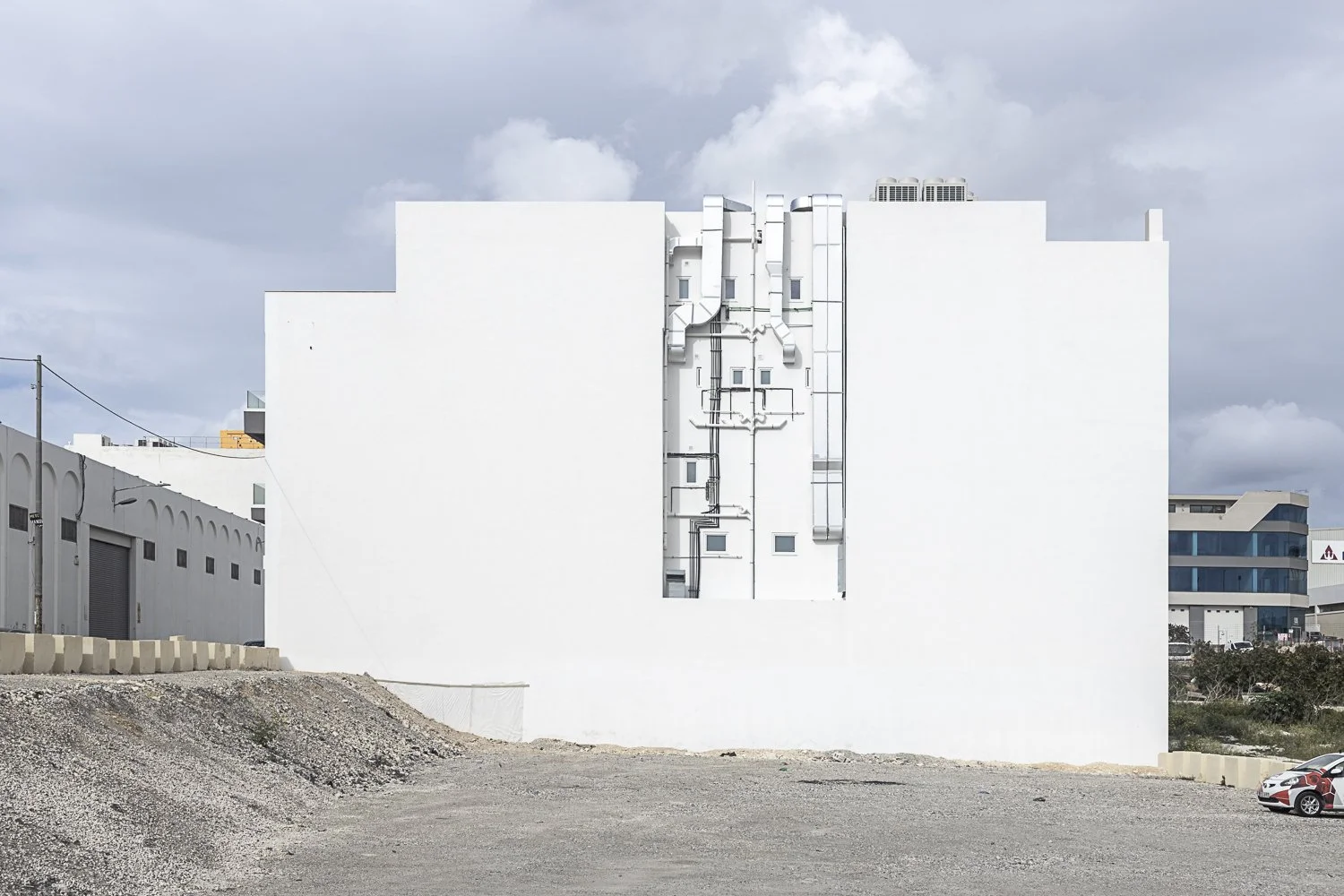
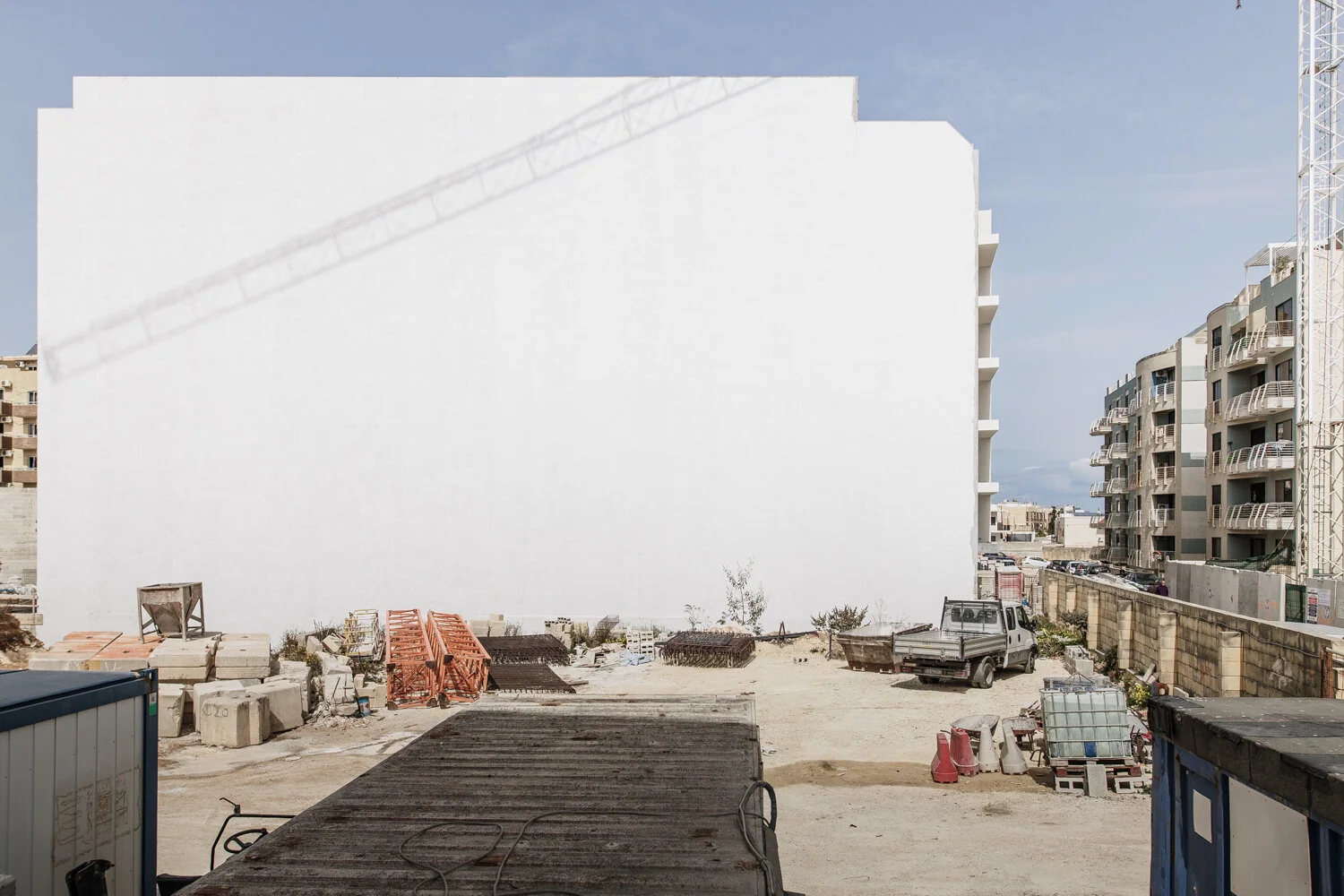
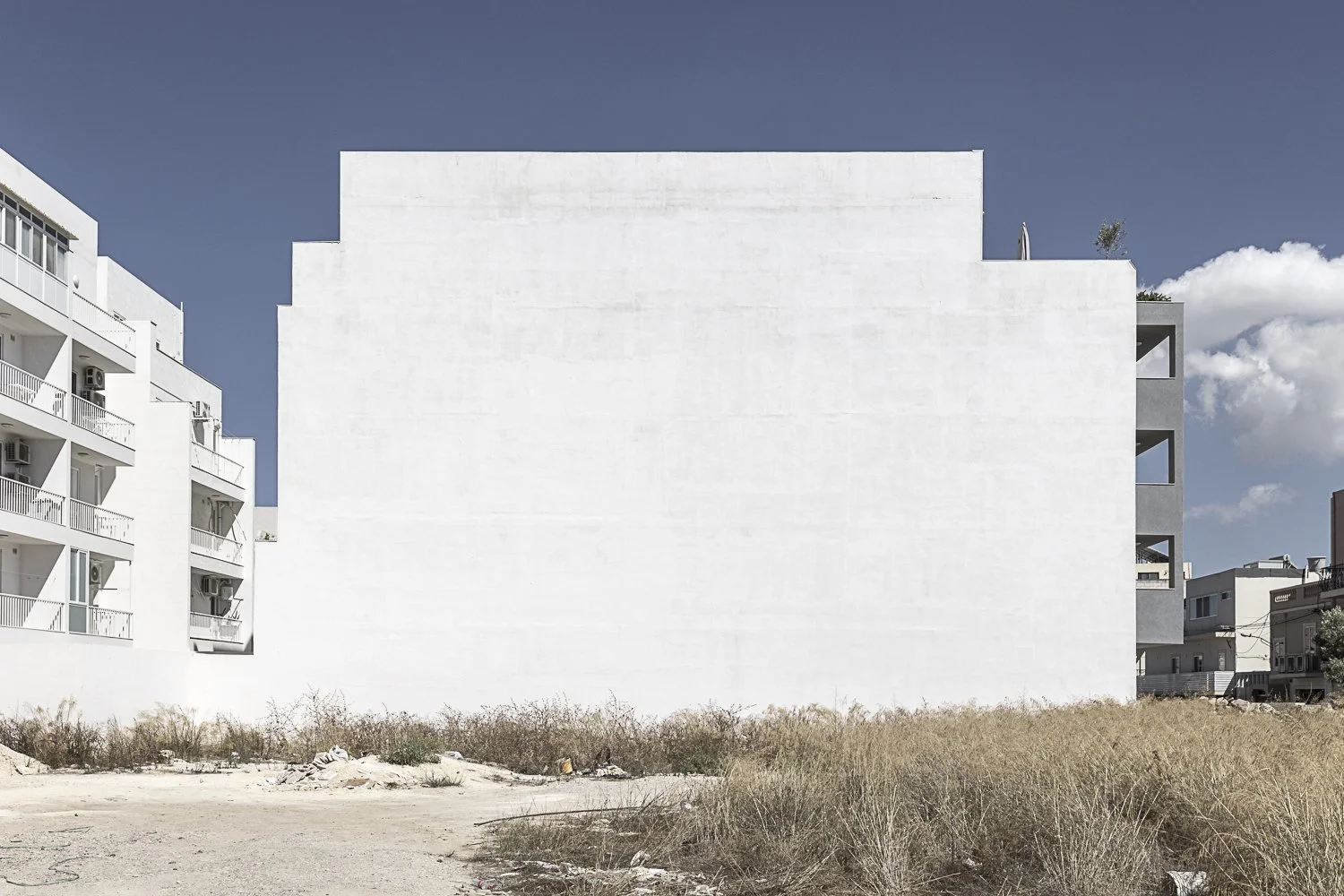
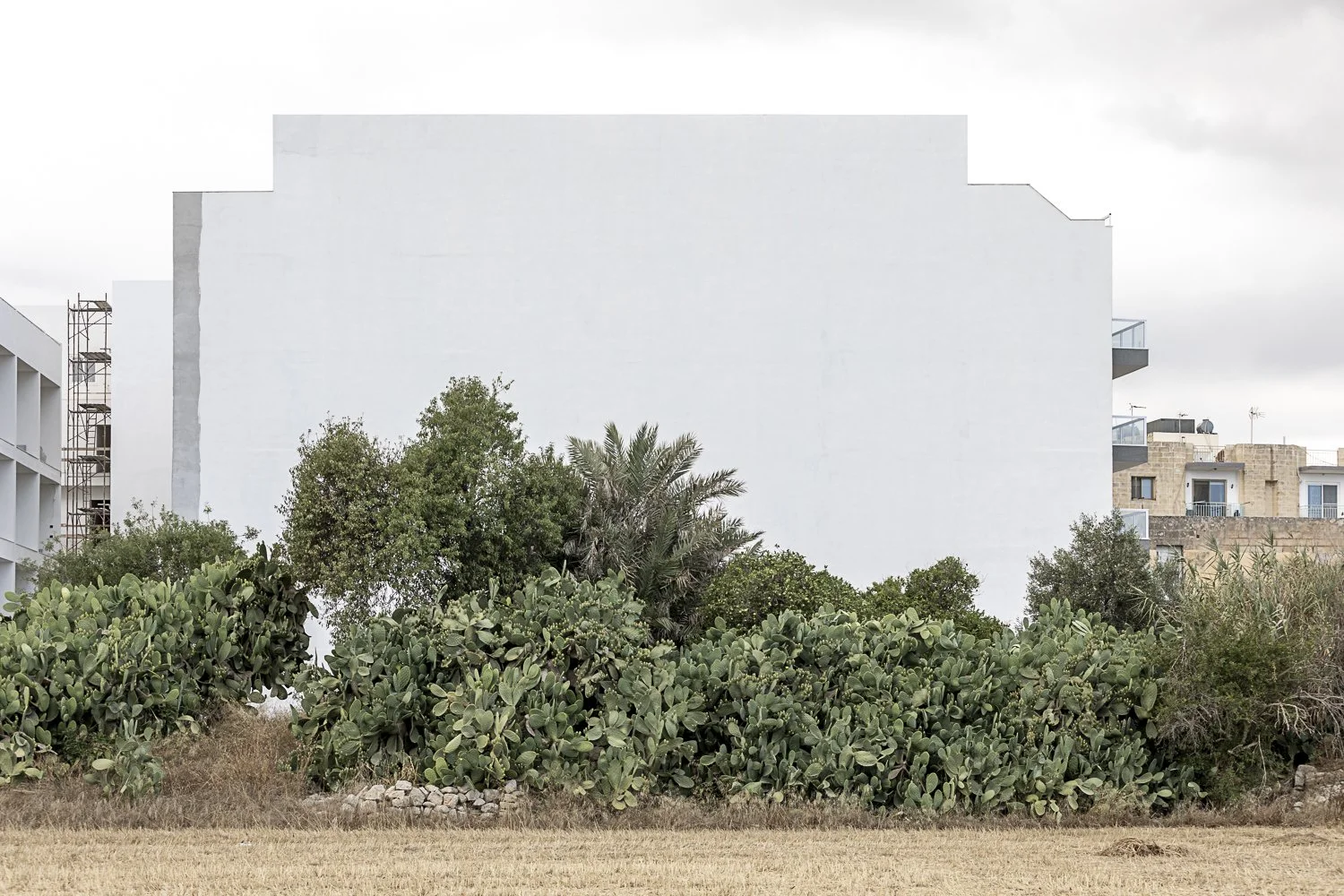
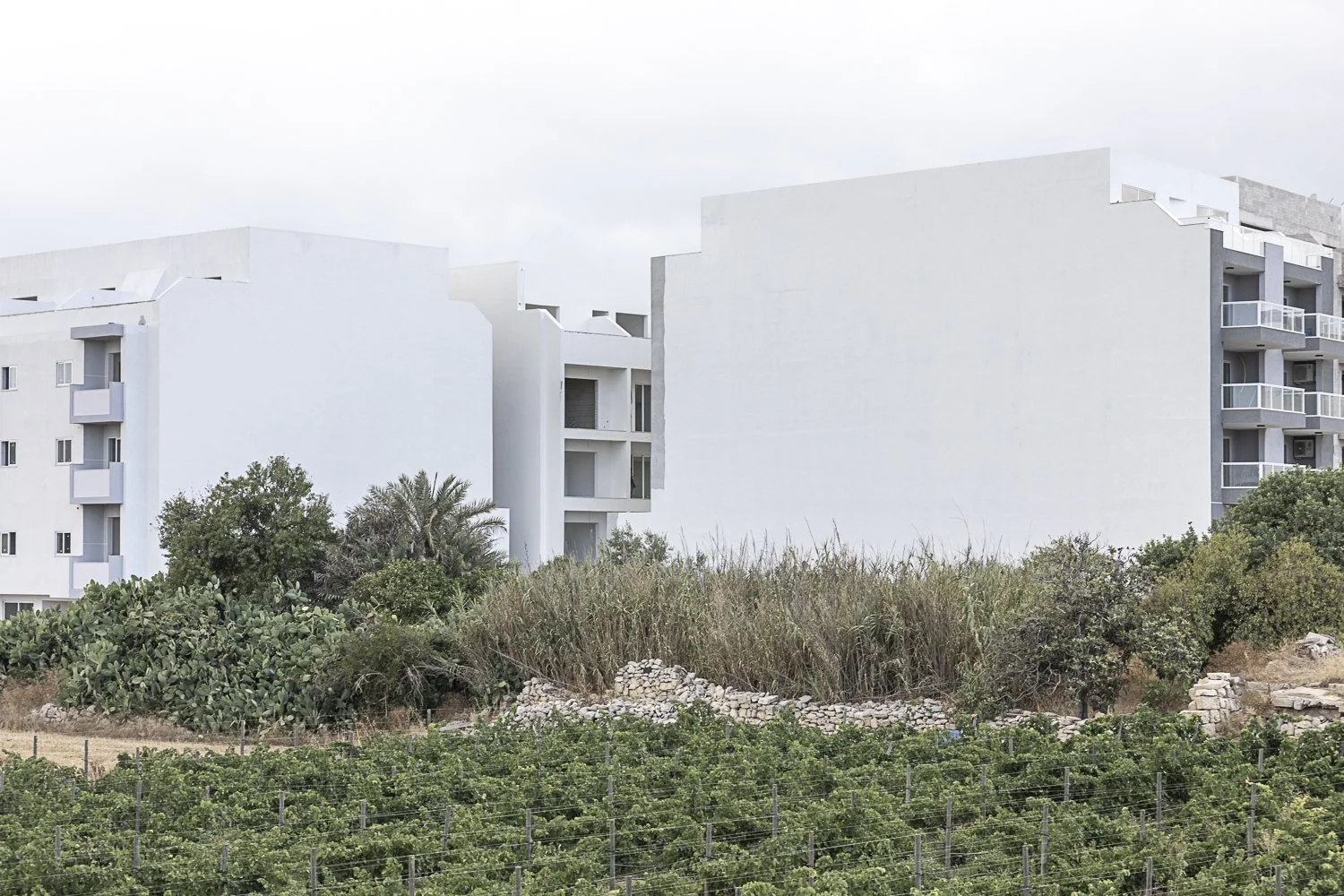
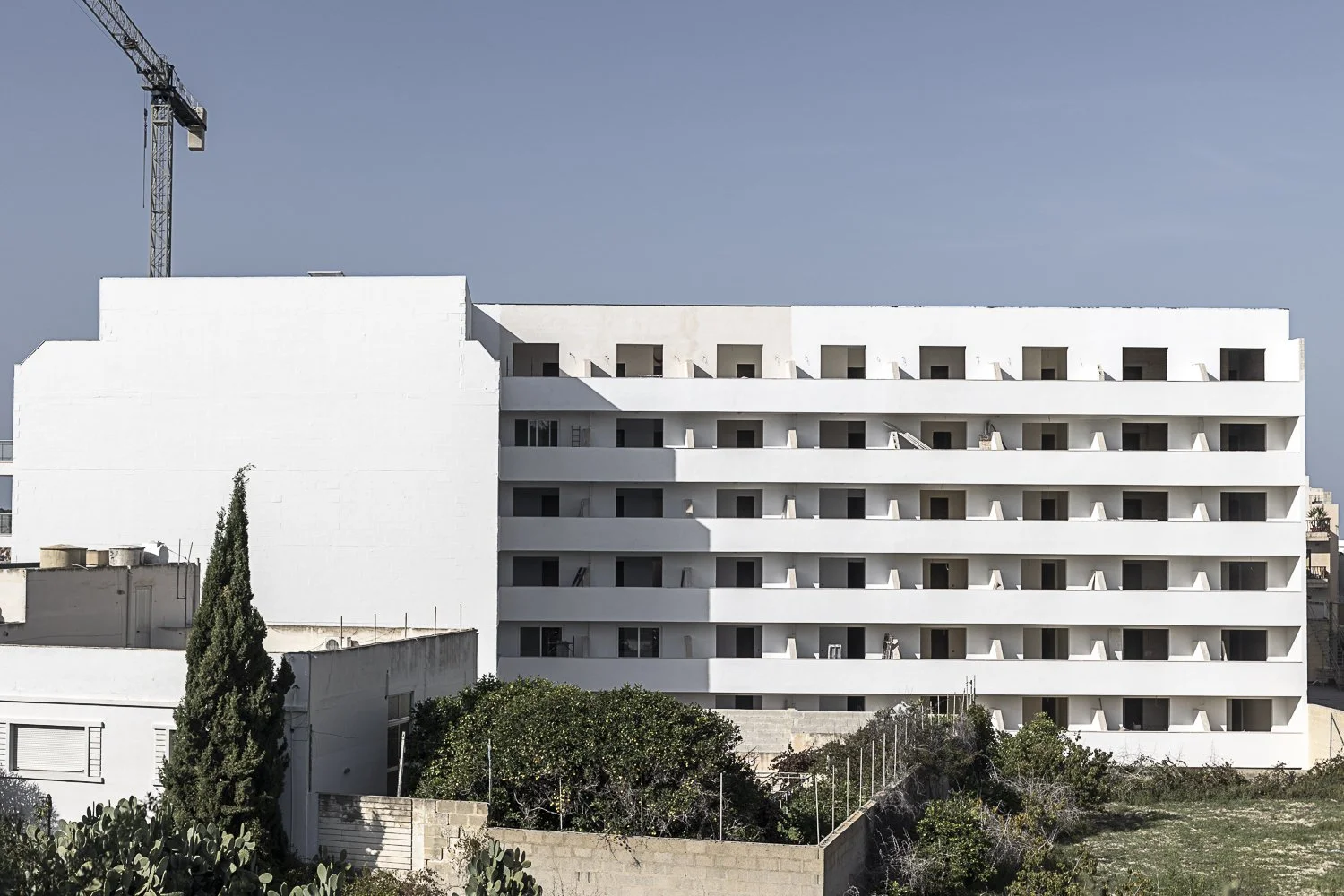
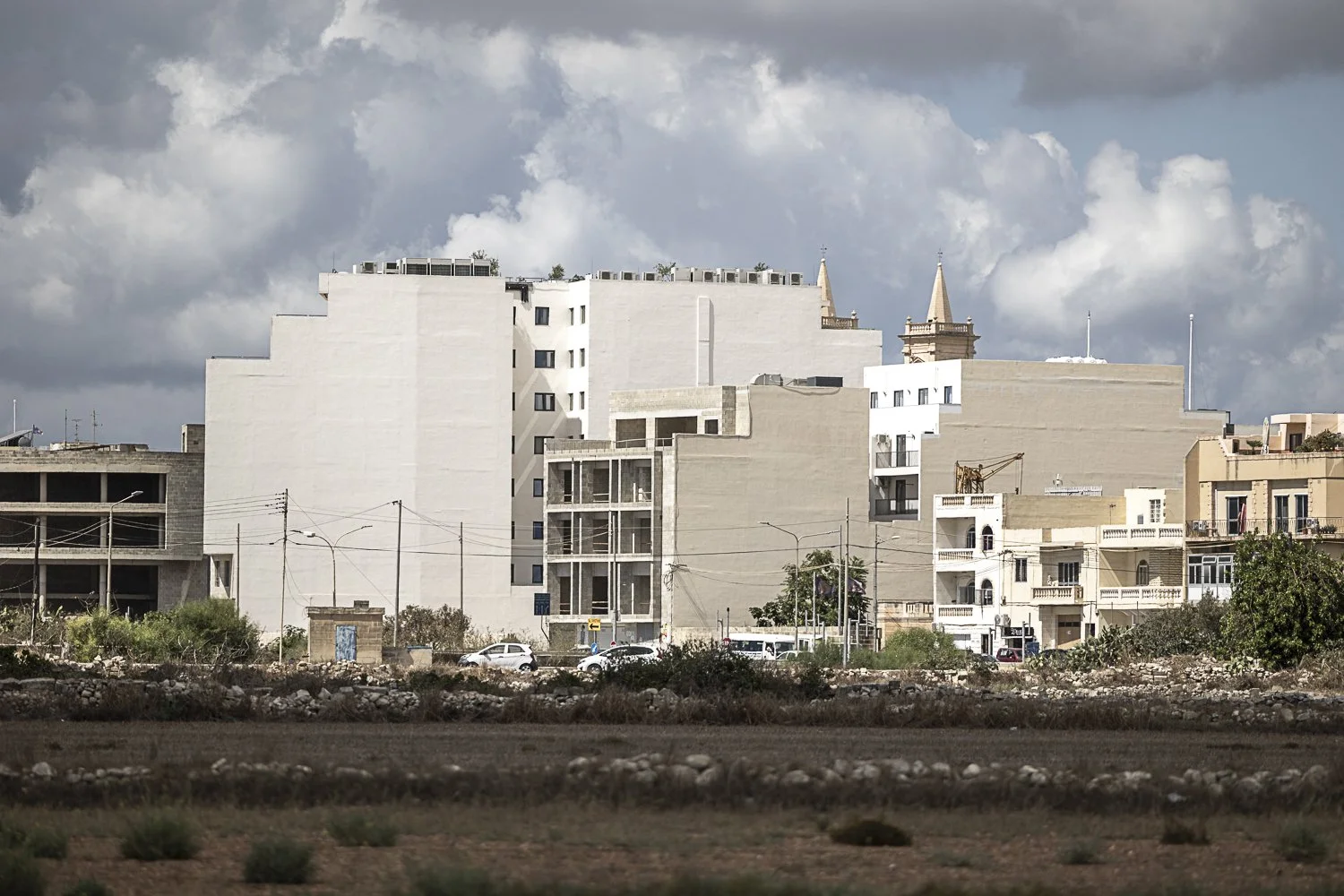
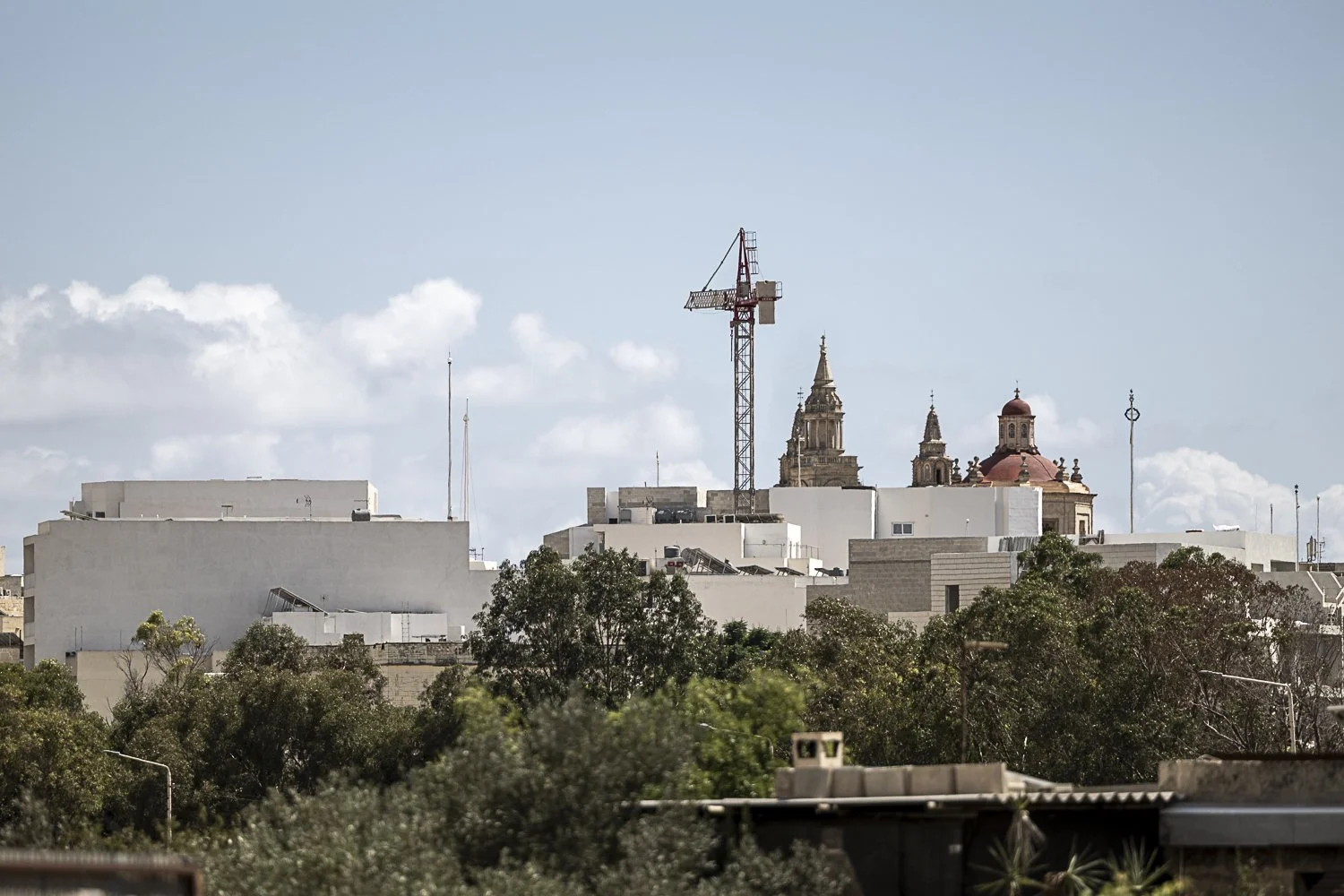
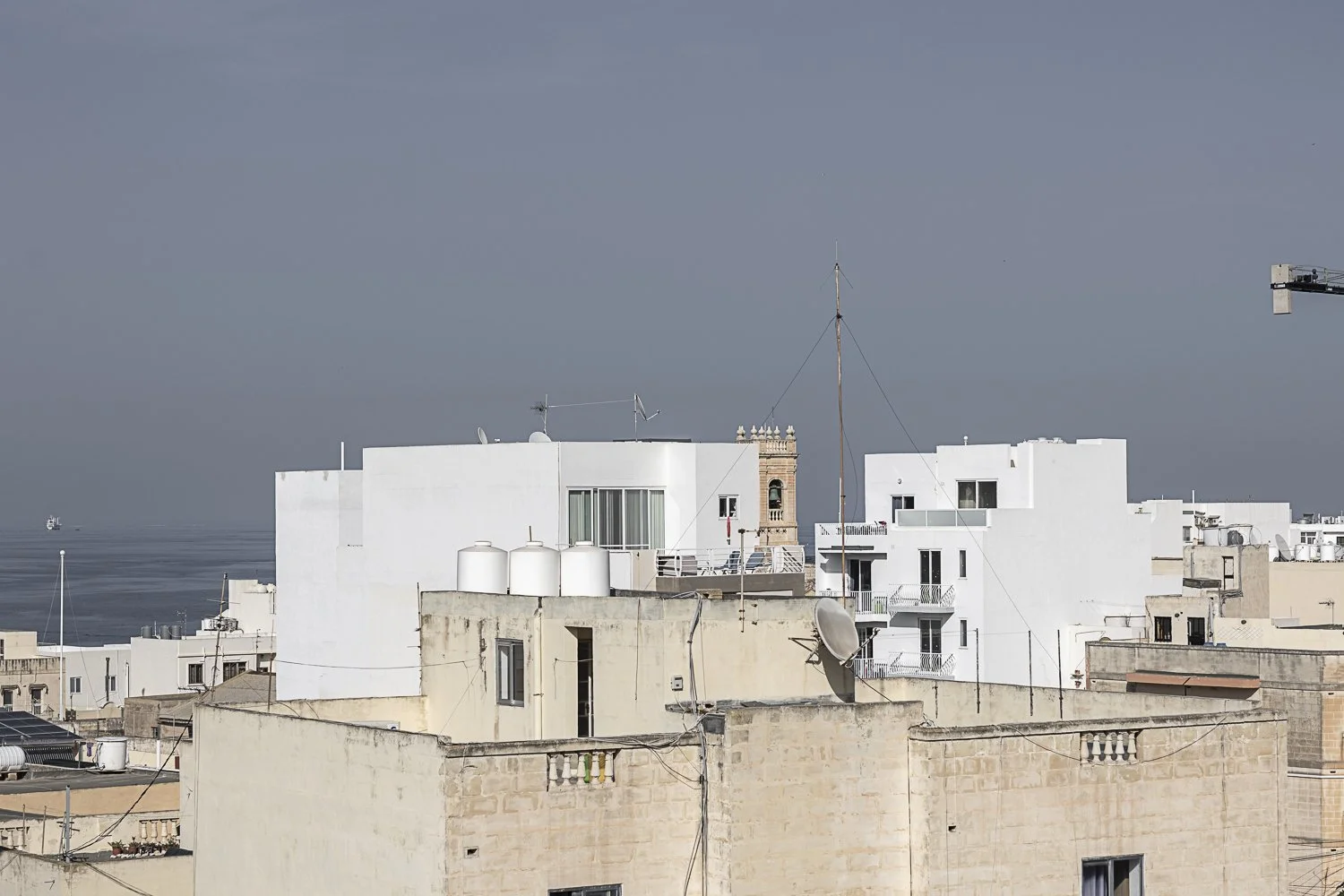
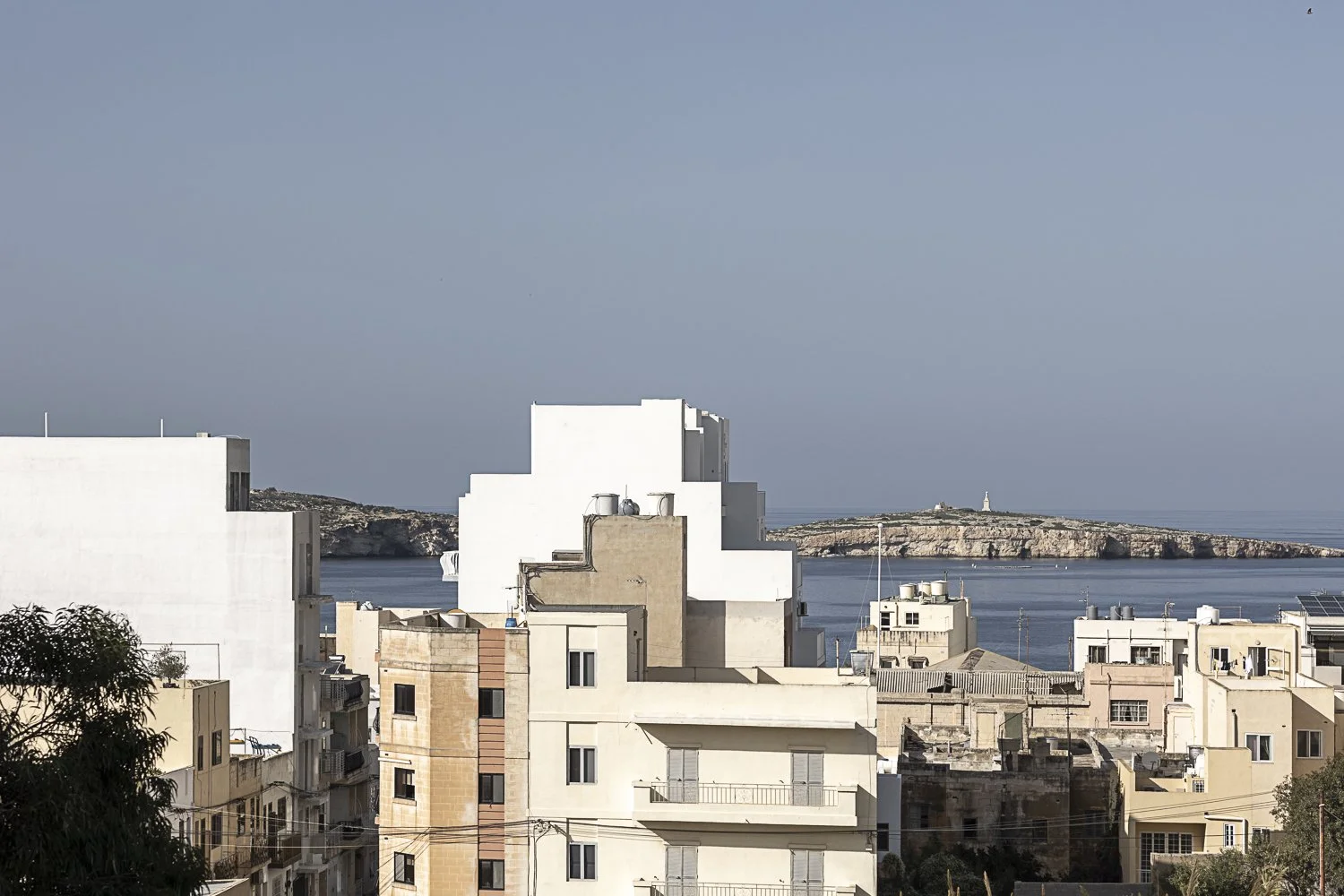
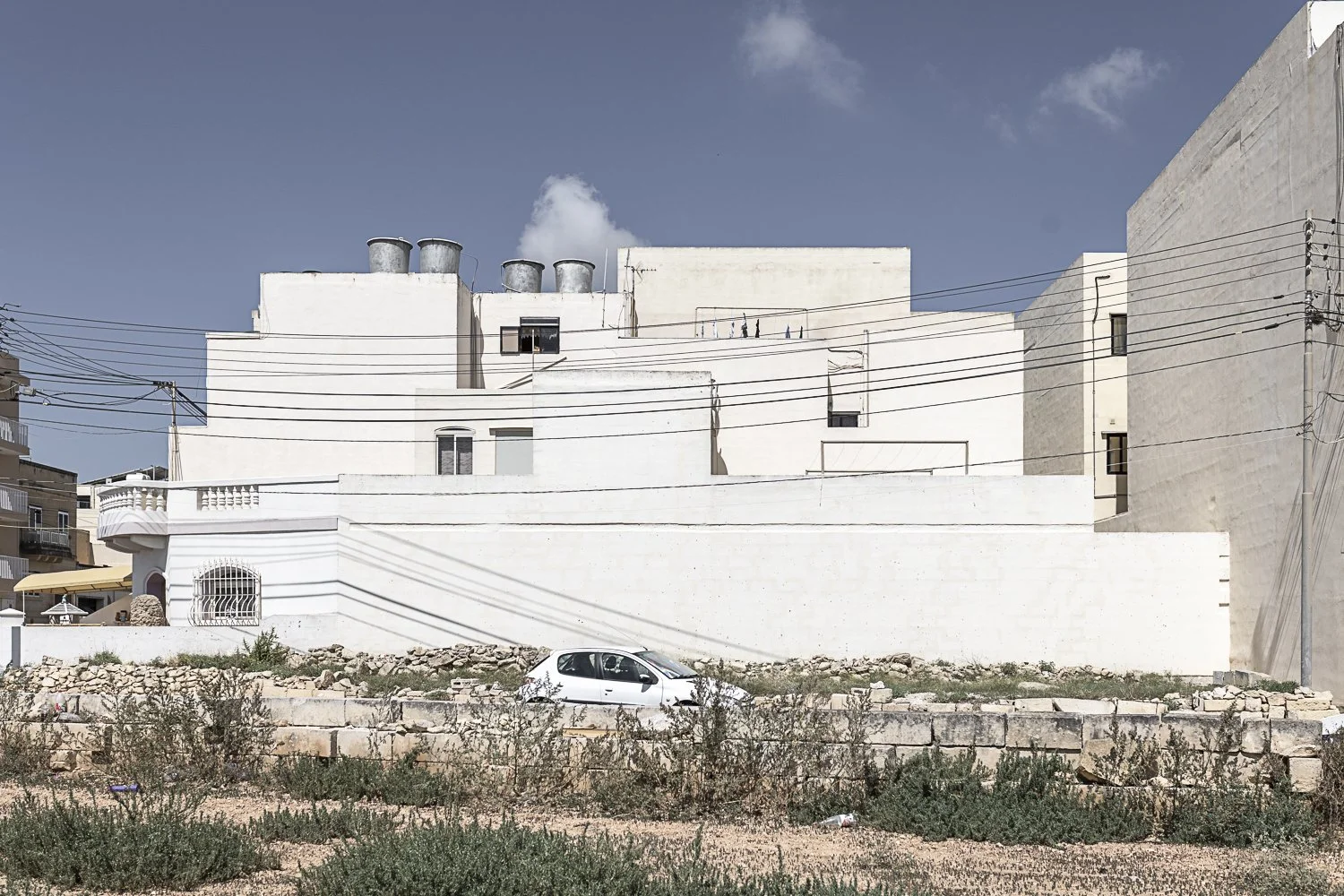
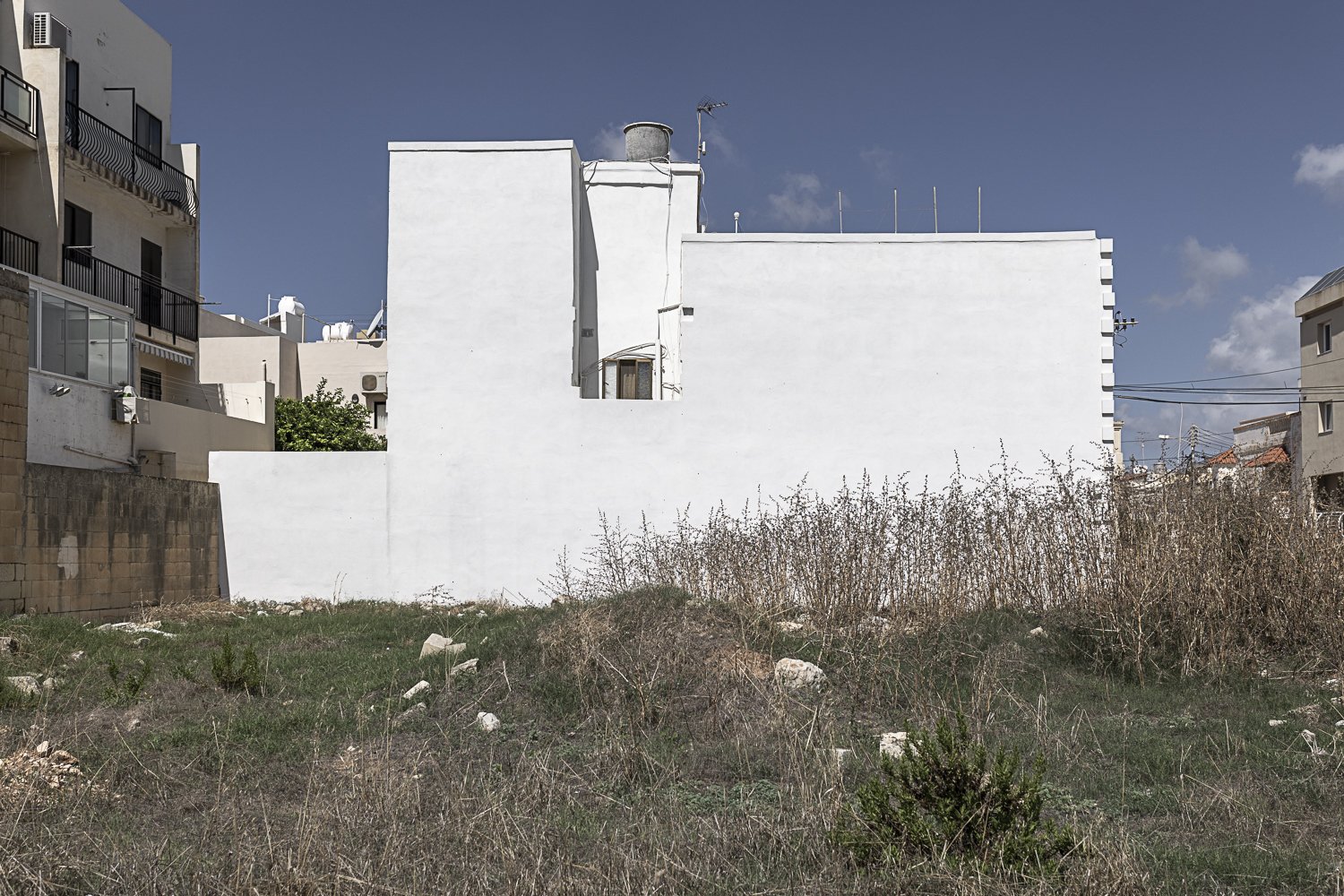
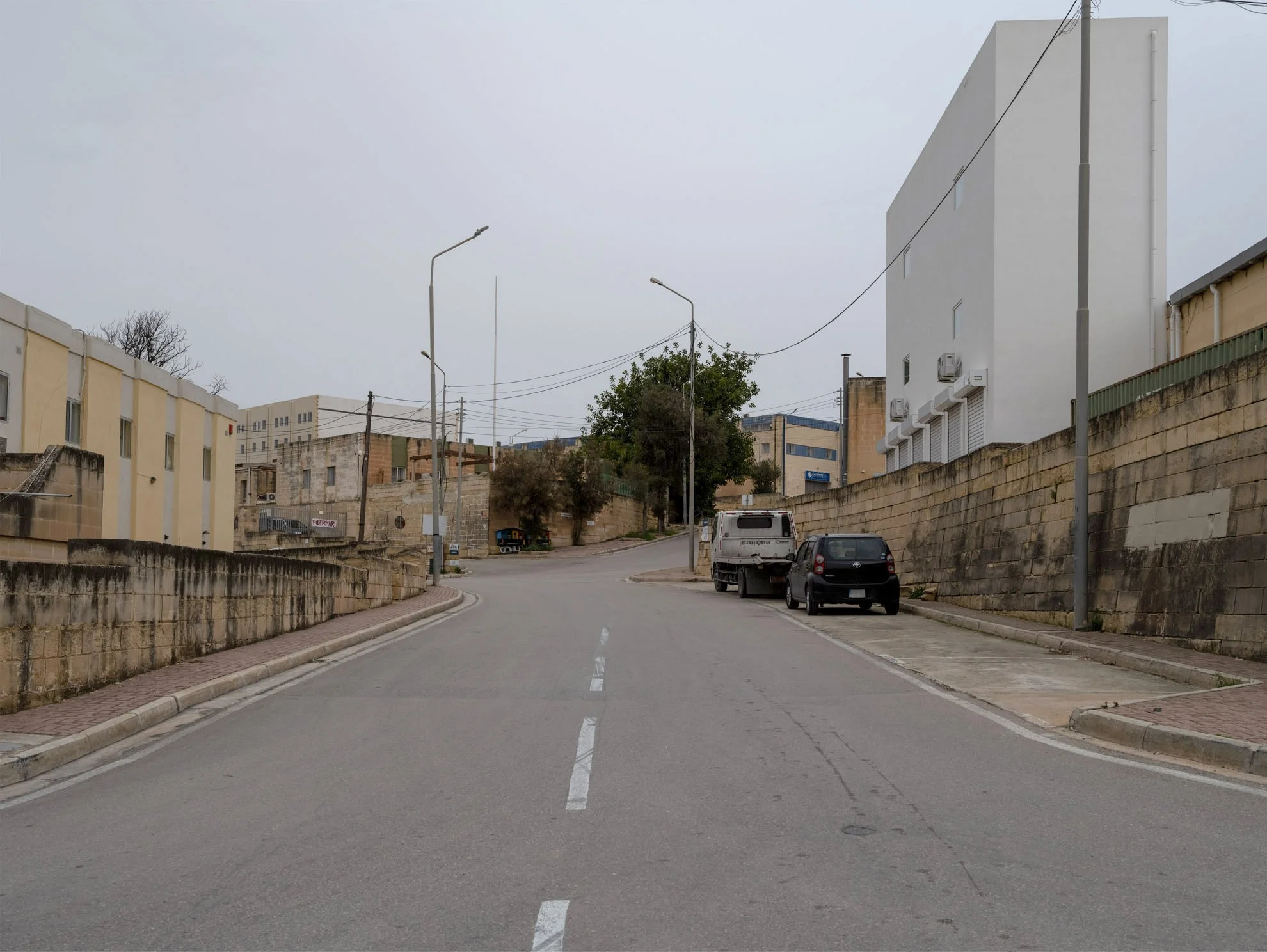
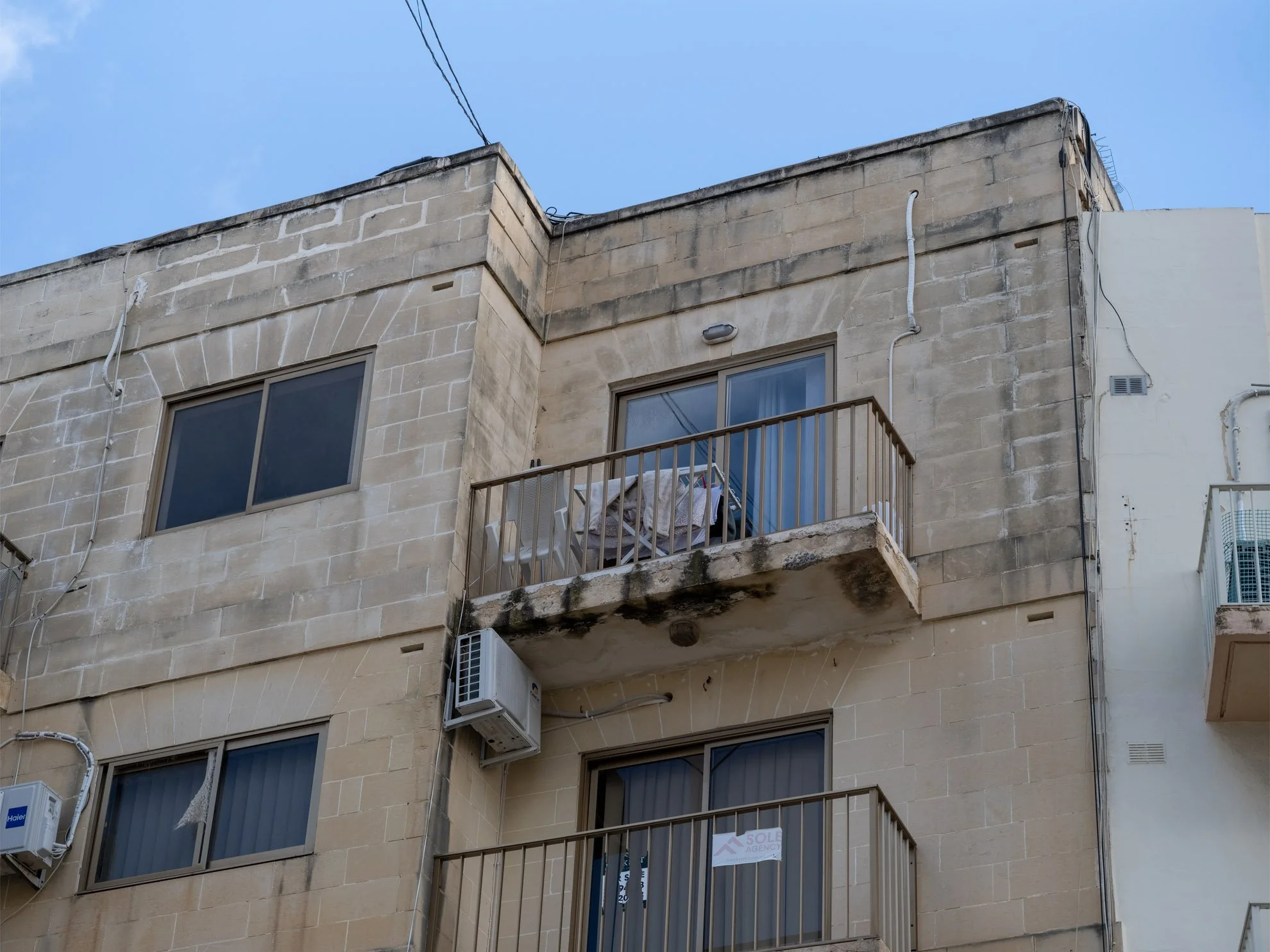
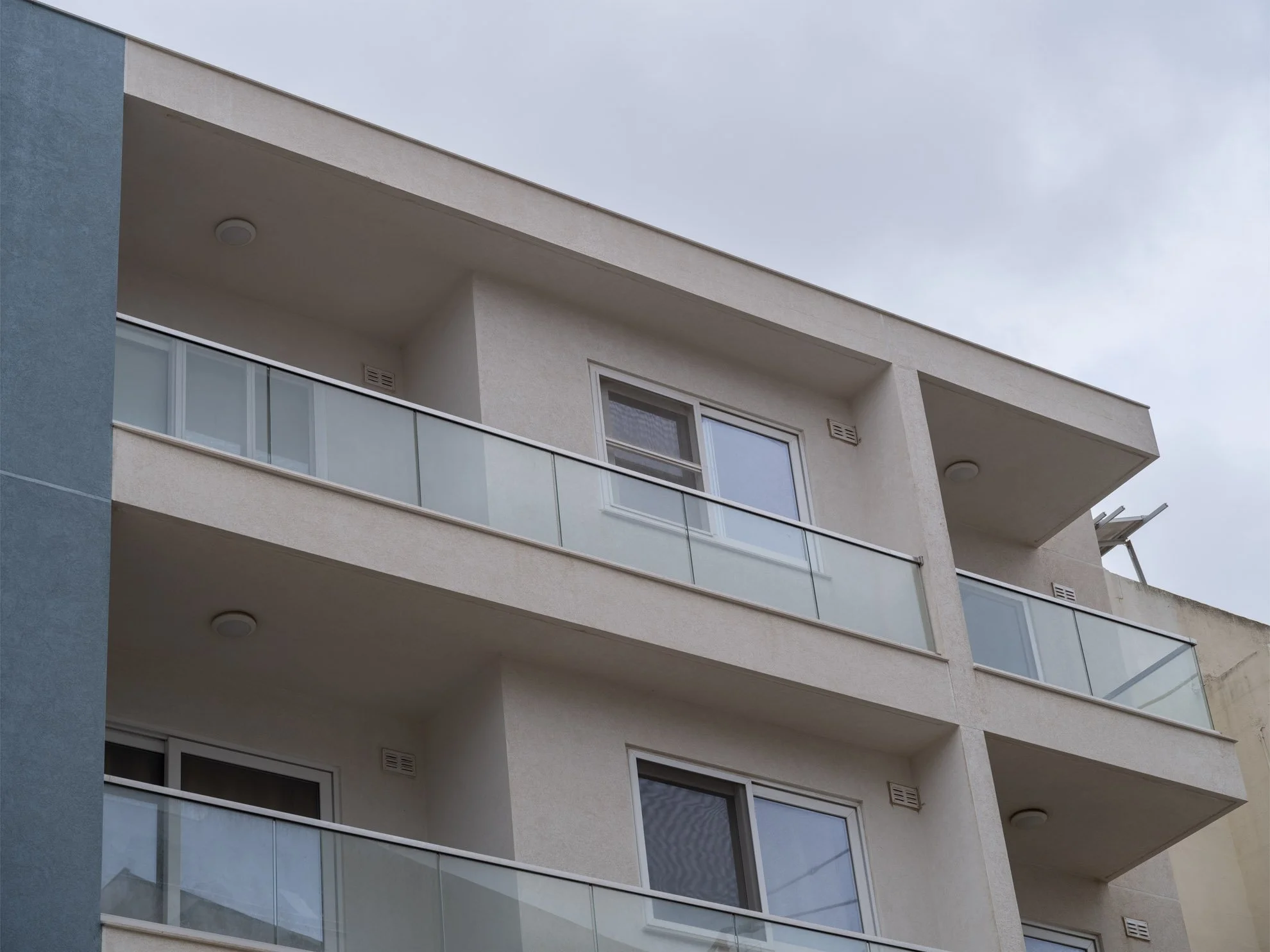
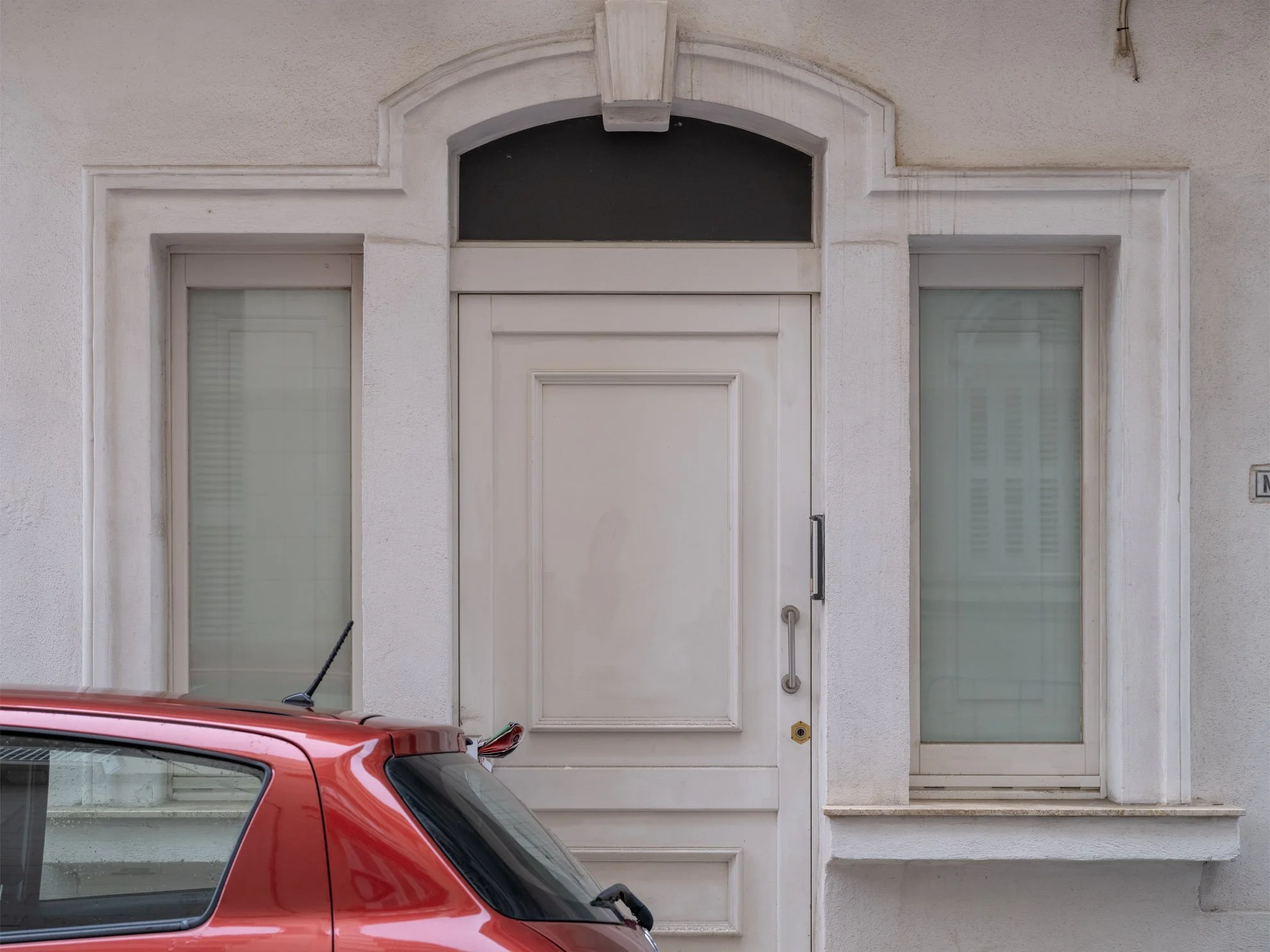
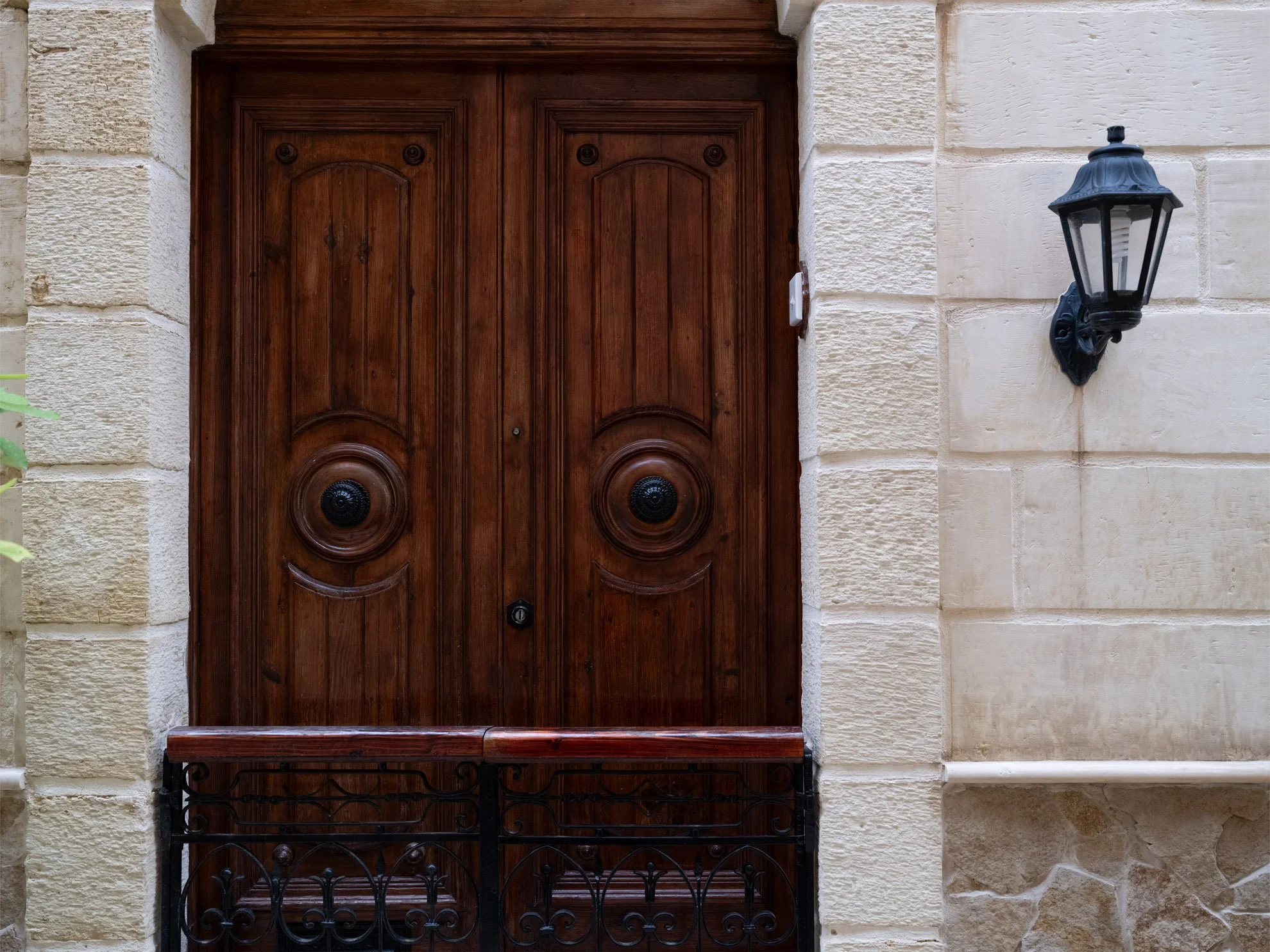
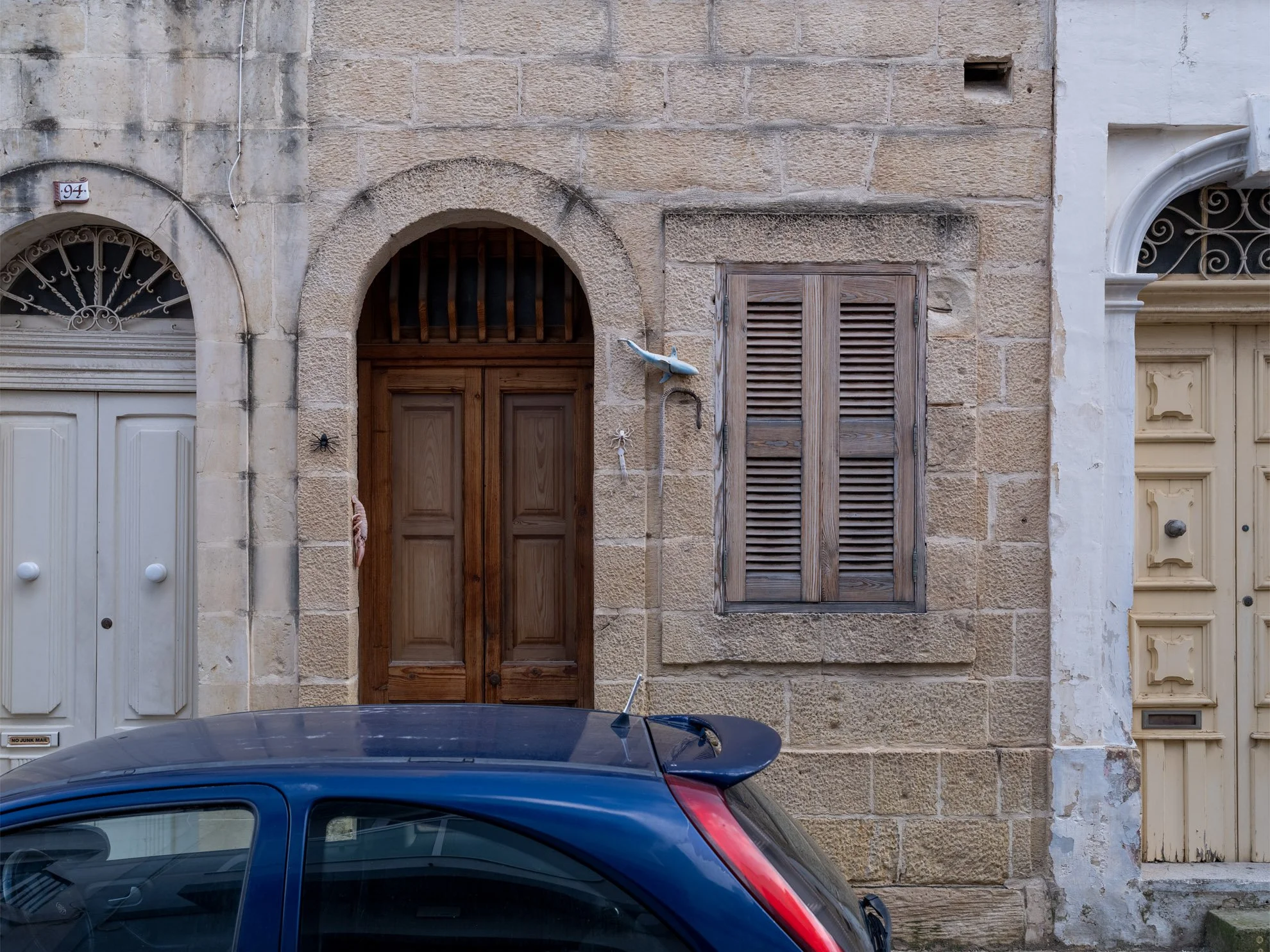
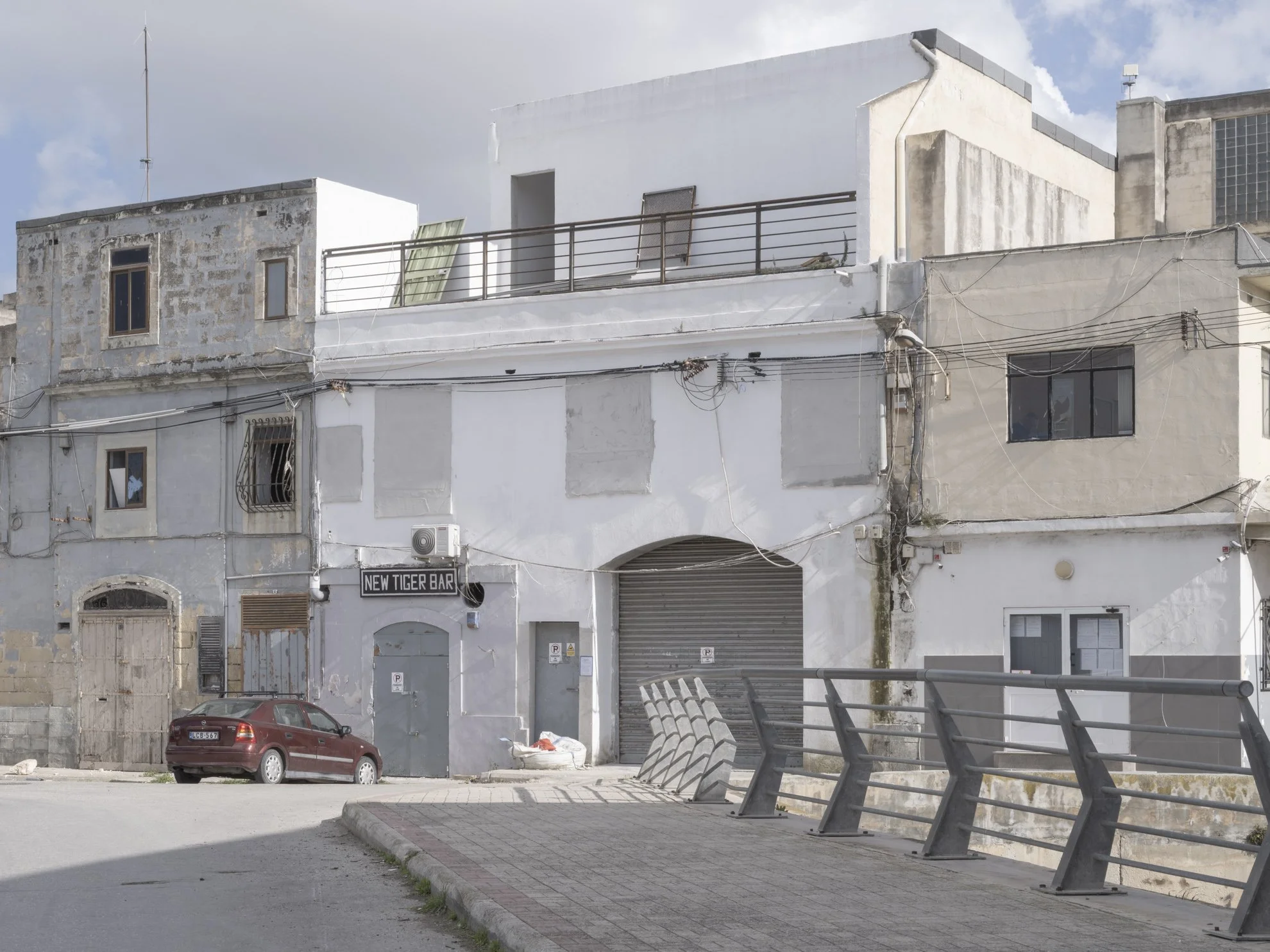
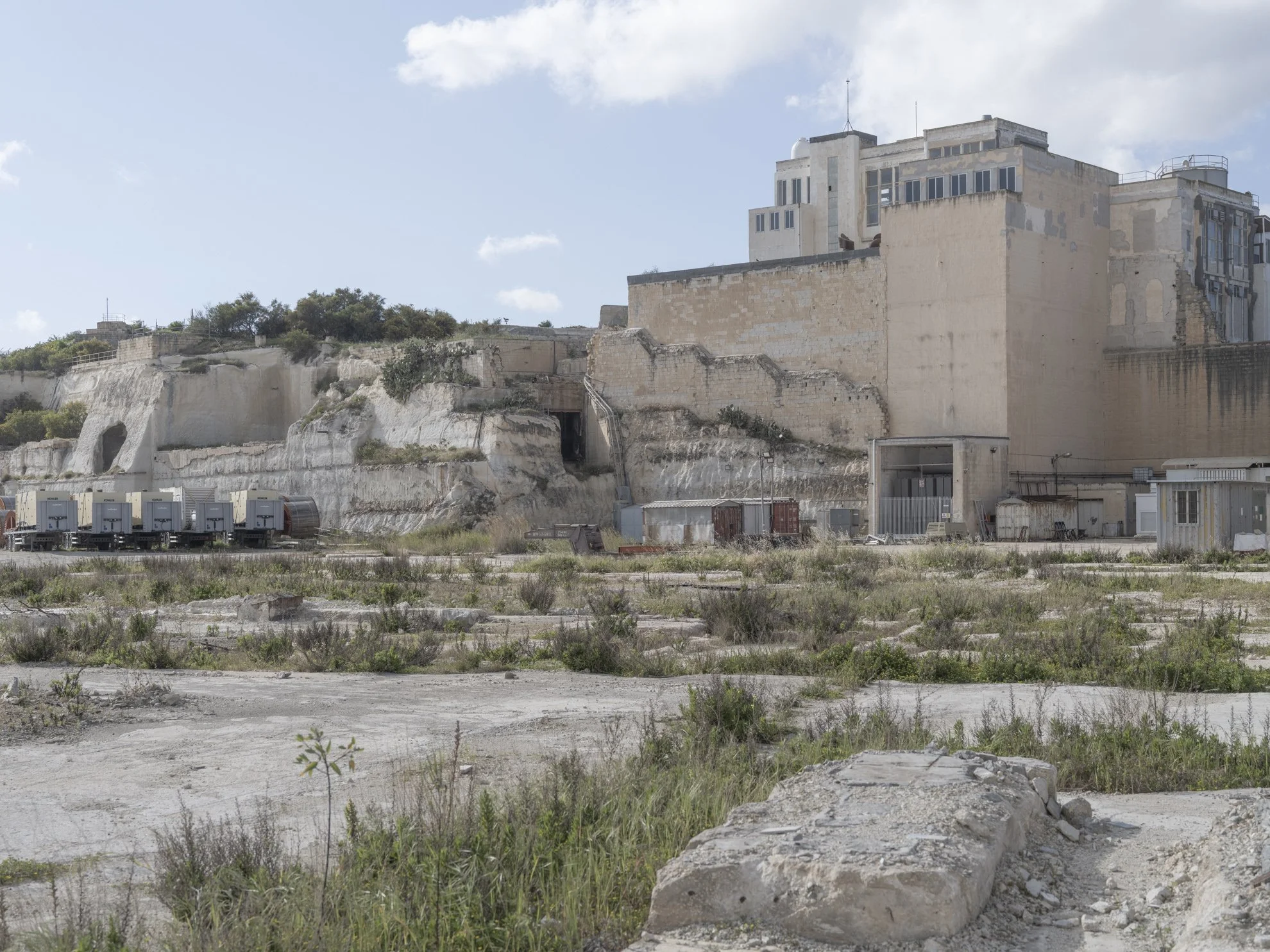
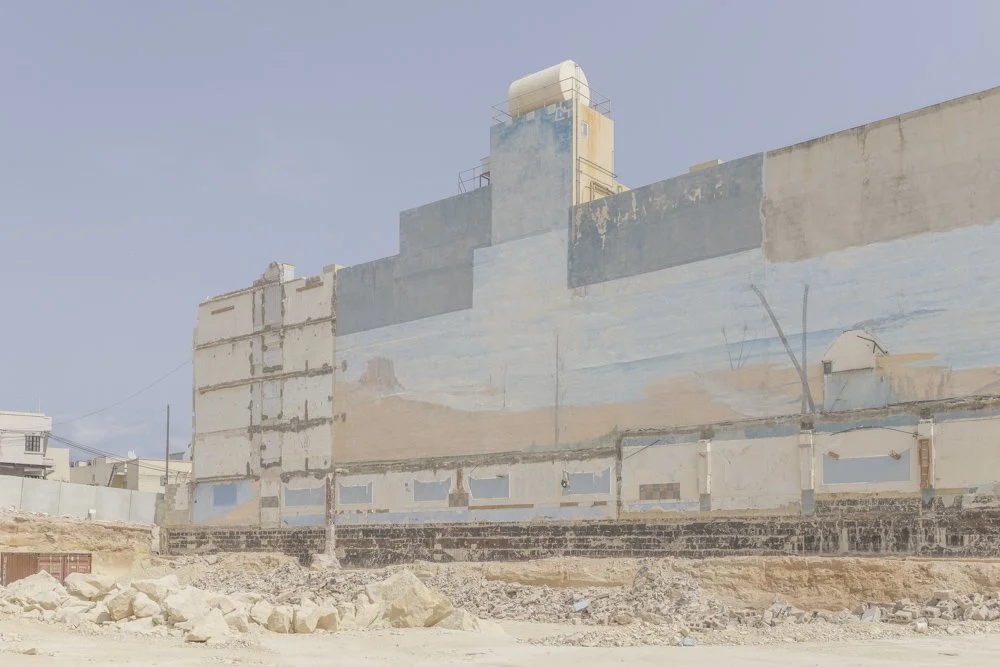
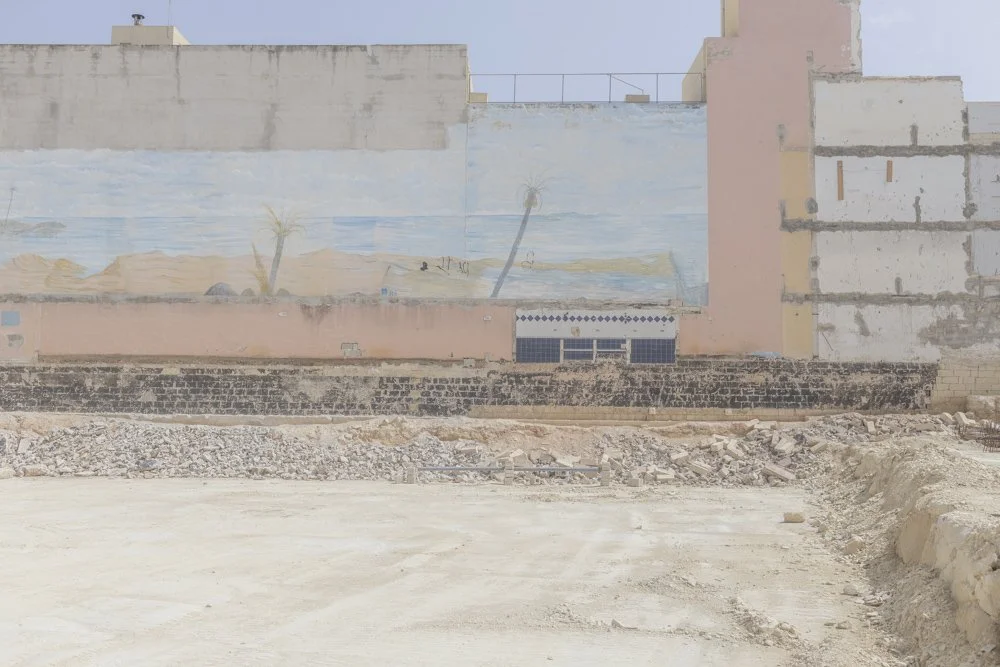
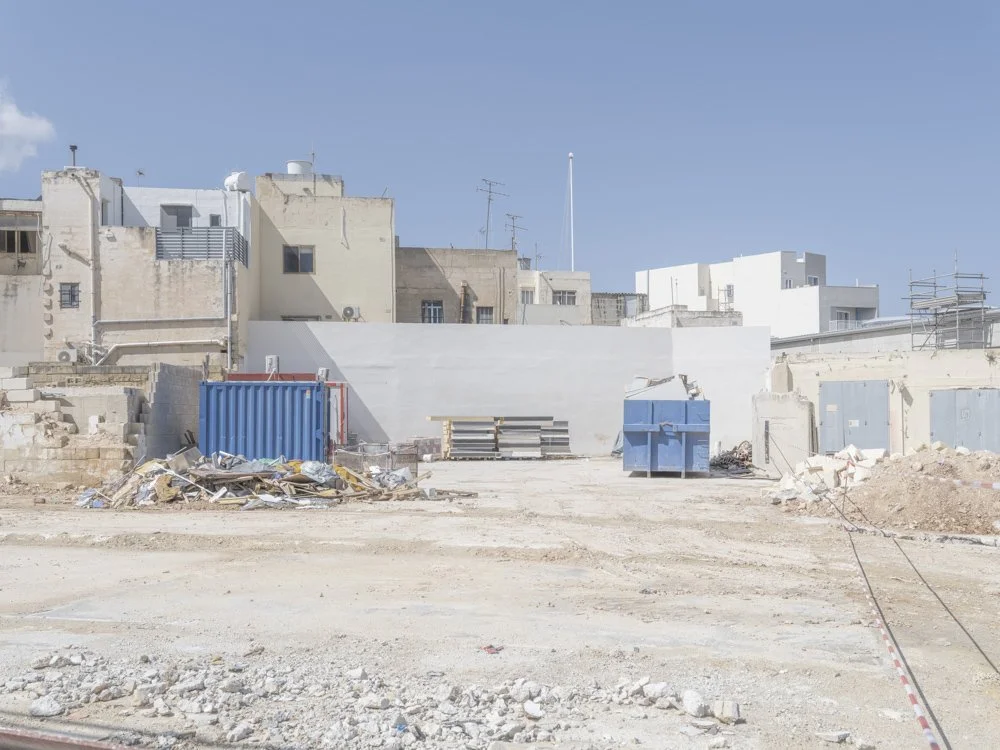
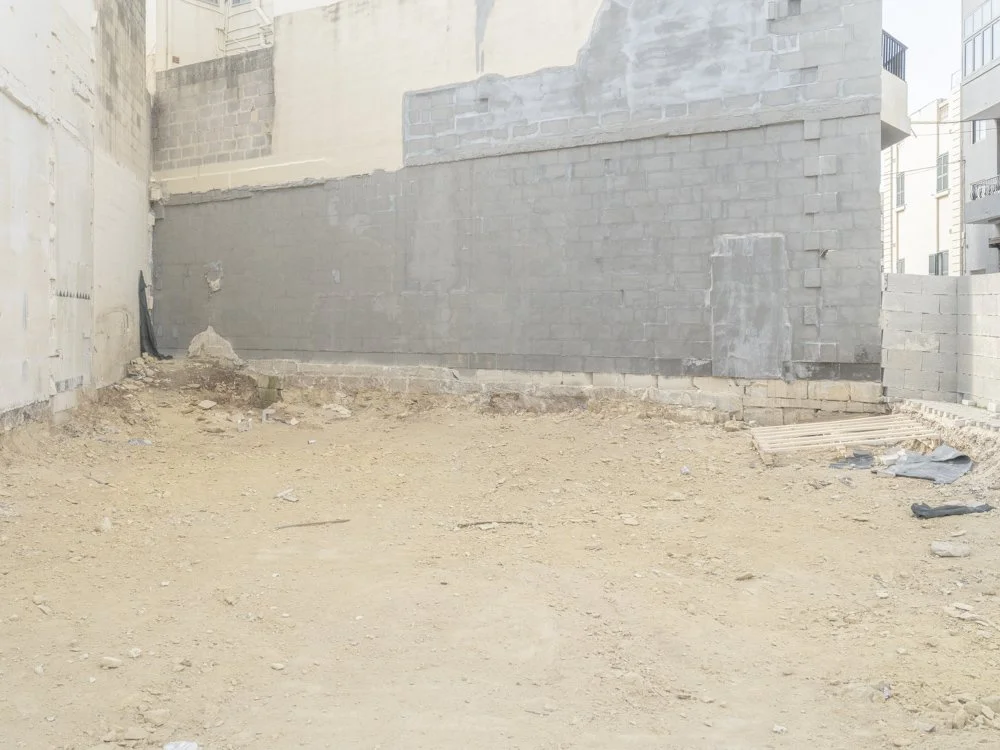
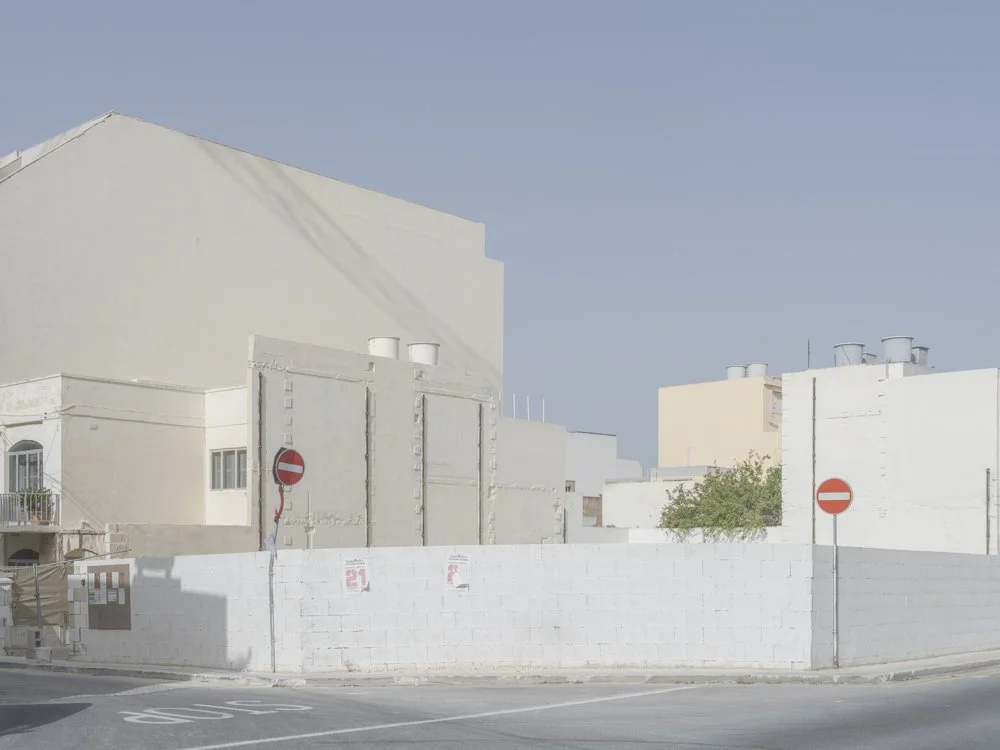
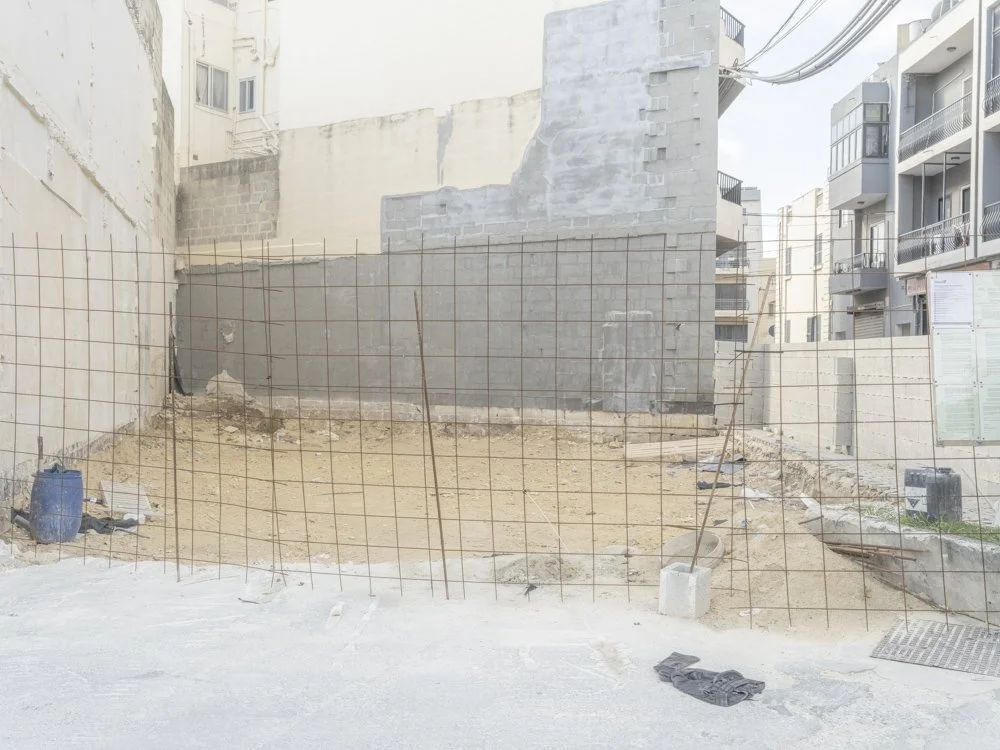
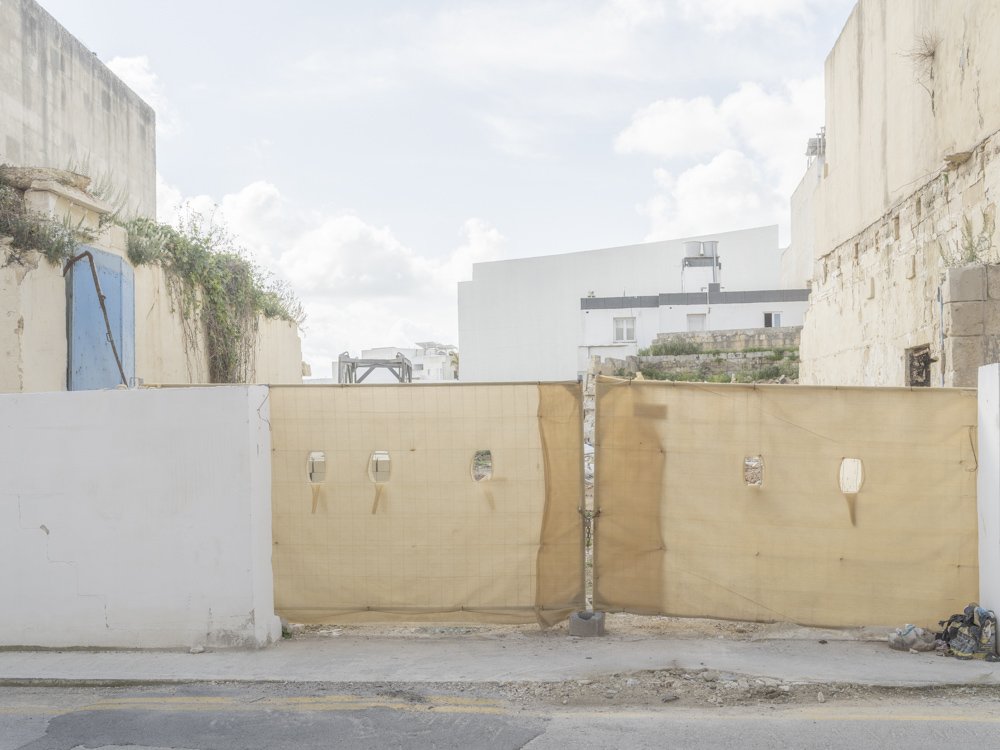
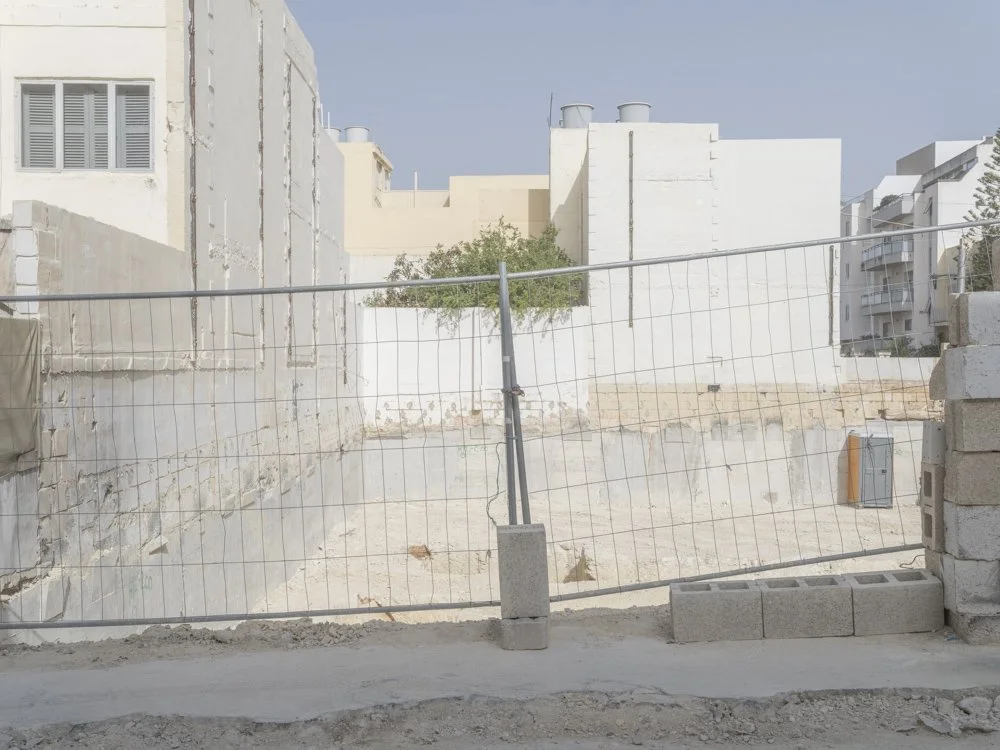
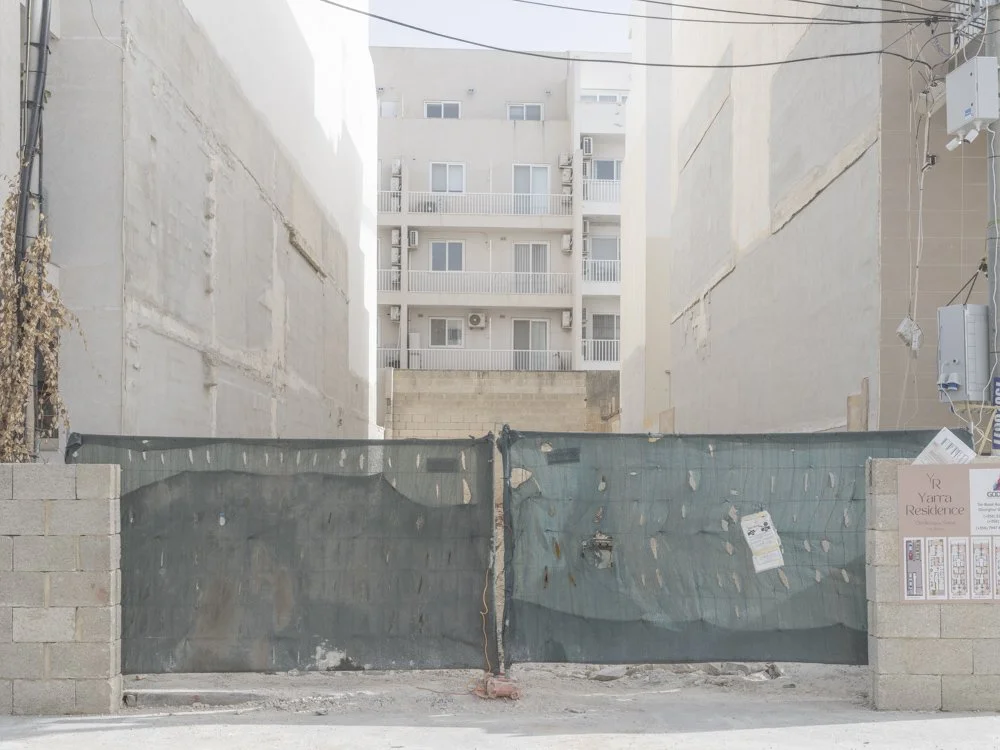
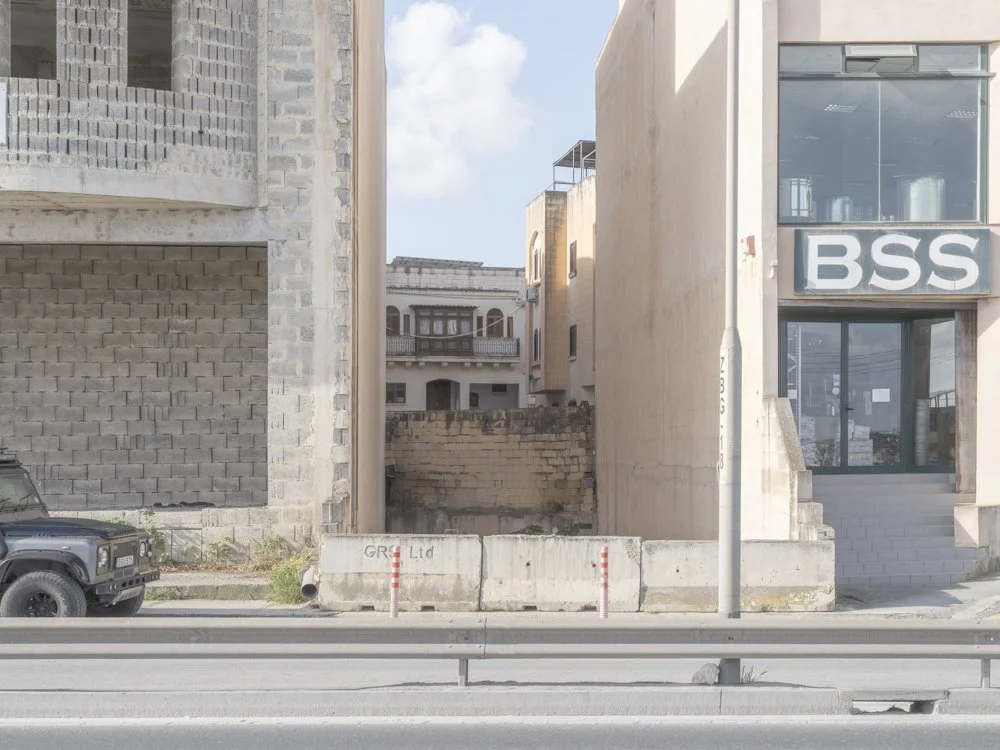
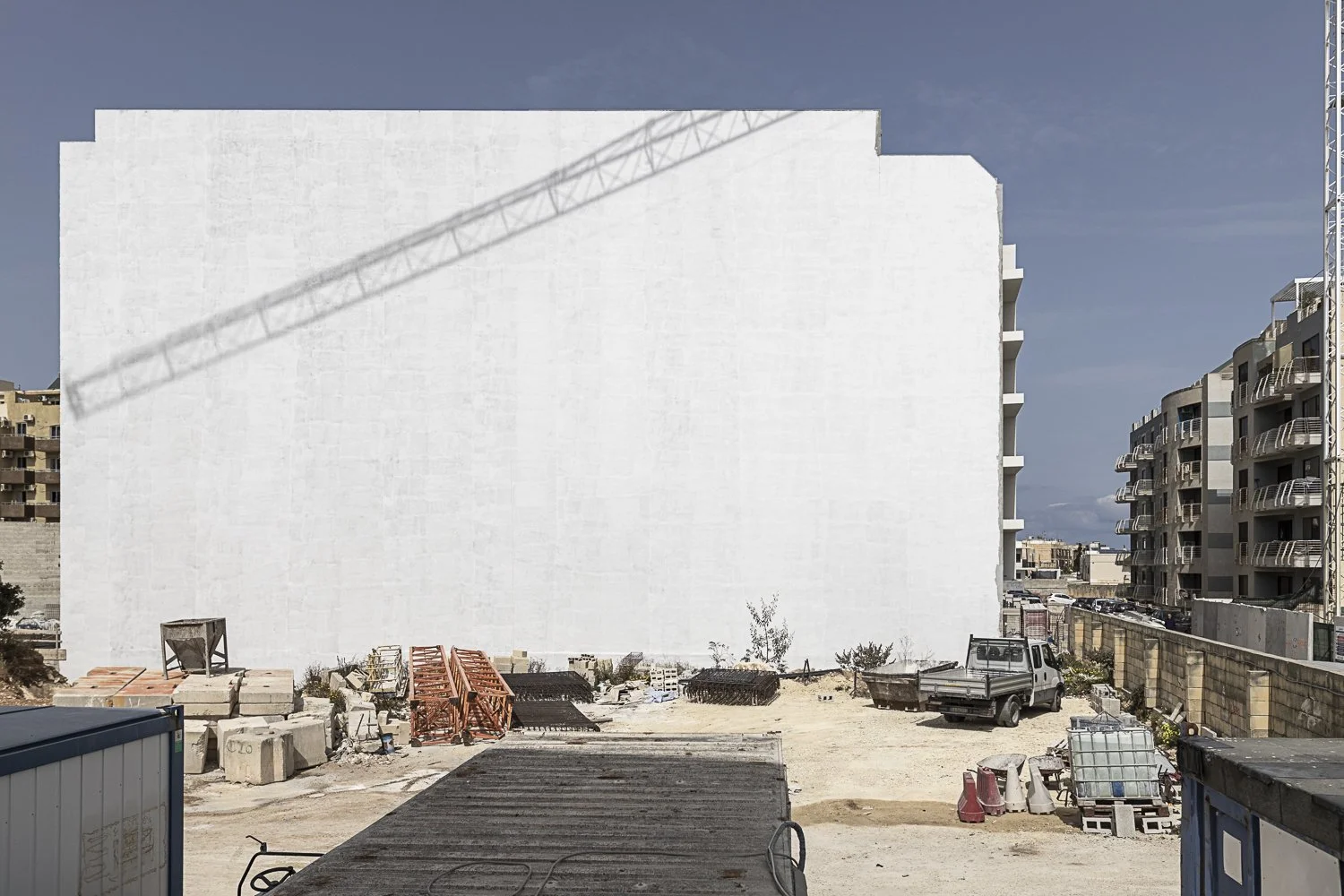
Blank examines the exposed party walls that emerge across Malta as new apartment blocks rise across the island. In areas still under development and above the rooftops of existing neighbourhoods, the smooth white lateral surfaces of new buildings are left bare. Built to be hidden, pressed against adjacent structures, these walls were never designed to be seen. They stand exposed as indexes of erasure: of what occupied the plot before, of vistas now blocked, of memory tied to place.
Photographed with restraint and distance, the walls appear almost neutral. Yet they function as architectural indexes of absence, transforming ordinary urban spaces into quiet traces of erasure.
These walls are not simply by-products of construction. They mark moments of rupture within the urban fabric. As the built environment transforms and new developments rise, the exposed surfaces become visible records of a form of spatial violence embedded within rapid urban transformation.
Rather than depicting transformation directly, Blank focuses on what these surfaces make visible. The project observes how the built environment absorbs change, allowing these walls to stand as indexes of transition, memory, and loss within Malta's evolving landscape.
Blank was exhibited at the Malta Biennale 2026 at the Ġgantija Temples in Gozo.
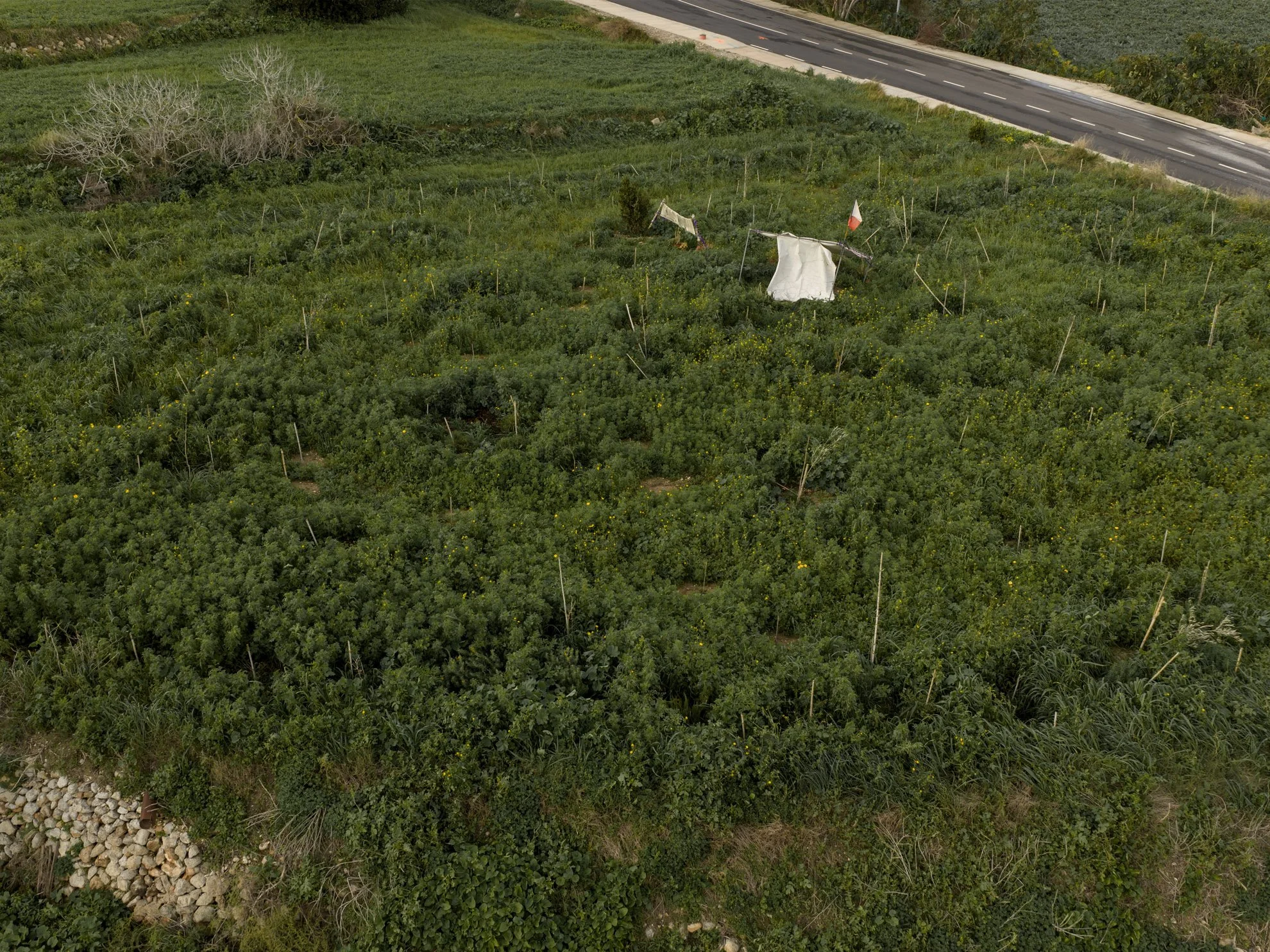
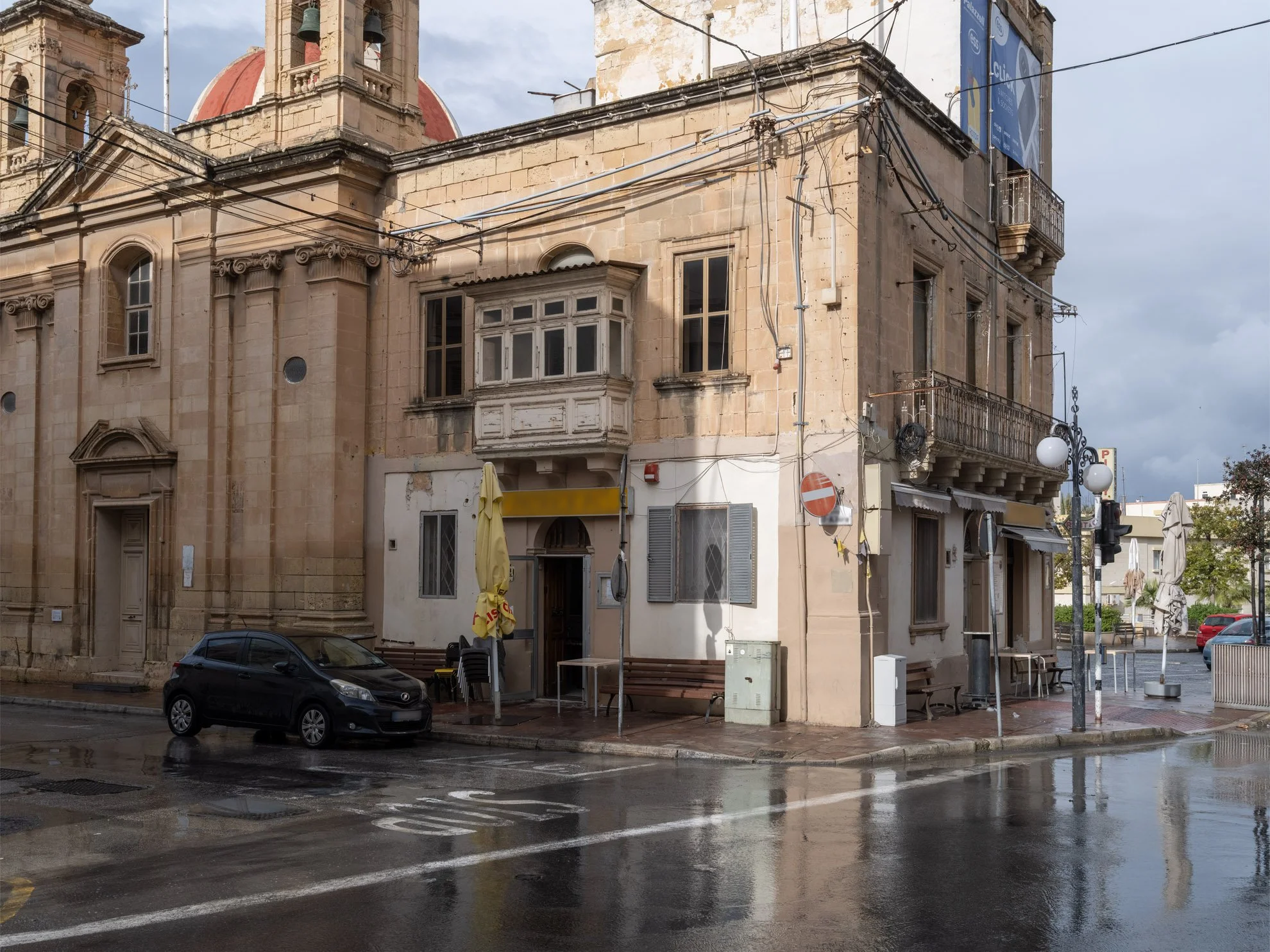
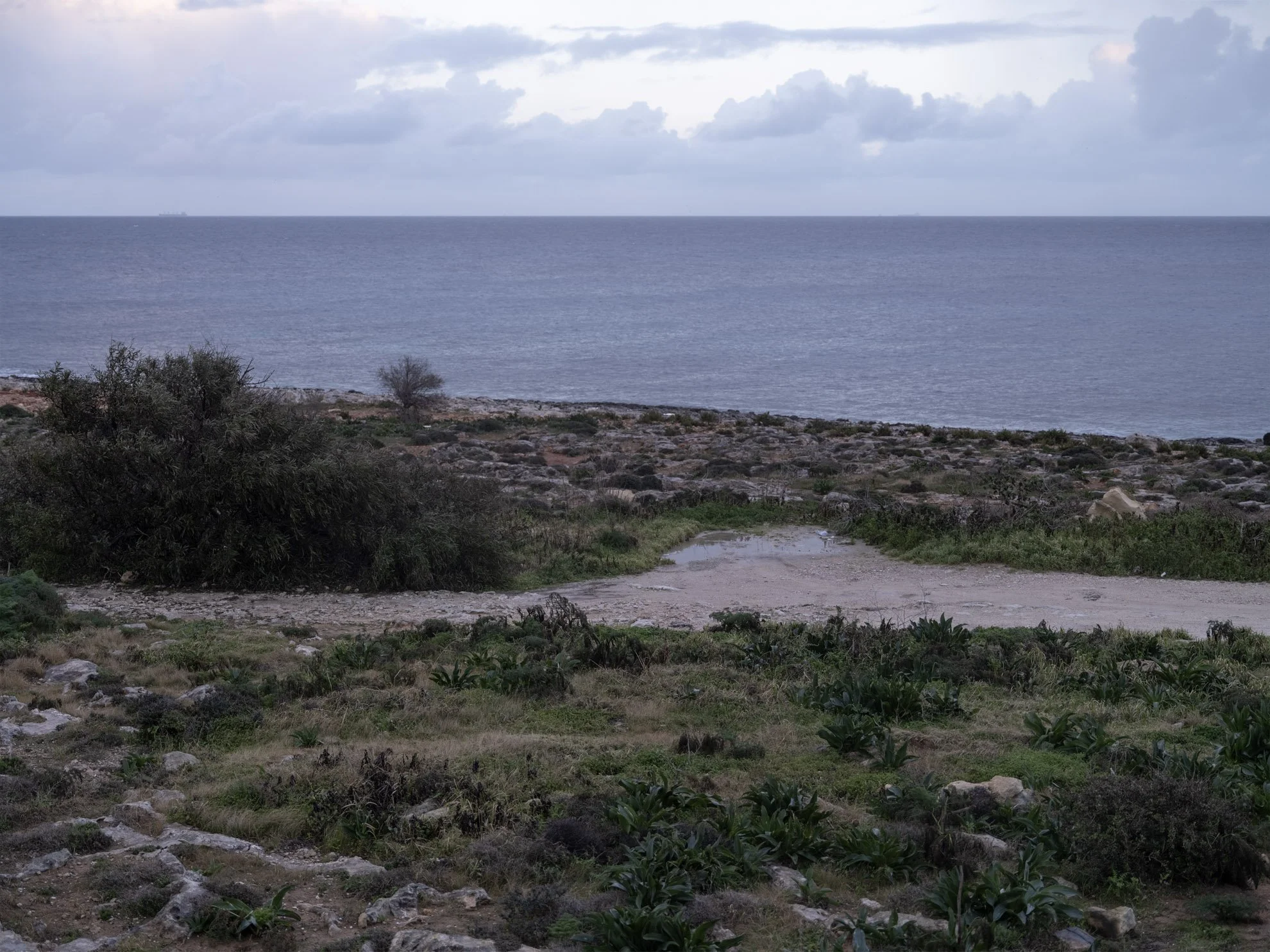
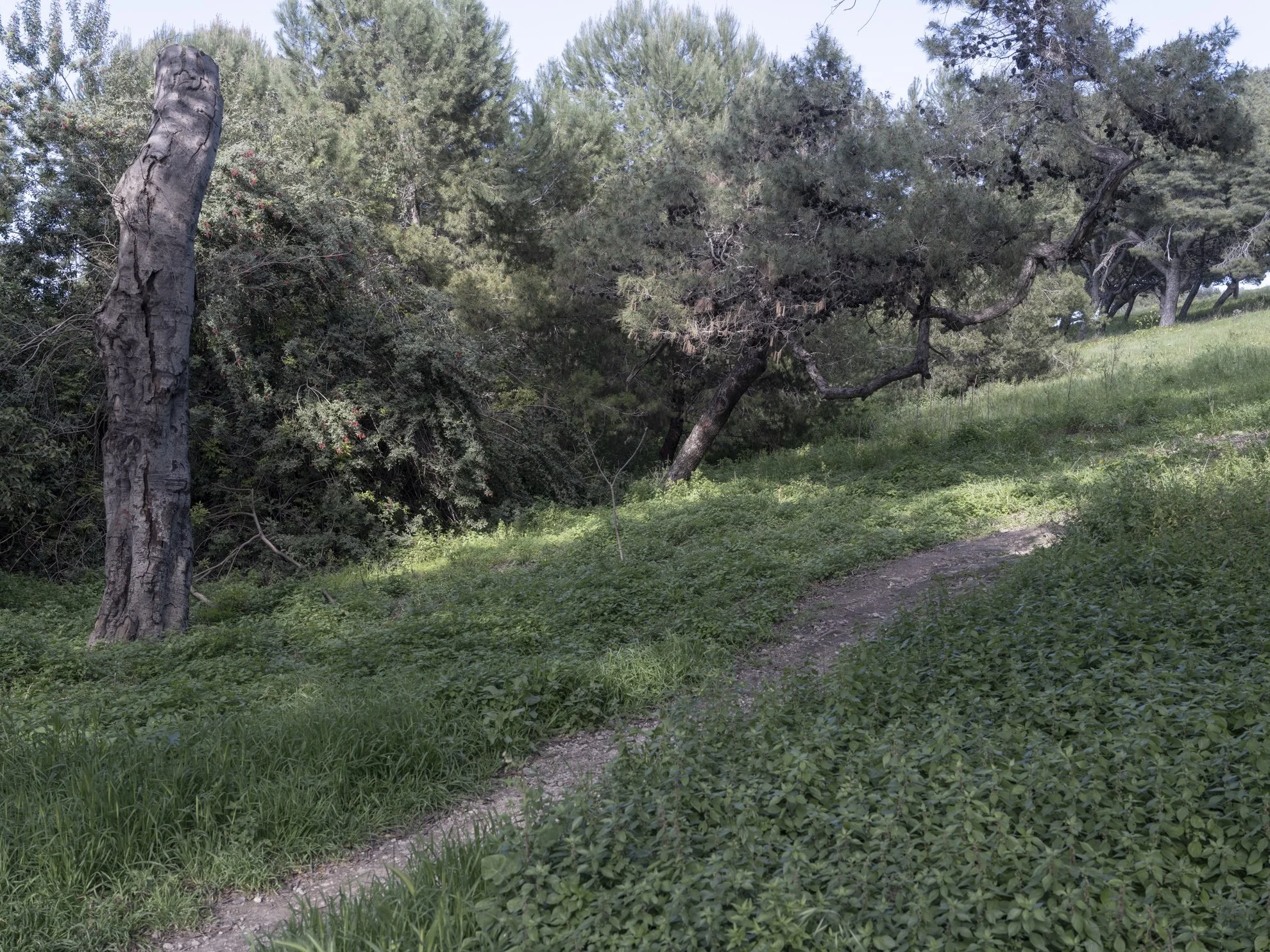
In Place. Where the Land Holds is a photographic project developed through sustained engagement with sites in Malta where women were killed.
The work begins without a camera. Each site is visited first on foot, because the body registers what photography cannot yet reach; the scale, the atmosphere, the particular quality of ordinariness that makes these places so difficult to hold in mind. The photographs come after, and out of that prior knowing.
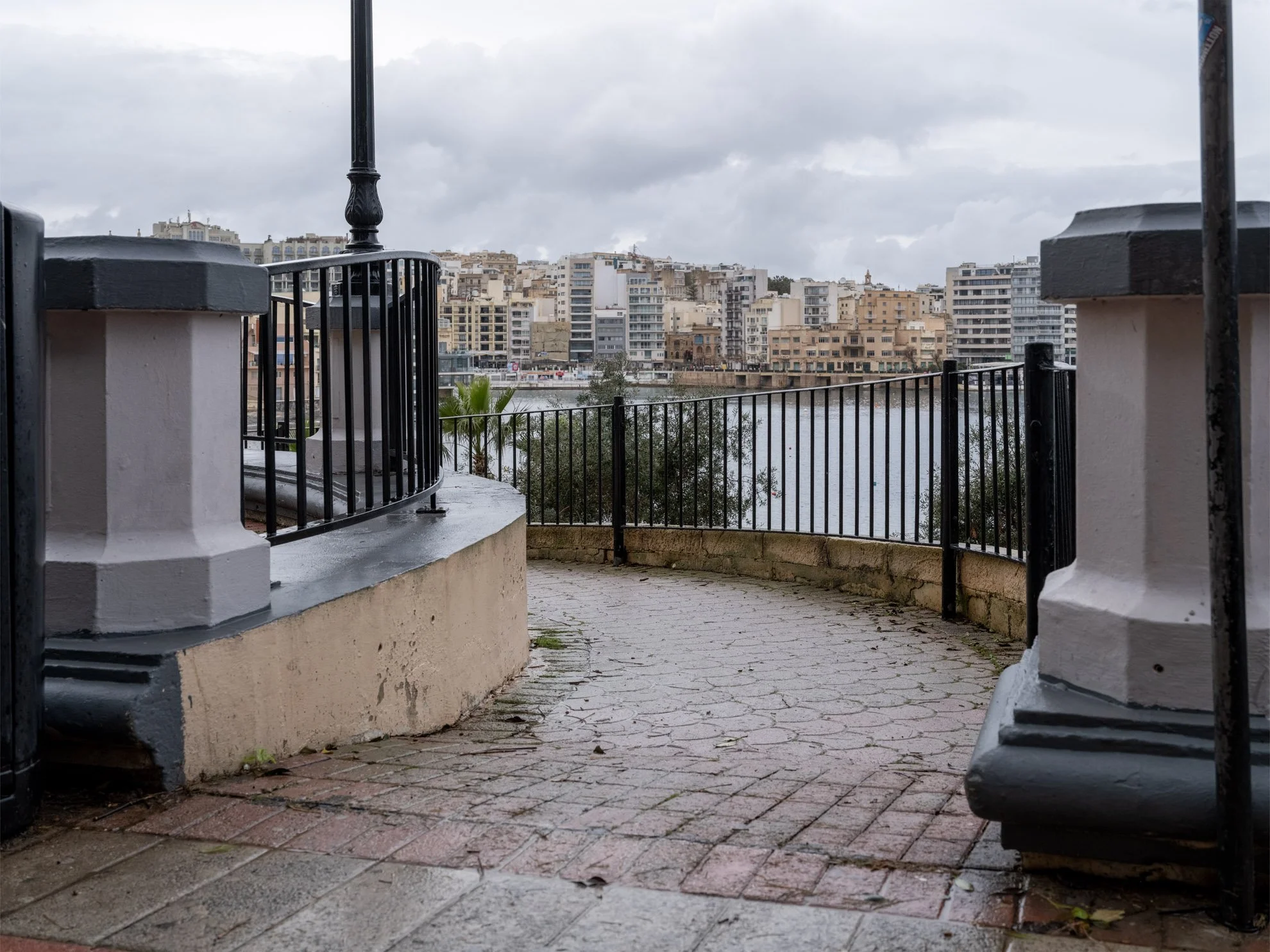
What the camera finds are places that continue to function within everyday life: accessible, unremarkable, walked through and lived beside. No bodies are shown. No victims are named or identified within the images. This opacity is not an absence of care but an ethical position: those who died cannot give consent, and the work will not make them available for consumption. It draws on Glissant's right to opacity and on the questions Sontag raises in Regarding the Pain of Others about what it means to look at suffering, and what it means to make suffering available to be looked at.
The images operate as indexes, they point, but what they point to has itself disappeared. The event is not visible; in many cases the site has been altered or rebuilt entirely. What remains is an ordinary surface that gives nothing away. The photograph holds this condition rather than resolving it: absence not as a lack to be filled, but as something the land has absorbed and continues to carry.
This positions the photographer as witness rather than investigator or narrator. Drawing on Azoulay's The Civil Contract of Photography, the work understands photography as constituting an obligation to those who were there, to those who cannot speak, and to those who will look. The restrained framing is not an aesthetic choice but an ethical one: the image should not exceed what the photographer has the right to show. Witnessing here means staying with what persists without claiming to explain it.
That persistence is central to the project. Violence does not only occur as an event; it settles into place, into architecture, into the texture of built and natural environments. Over time this renders trauma increasingly invisible, folded into surfaces that appear neutral and functional. In Place works in that interval between what happened and what shows, attending to how landscapes hold histories without declaring them, and how this quiet persistence shapes what we allow ourselves to remember.
The project is ongoing. Sixteen further sites are in development as part of a wider research framework, extending the enquiry into how landscape absorbs, conceals, and quietly maintains what violence leaves behind.
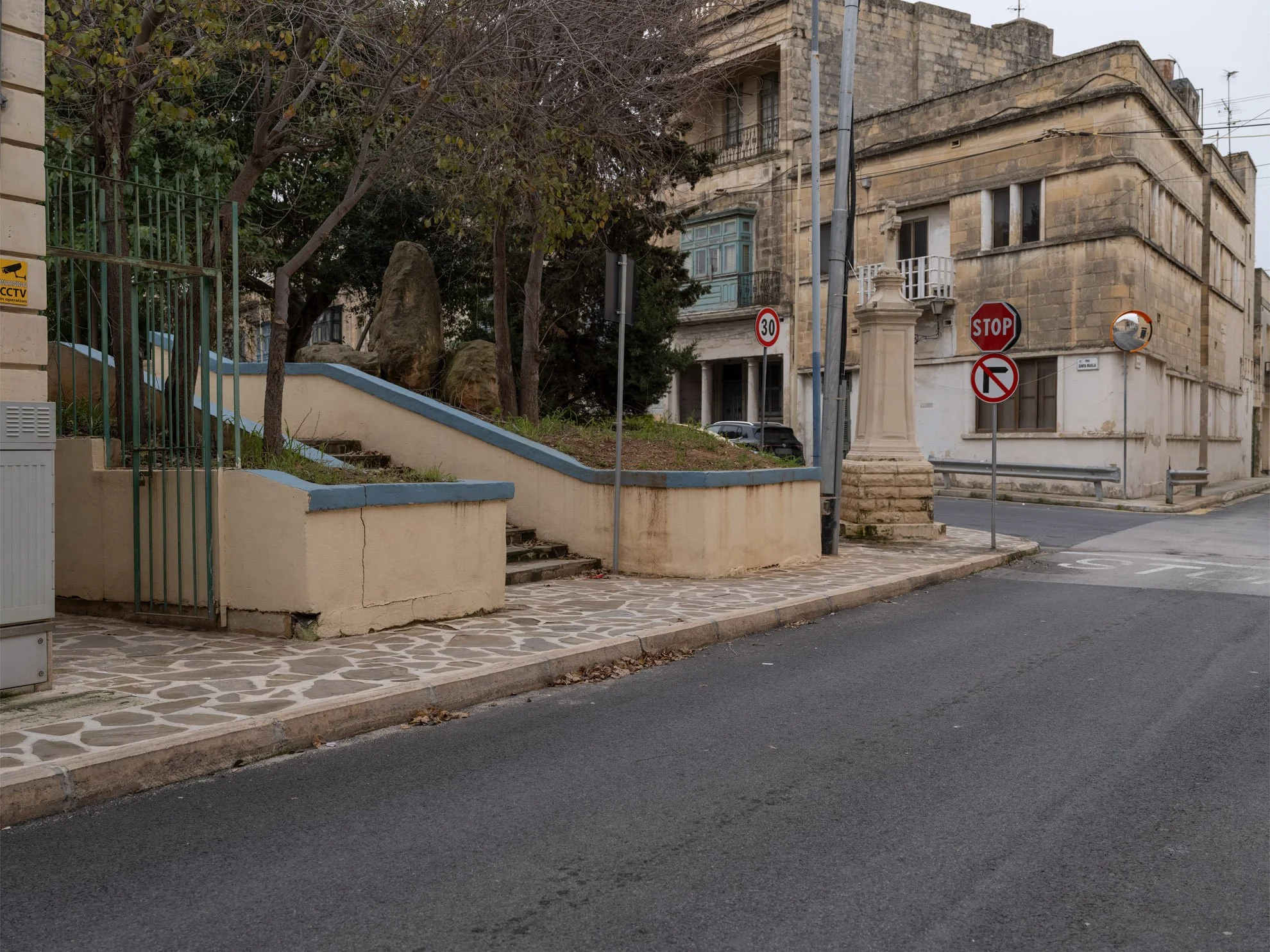
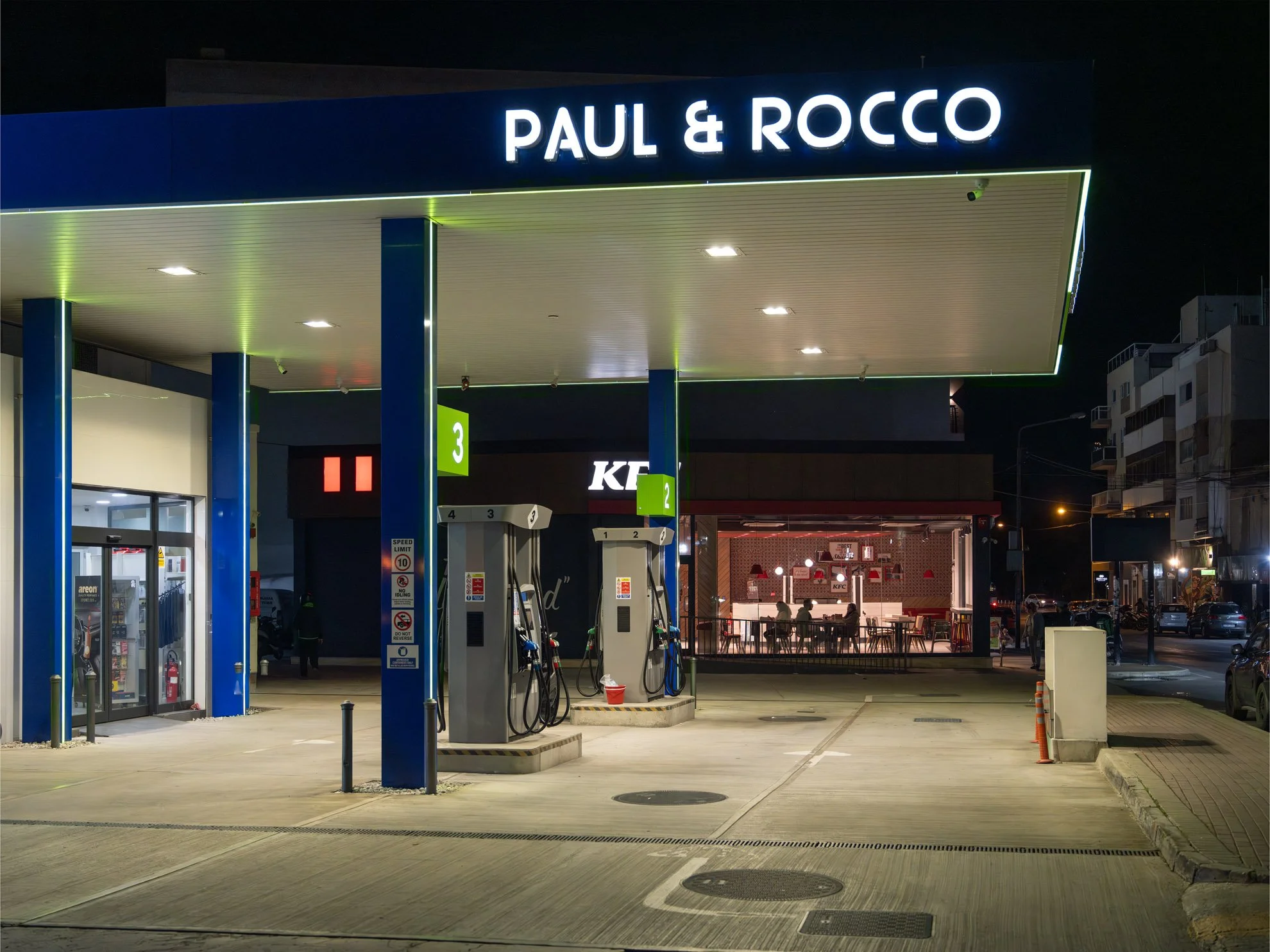
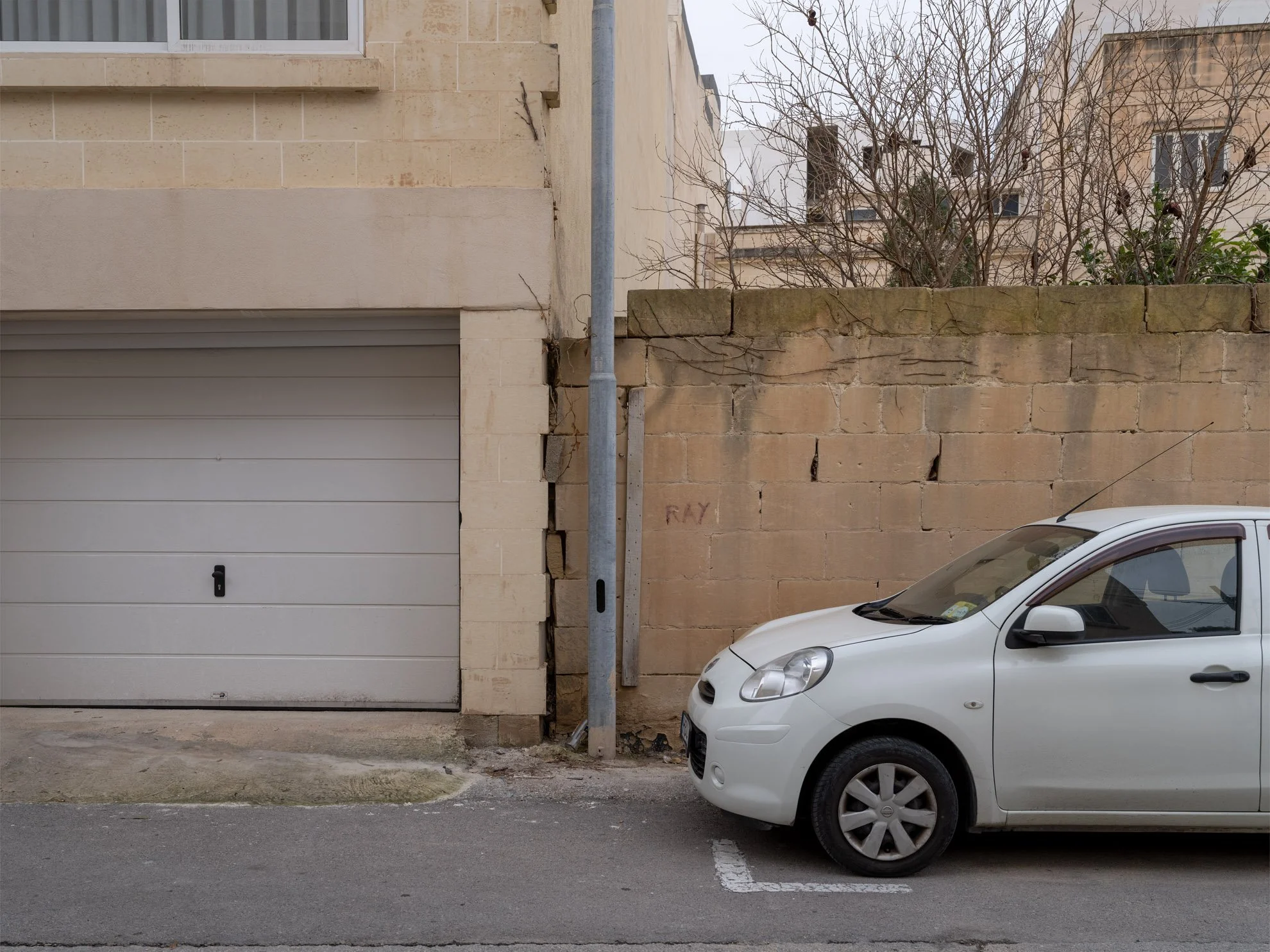
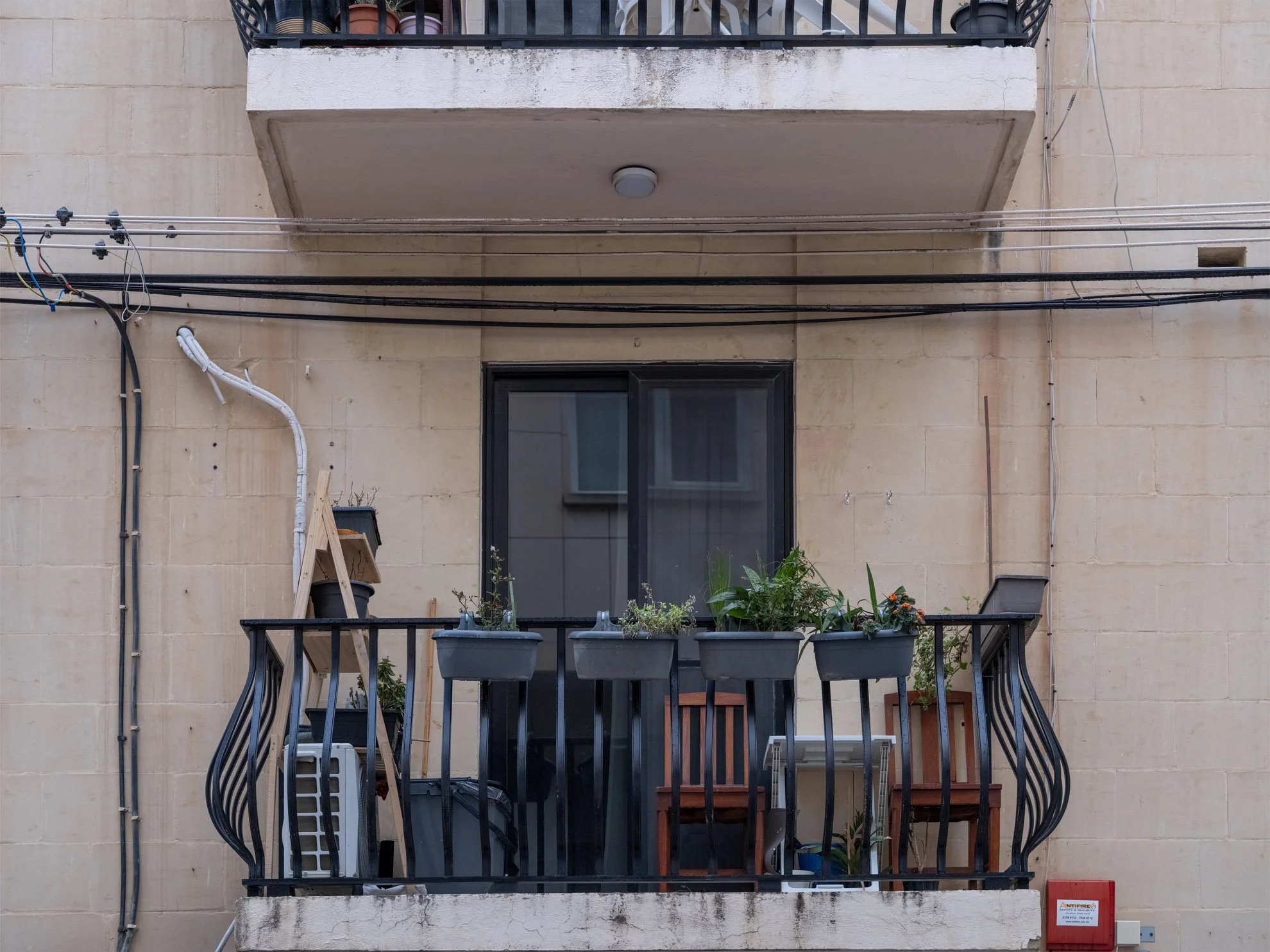
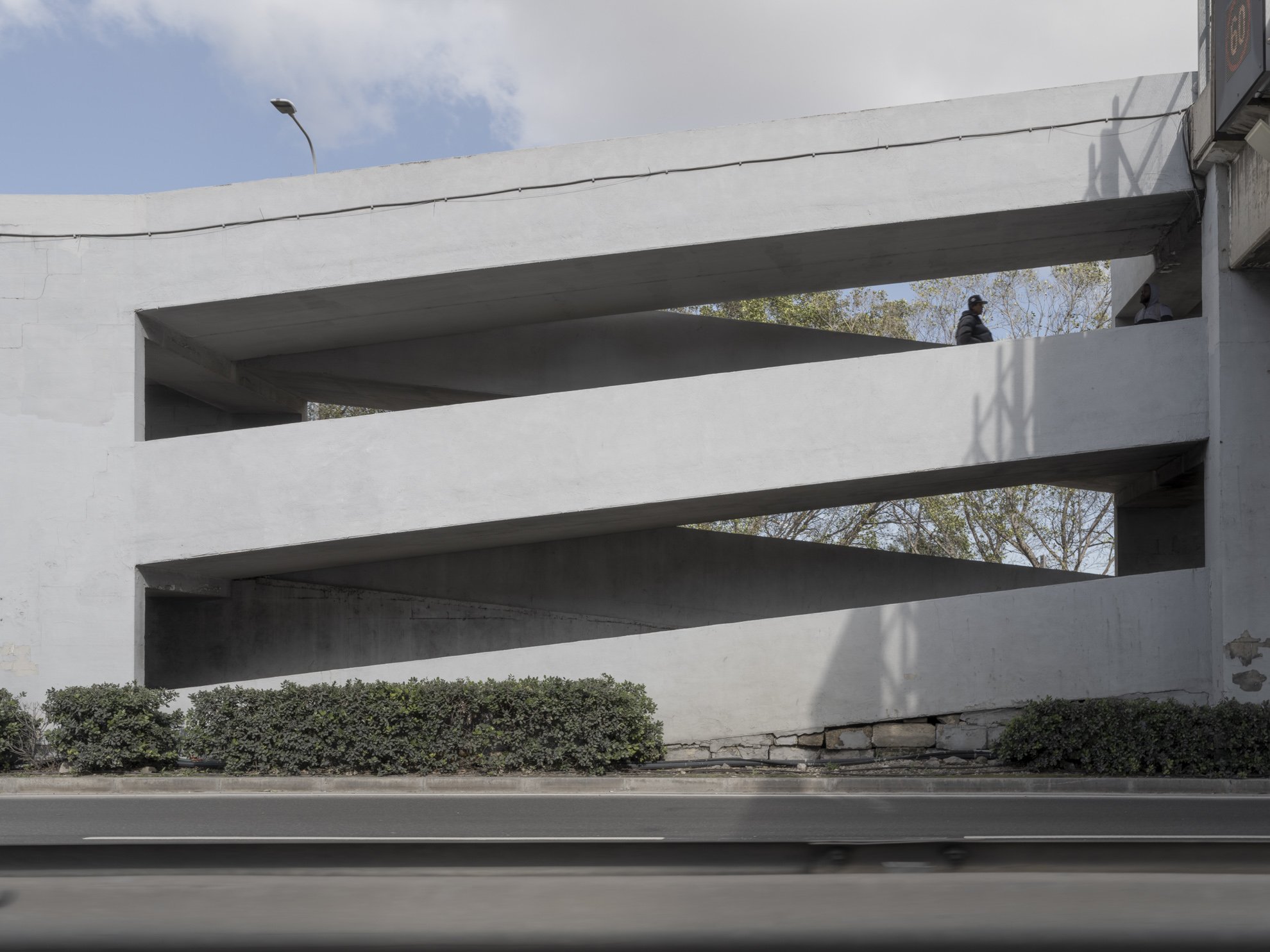
Assumed Safety explores environments that appear benign yet carry latent conditions of vulnerability. Moving across urban, industrial, and natural landscapes, the work focuses on spaces where visibility is fragmented, movement is uncertain, and spatial control is ambiguous. Rather than depicting events, the images examine how unease can be embedded within the structure of a place itself. The project forms part of an ongoing practice-based research into how landscapes reveal, conceal, or anticipate human experience.
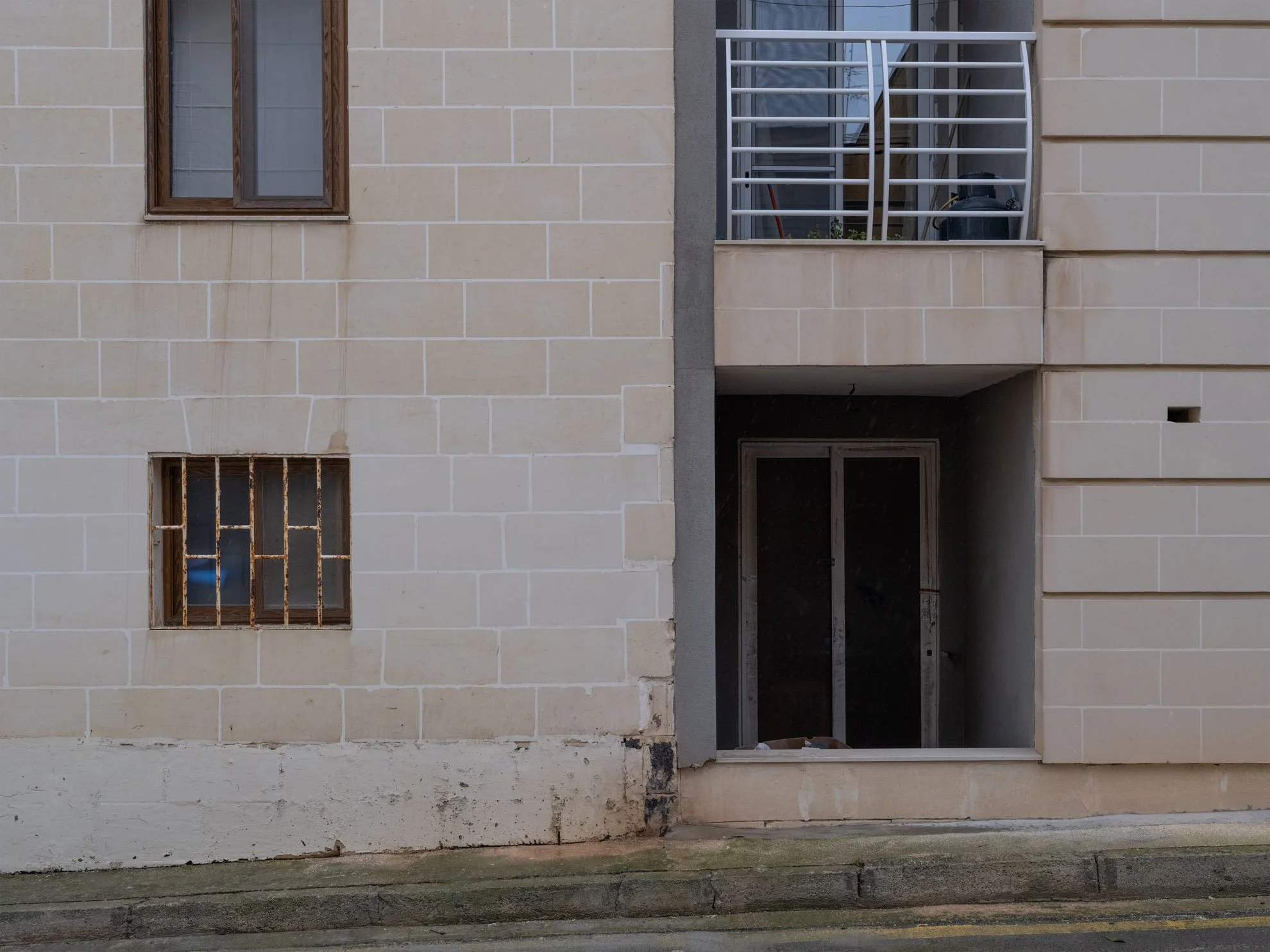
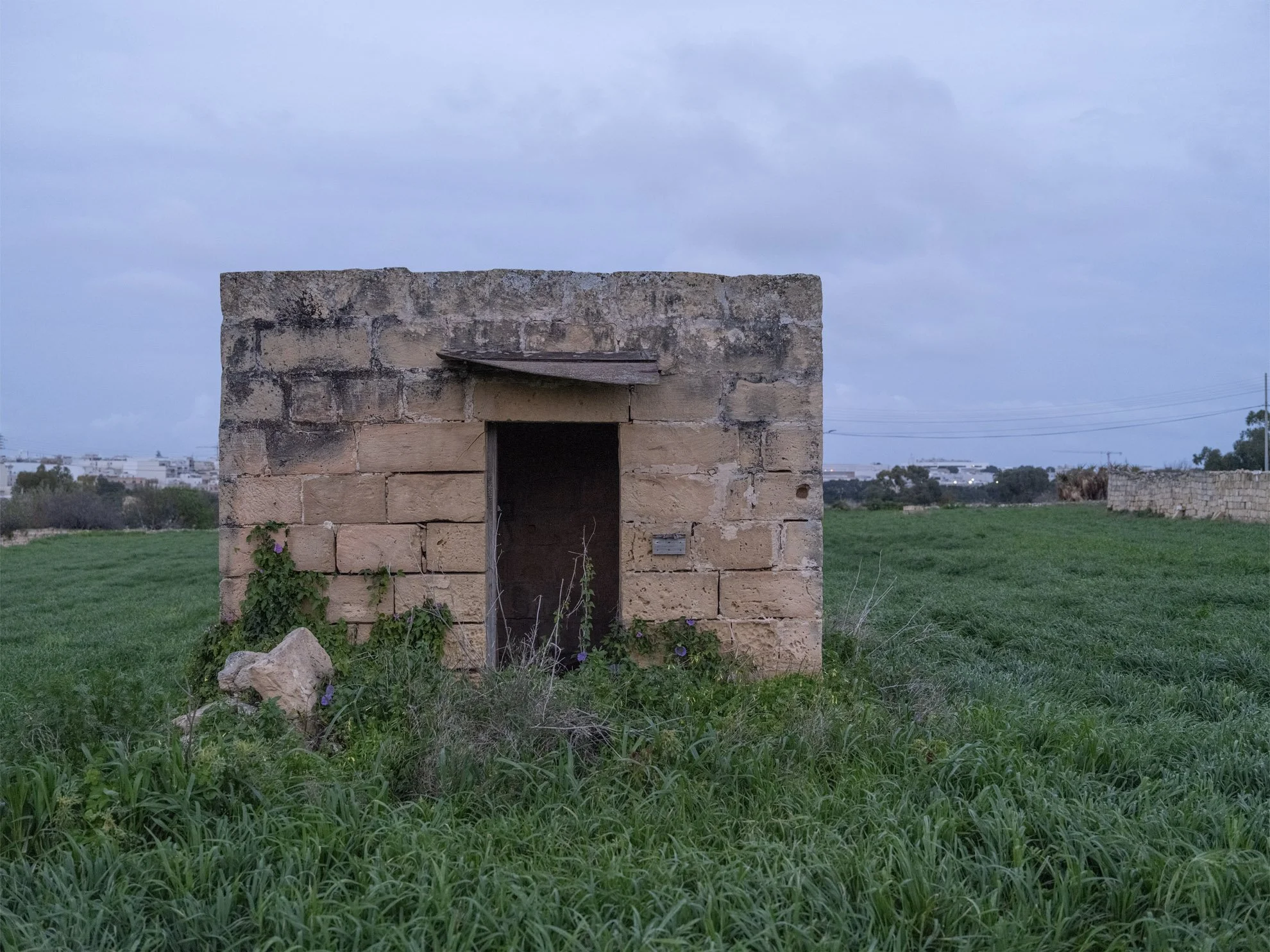
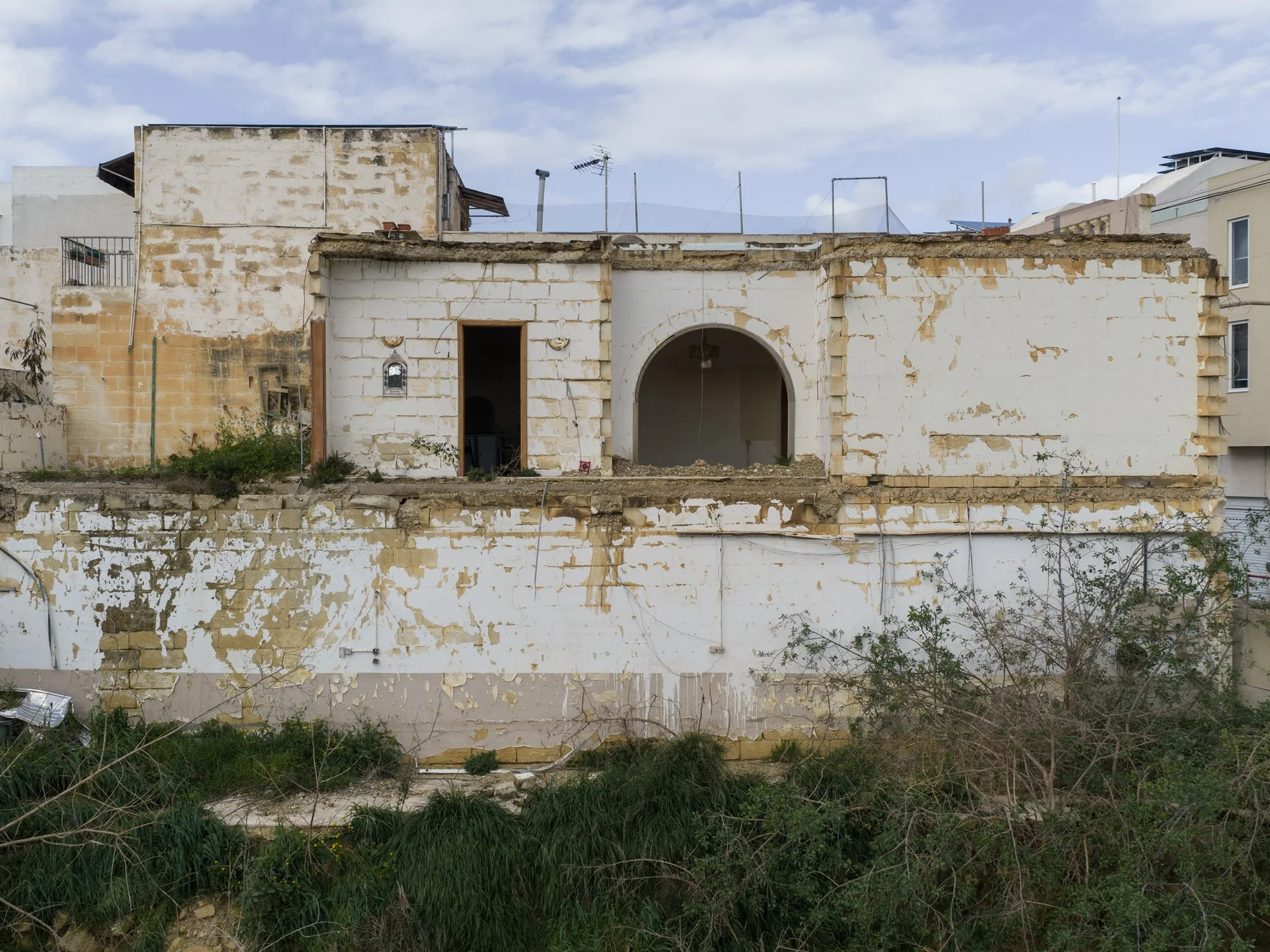
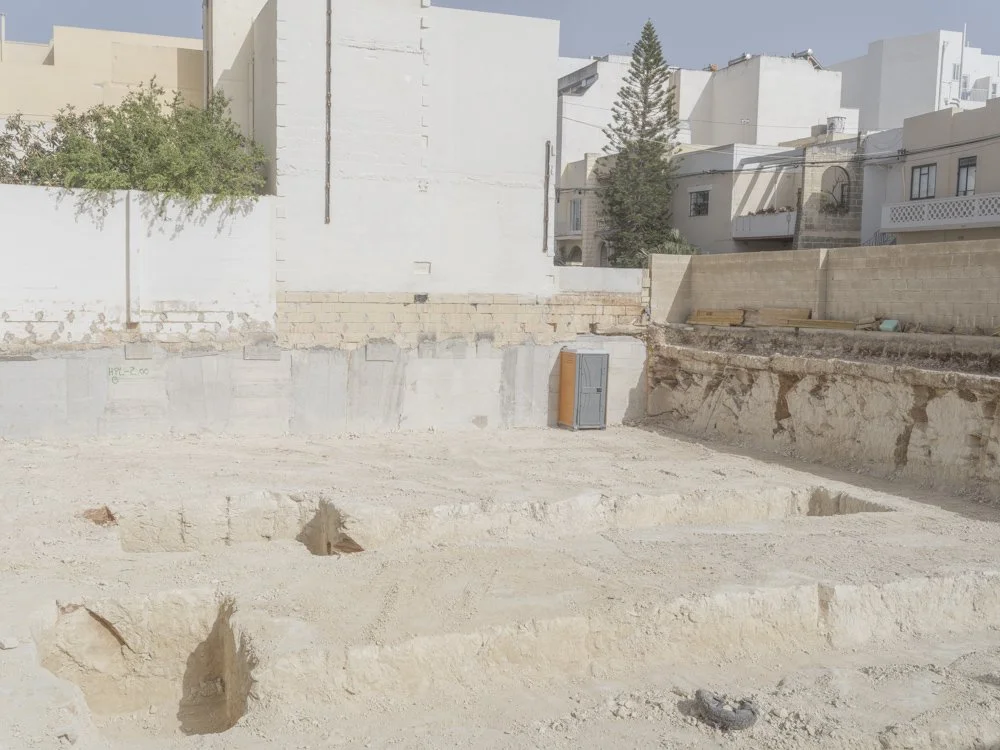
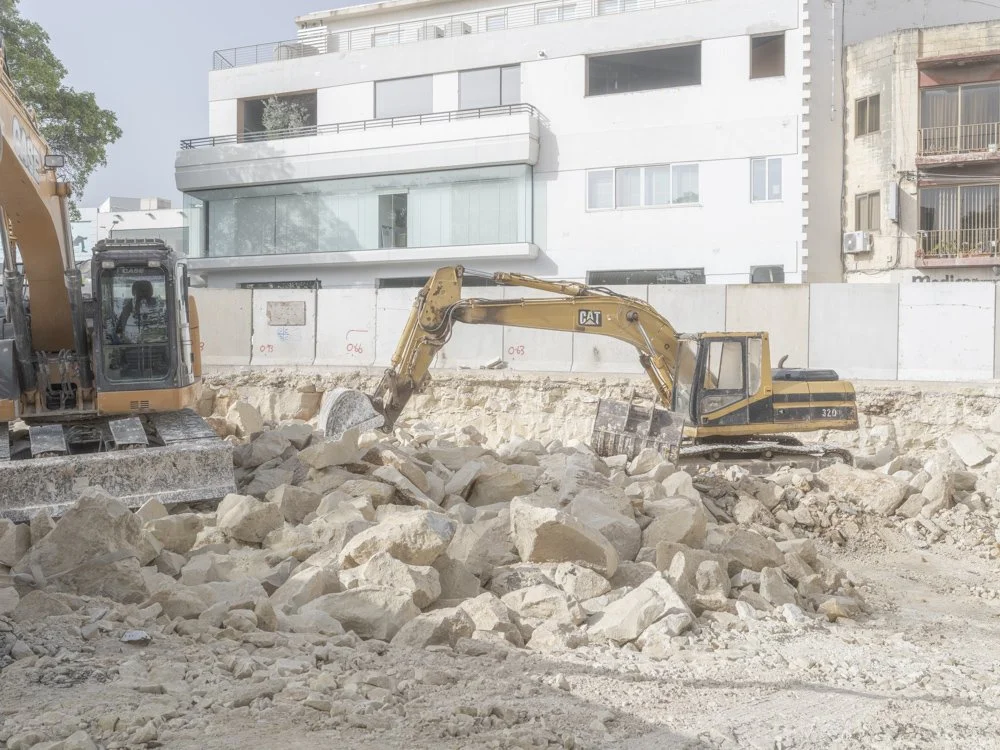
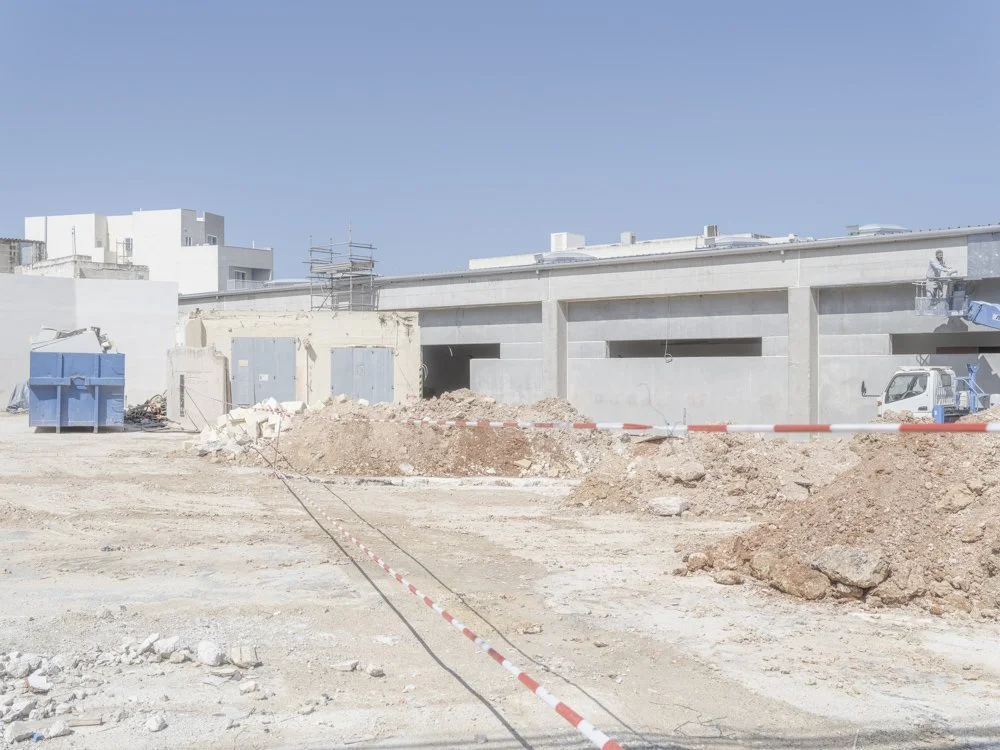
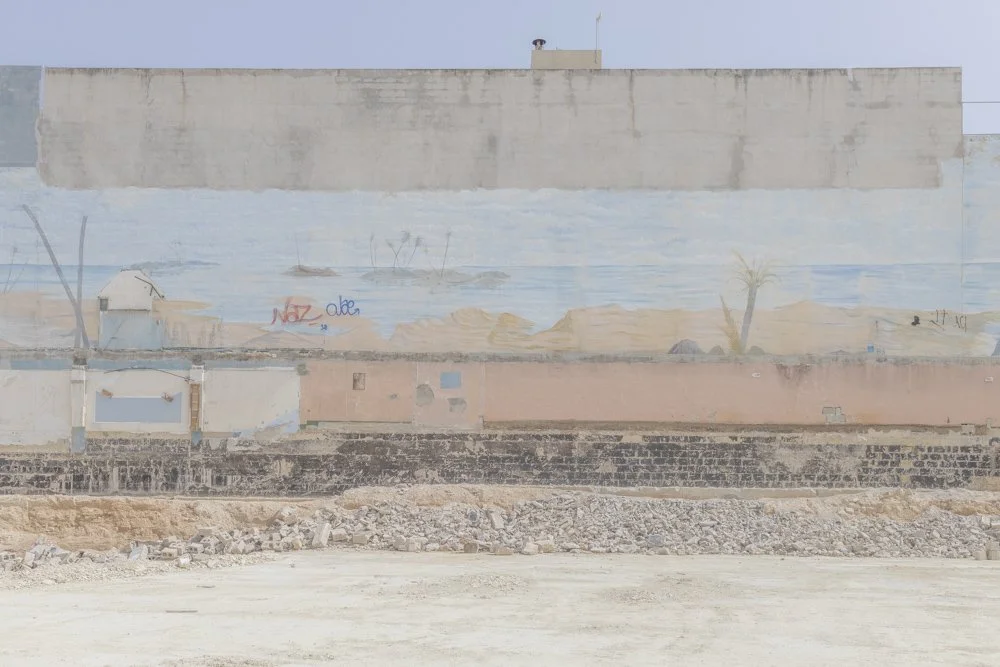
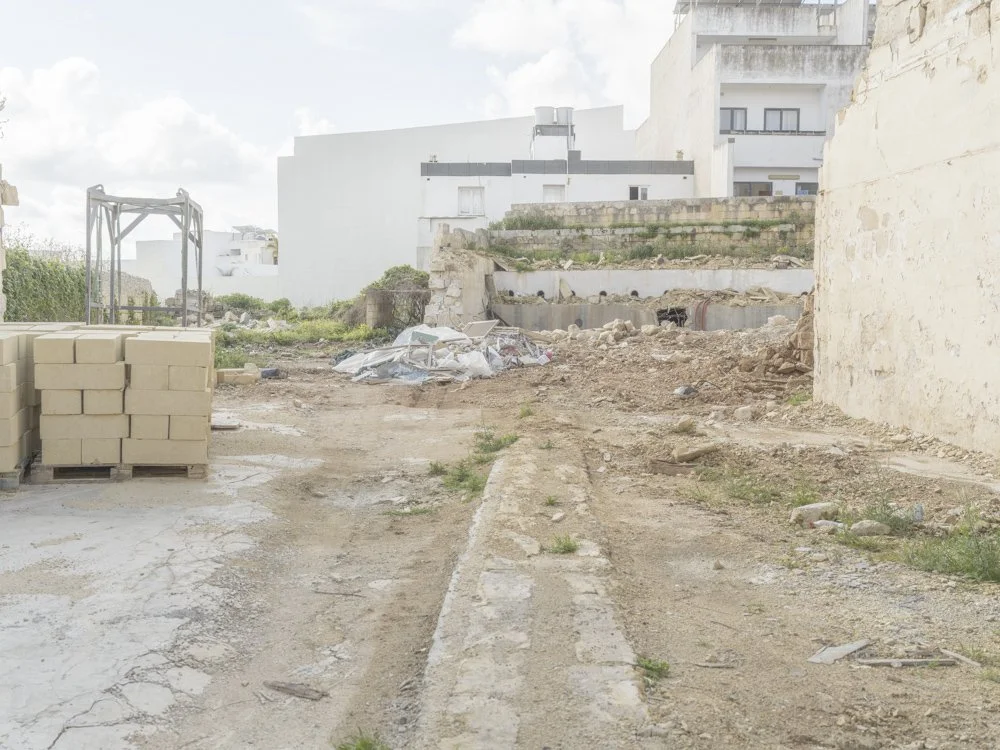
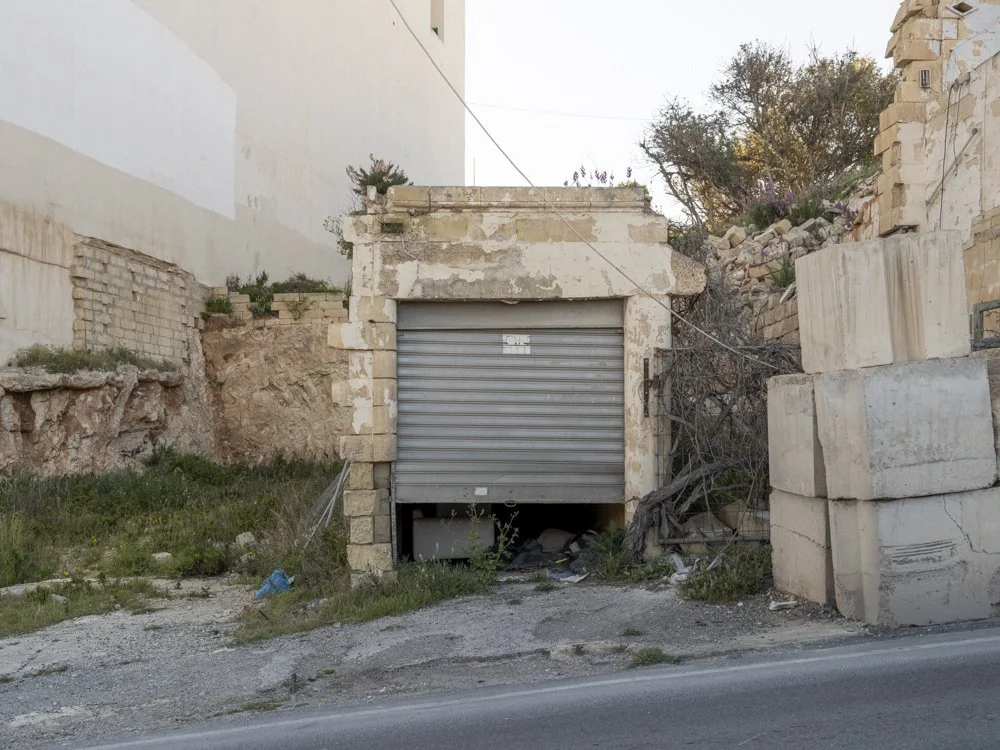
Subtraction examines architecture through acts of removal, where absence operates as a spatial index of what has been extracted. The work focuses on sites where buildings have been partially or fully removed, exposing interiors and reconfiguring the relationship between façade, depth, and ground.
Rather than depicting demolition as spectacle, the images adopt a frontal and measured approach, allowing the void to emerge as a material and volumetric presence. What remains is not emptiness, but a reorganisation of space in which interiors become exterior, and boundaries are redefined through loss.
The project considers how urban environments are continuously edited through processes of extraction, leaving behind spaces that are neither complete nor resolved. These sites function as quiet evidence of transformation, where absence becomes legible and architectural continuity is interrupted.
Subtraction is an ongoing body of work.
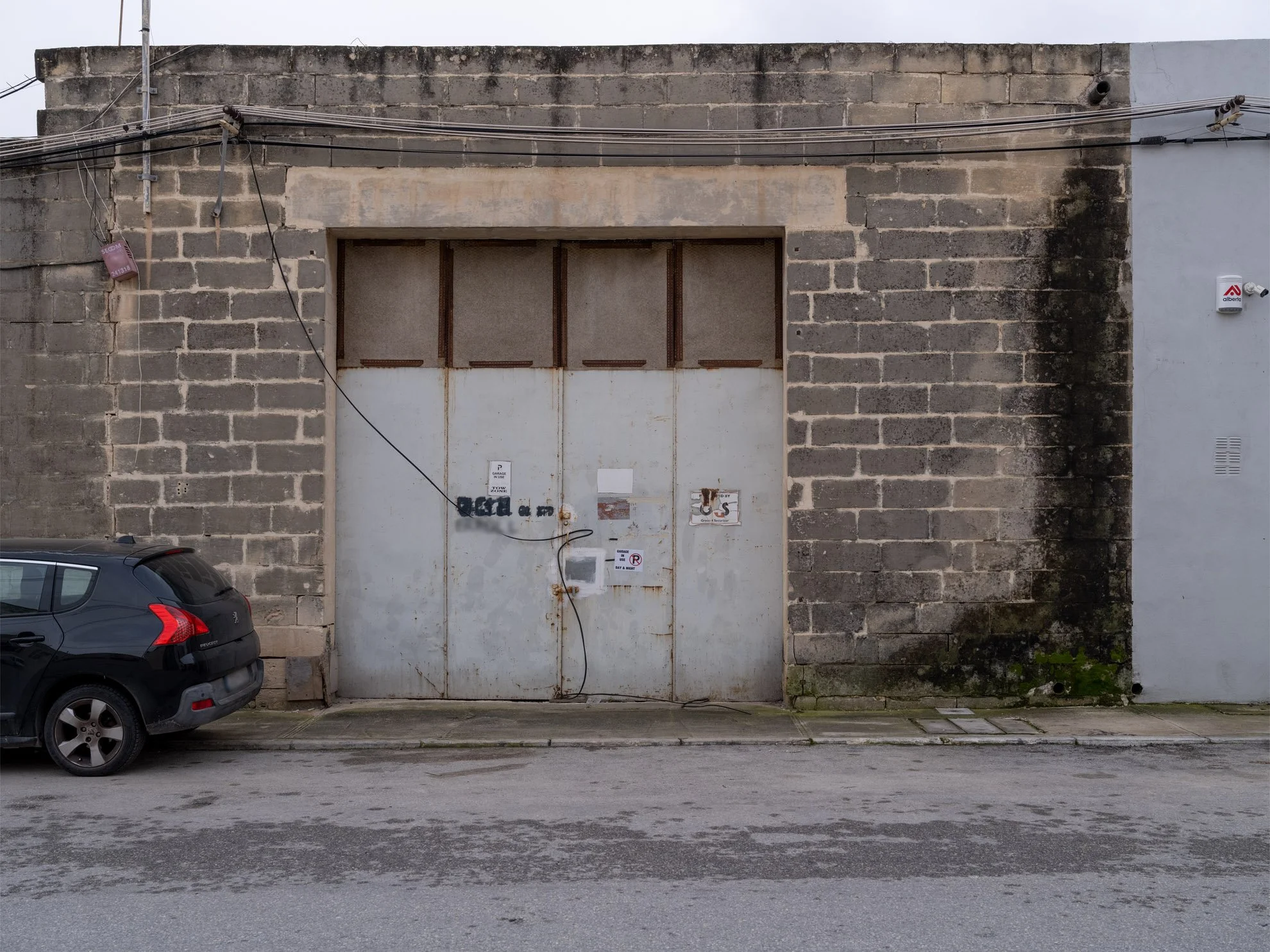
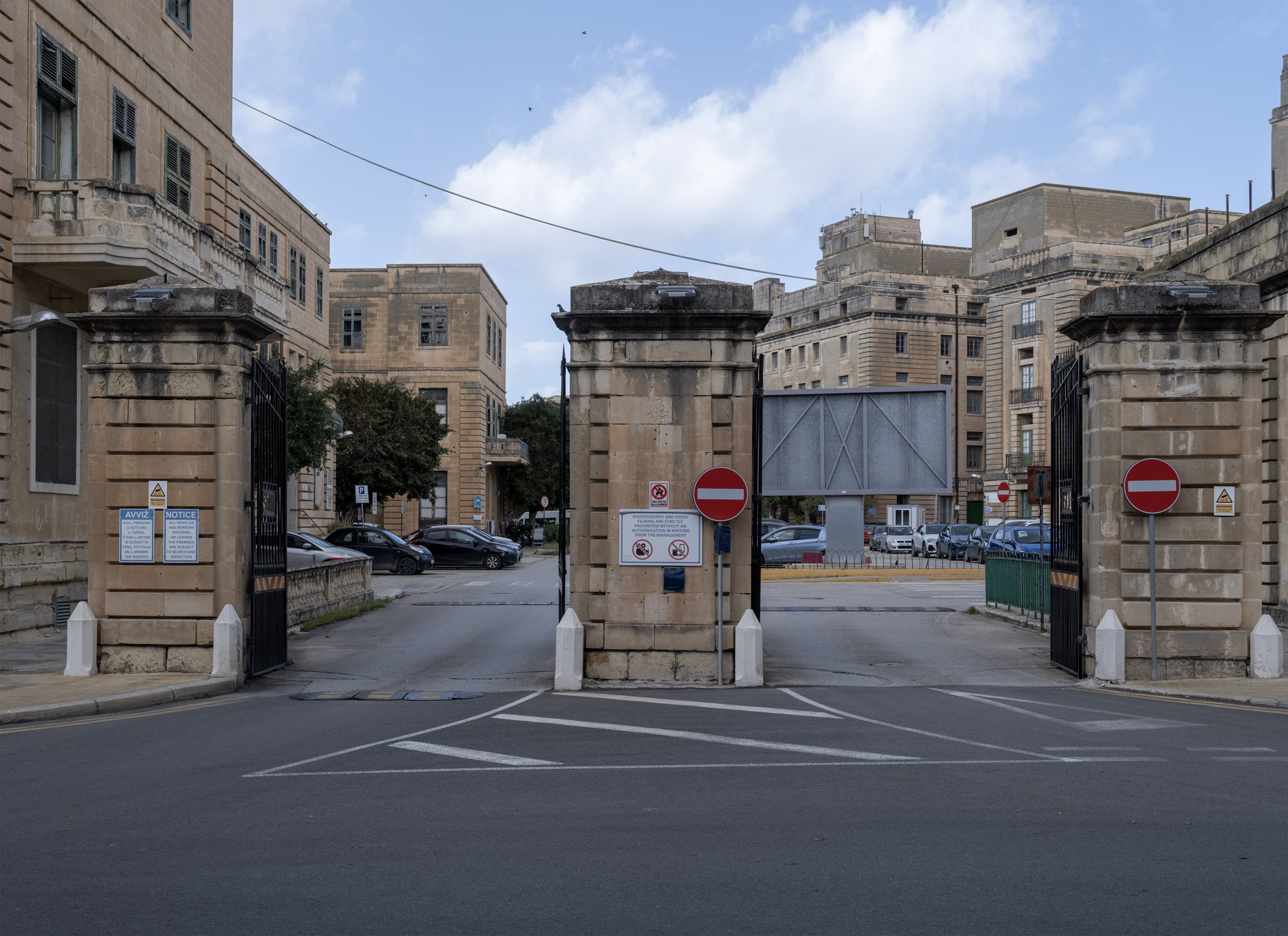
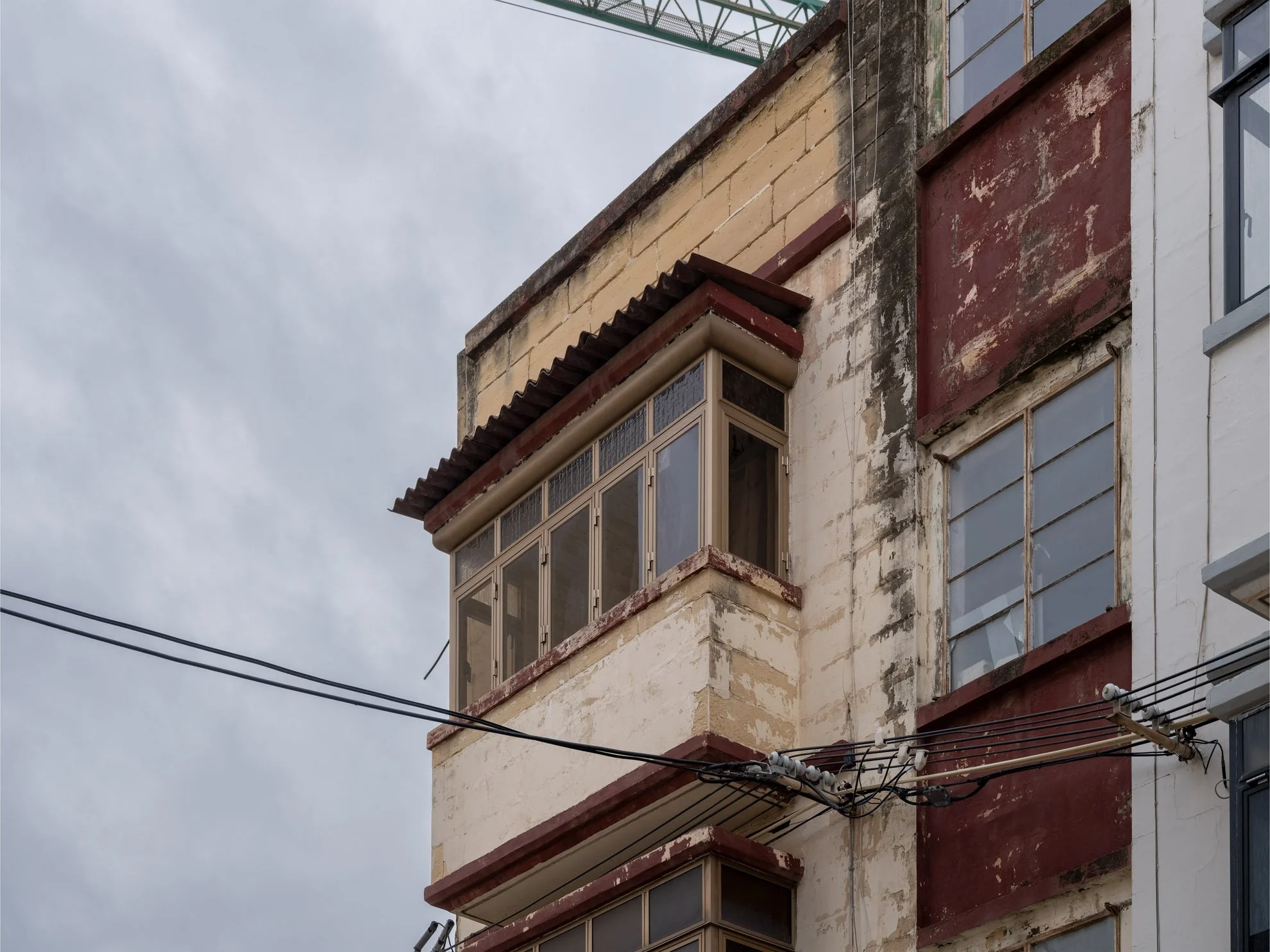
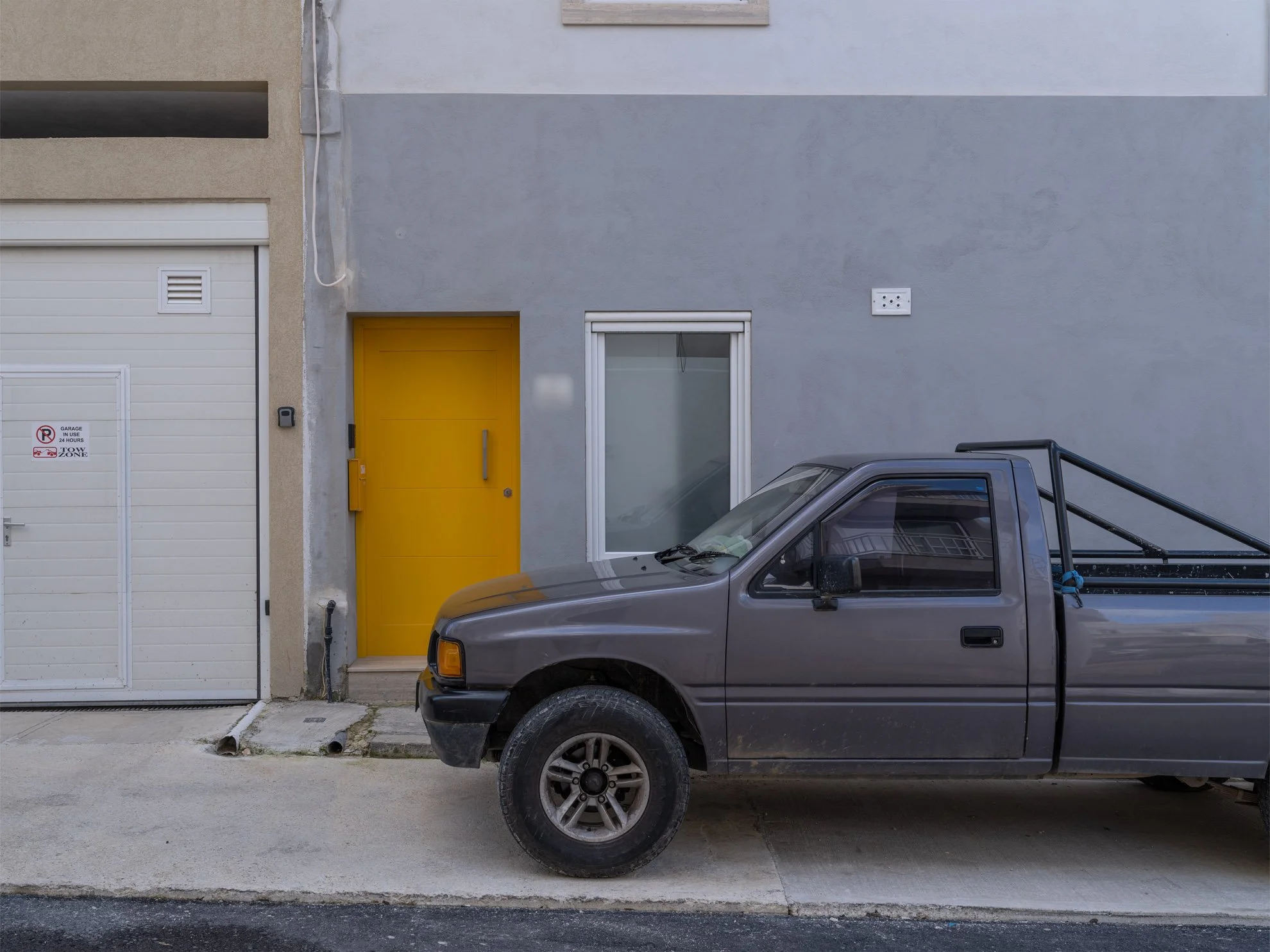
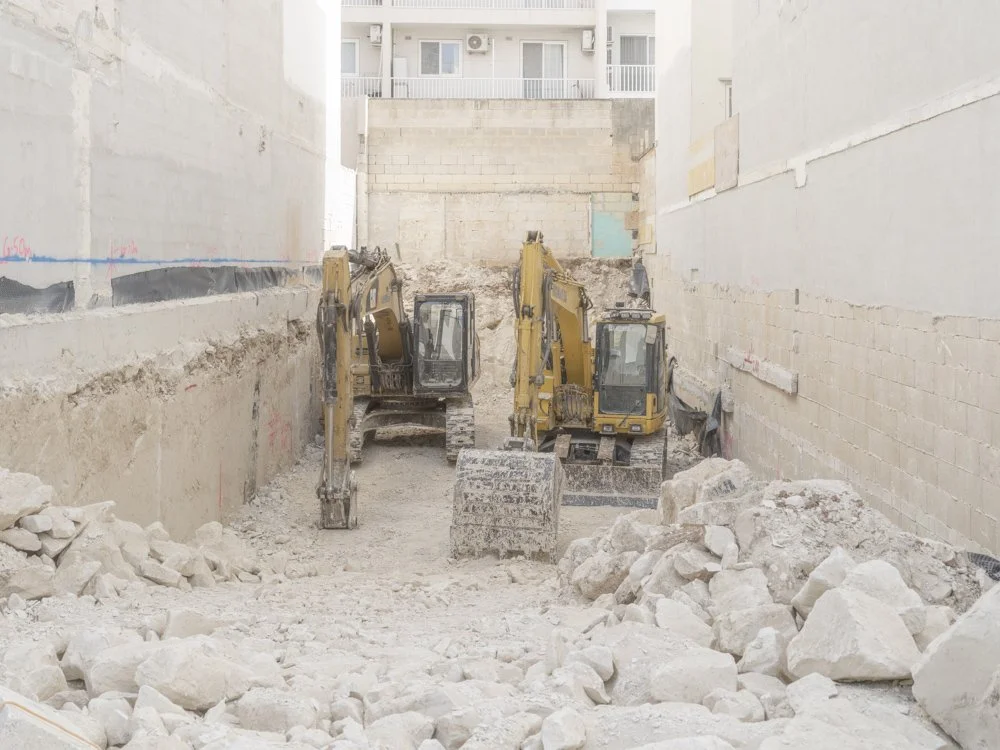
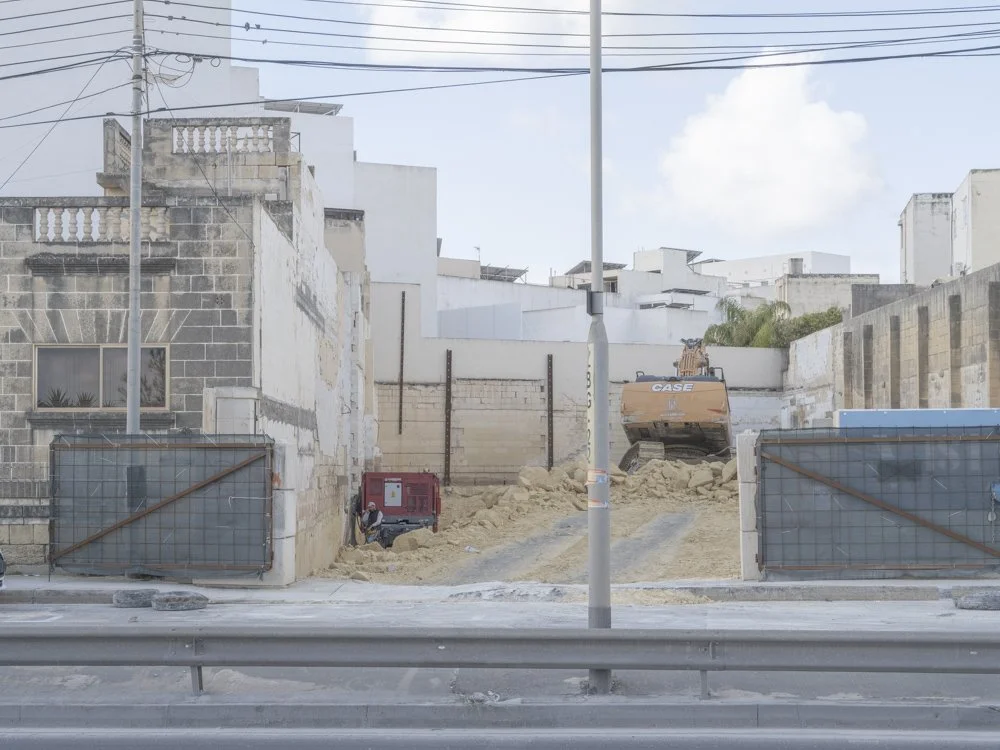
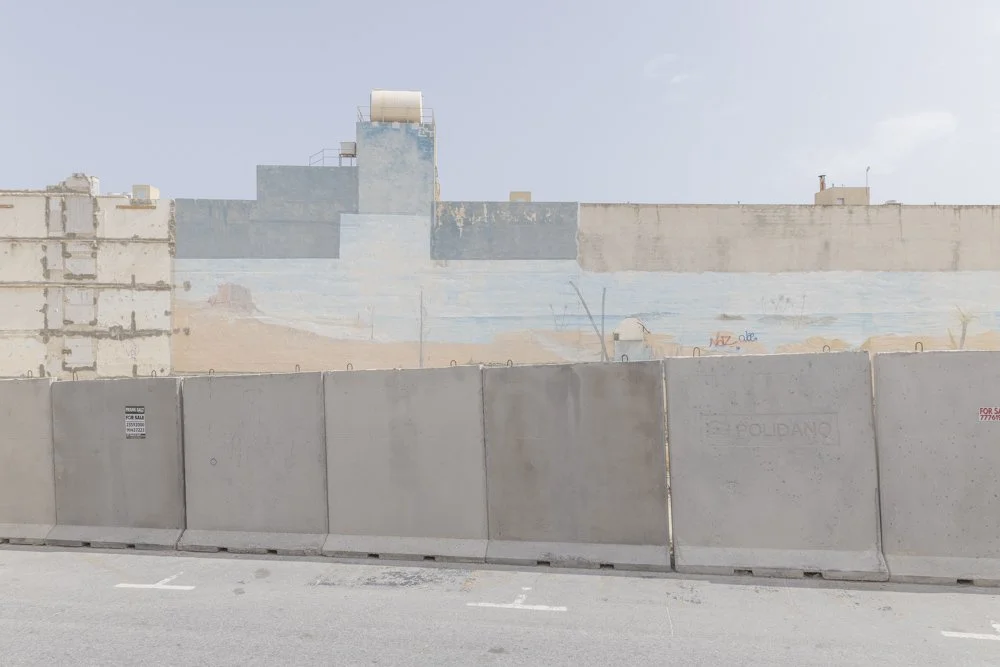
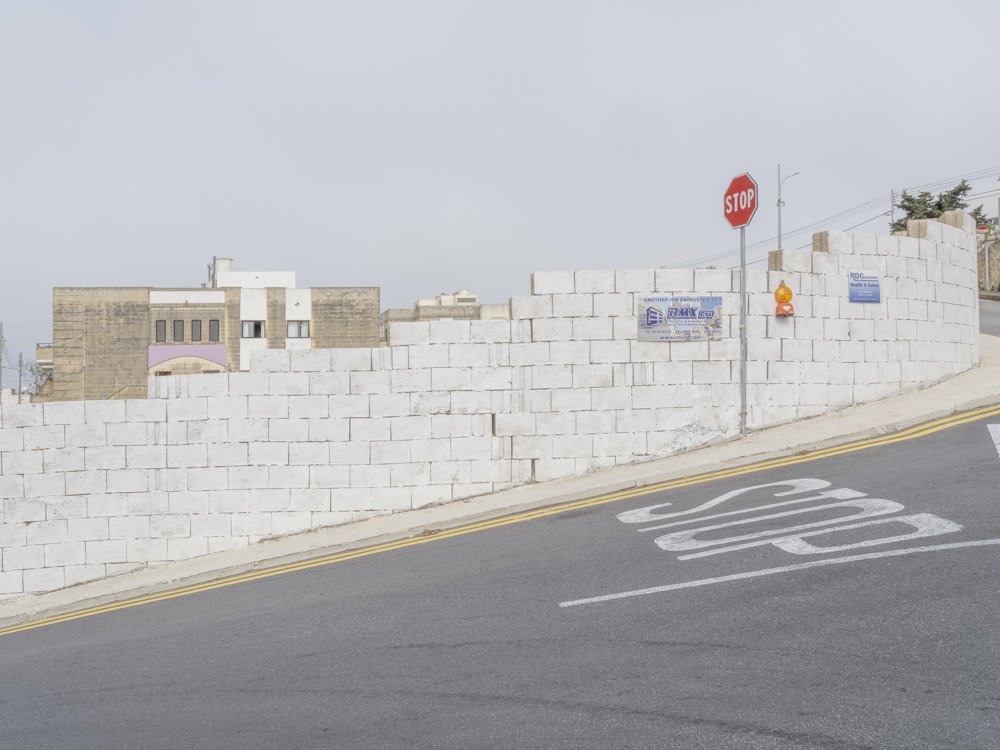
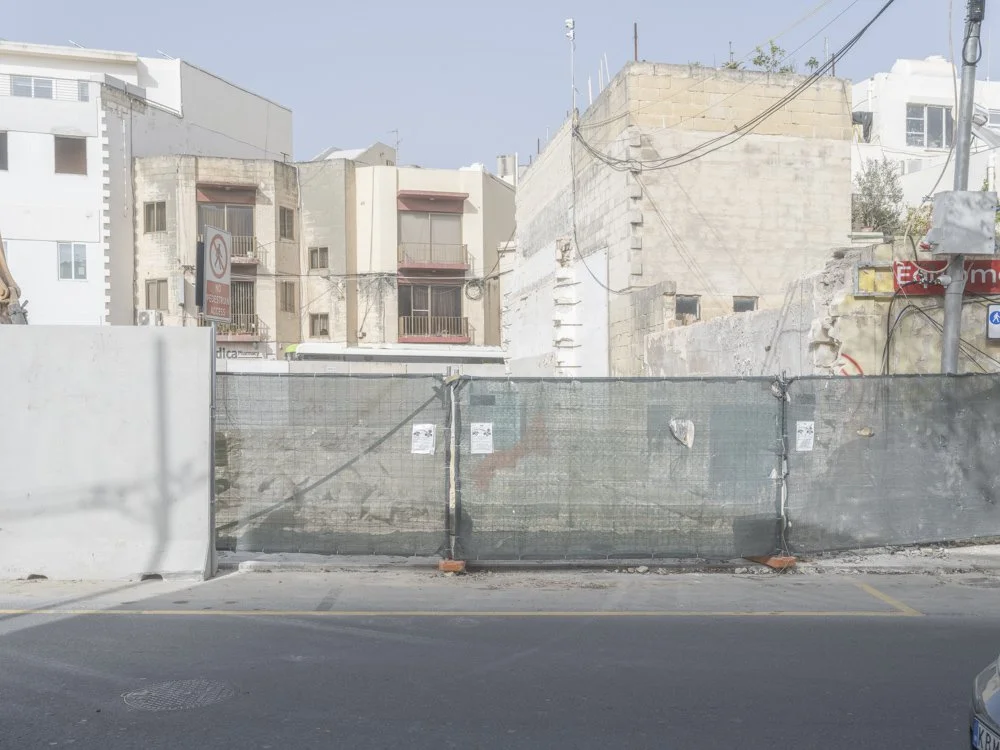
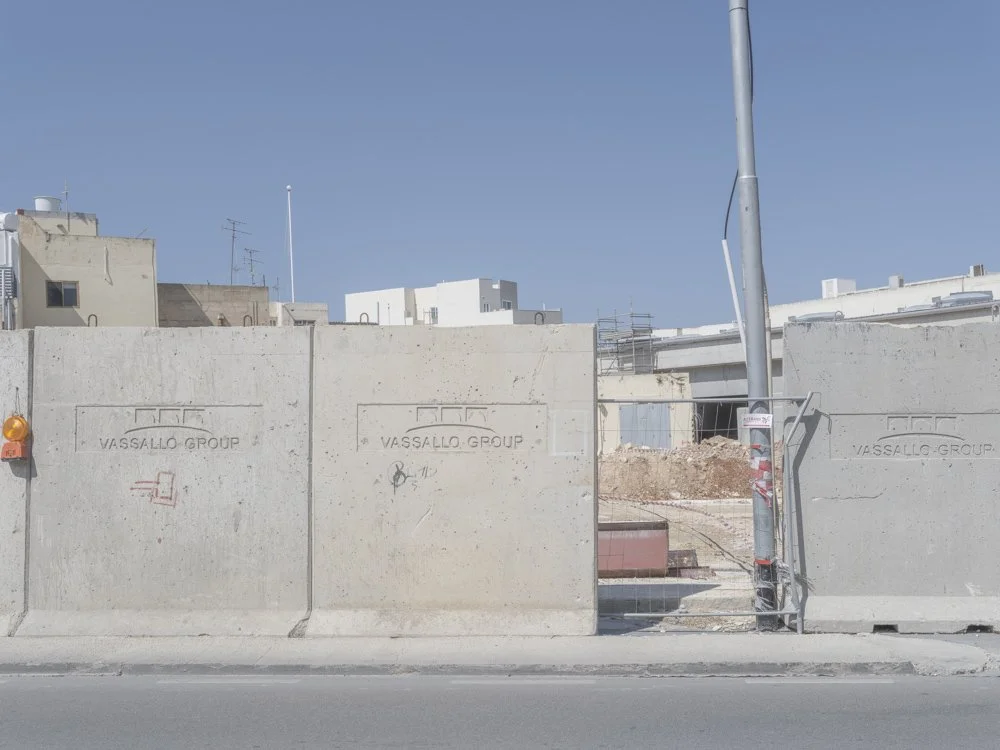
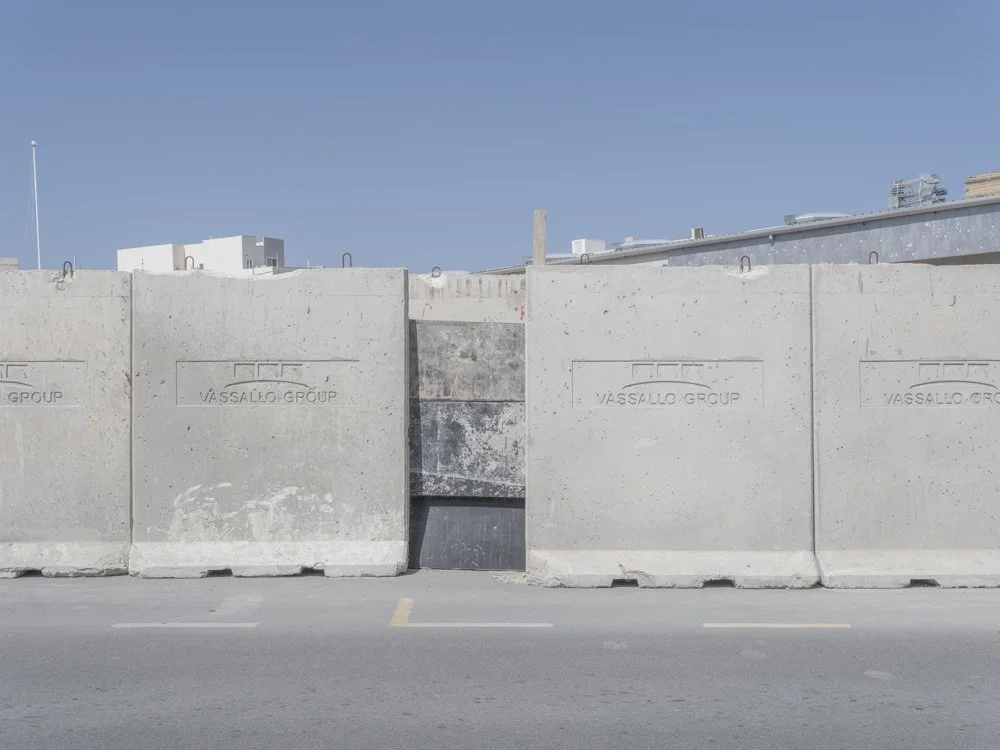
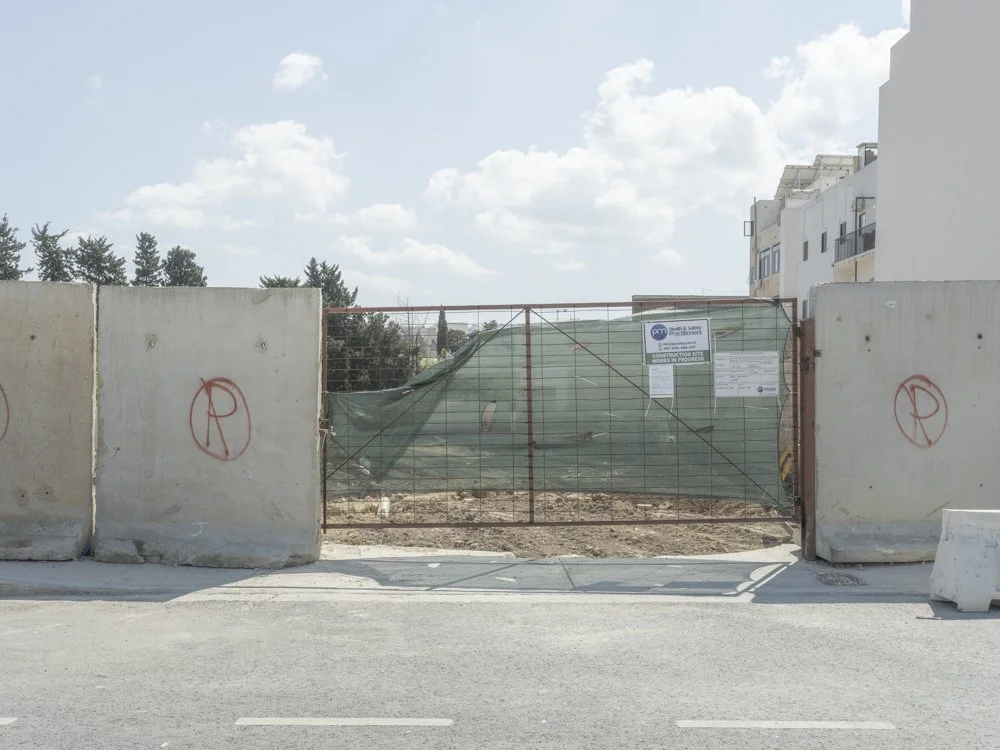
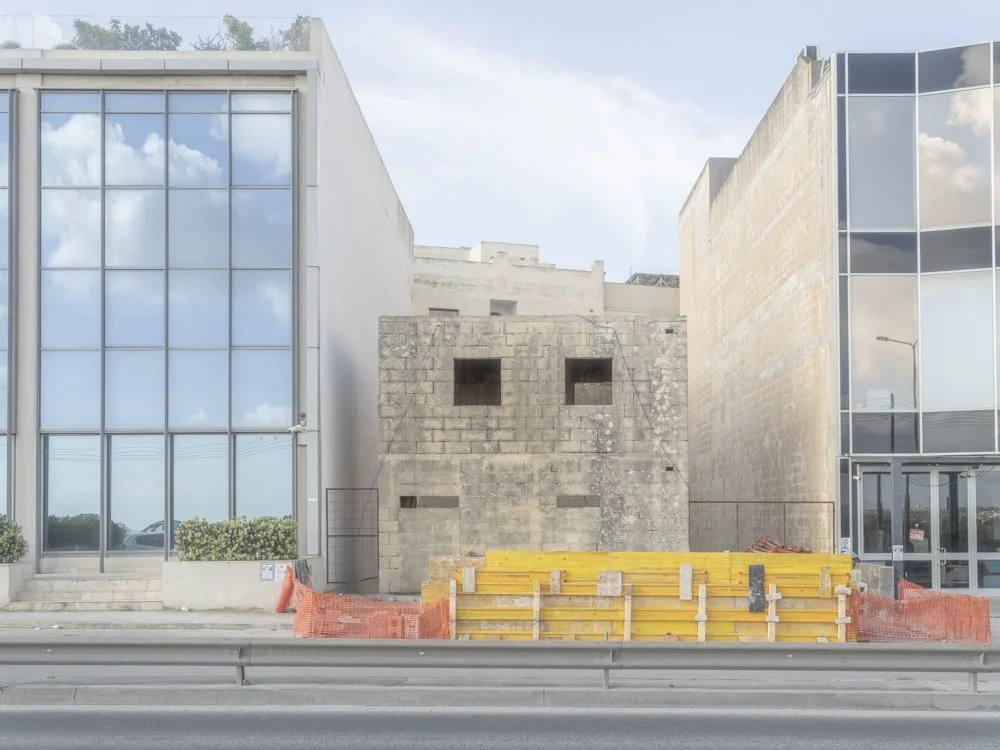
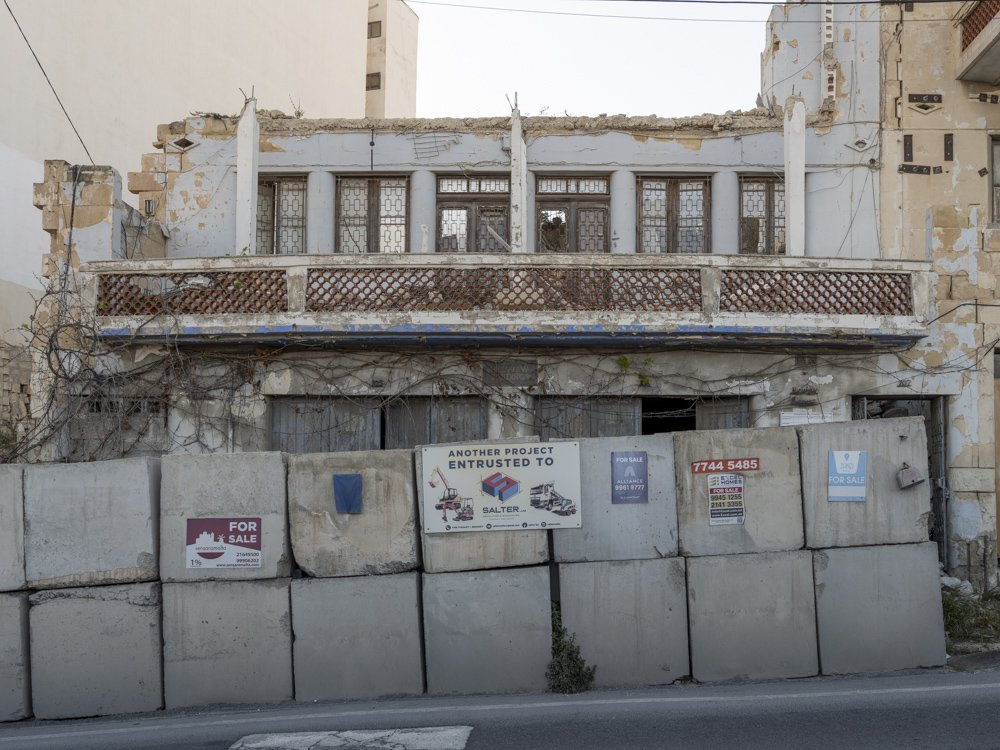
Interim examines urban spaces held in a state of controlled transition, where architecture is neither fully present nor entirely removed. Through barriers, hoardings, and temporary structures, access is restricted and visibility is carefully managed, producing sites that are simultaneously concealed and partially revealed.
The work focuses on the conditions that emerge during processes of development, where past traces remain visible while future forms are anticipated but not yet realised. Painted surfaces, exposed walls, and construction materials coexist, creating layered temporalities within a single frame.
Rather than documenting construction, the images consider how these spaces are mediated, how they are seen, accessed, and understood through systems of control. The resulting sites are neither stable nor resolved, but held in an interim state where transformation is ongoing and incomplete.
Interim is an ongoing body of work.
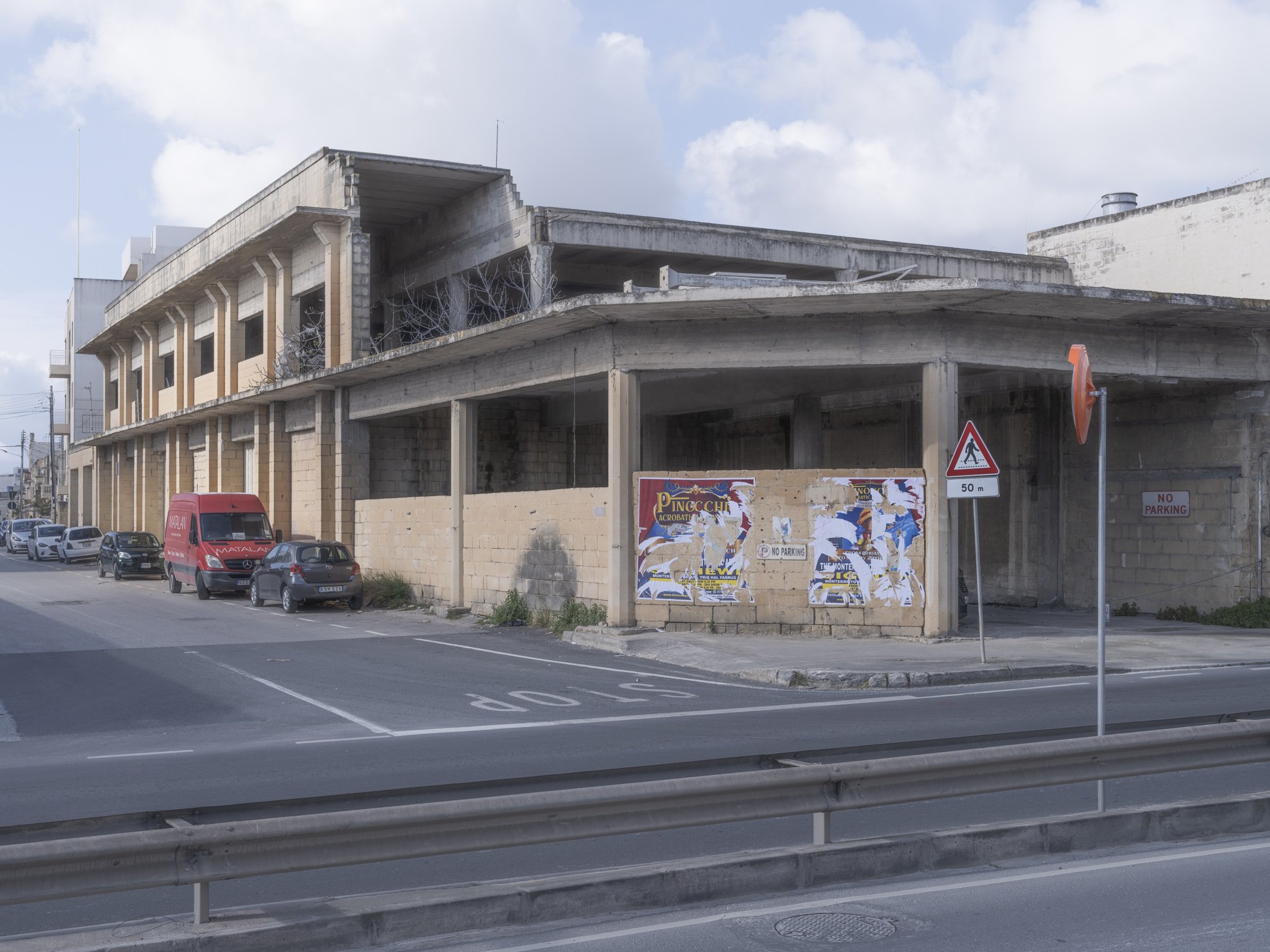
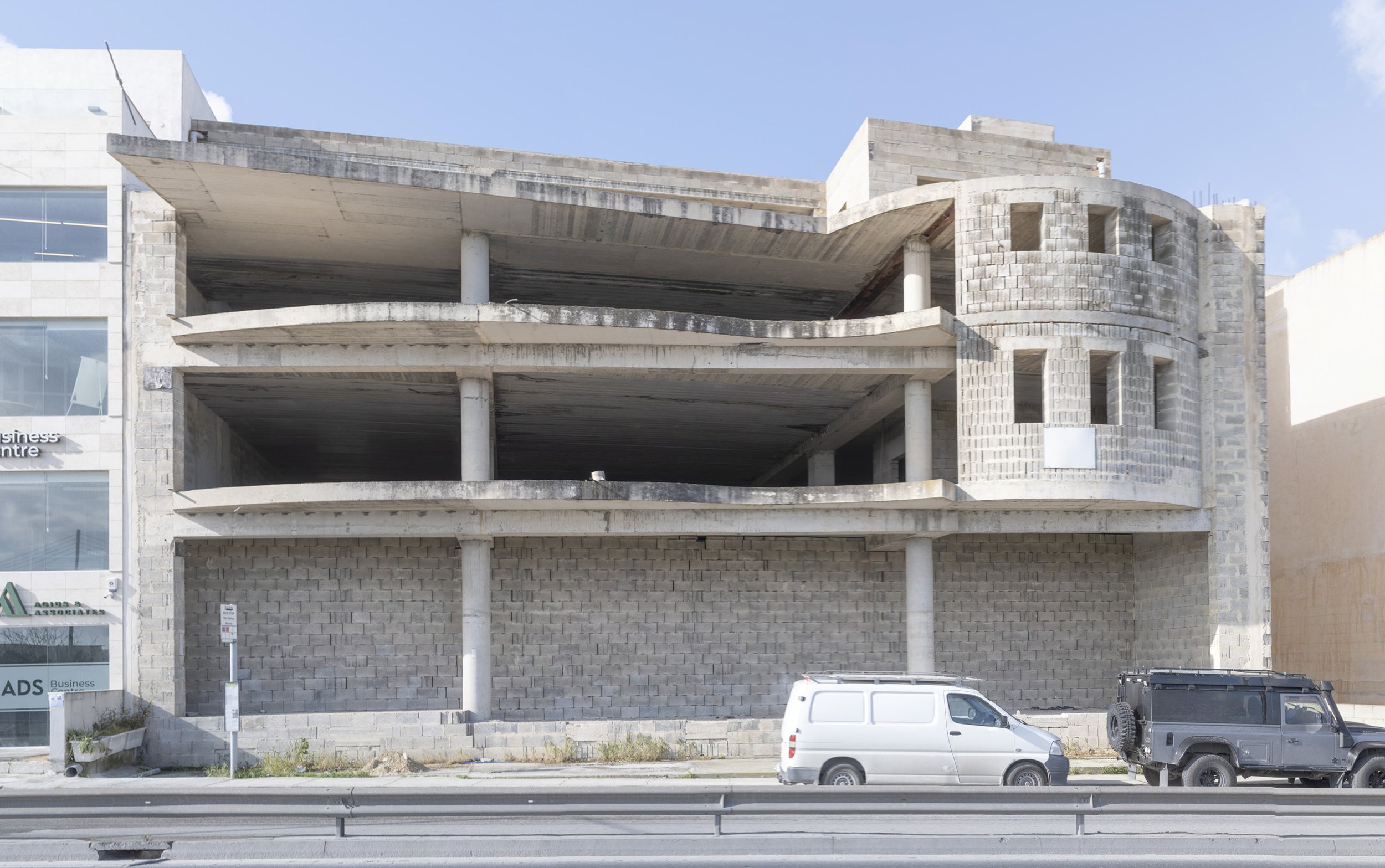
Deferred examines architectural structures that remain incomplete, where construction has begun but resolution has not been achieved. These buildings occupy a suspended condition in which intention is evident, yet function is absent.
The work focuses on spaces that resist clear categorisation: neither active nor abandoned, neither finished nor in progress. Exposed frameworks, unsealed volumes, and halted developments reveal architectures that appear paused, as if awaiting a future that may not arrive.
Rather than documenting decay or construction, the images consider how time operates within the built environment—how certain structures become held in prolonged delay, detached from their intended purpose. In these sites, architecture persists without fulfilment, producing a quiet tension between potential and inertia.
Deferred is an ongoing body of work.
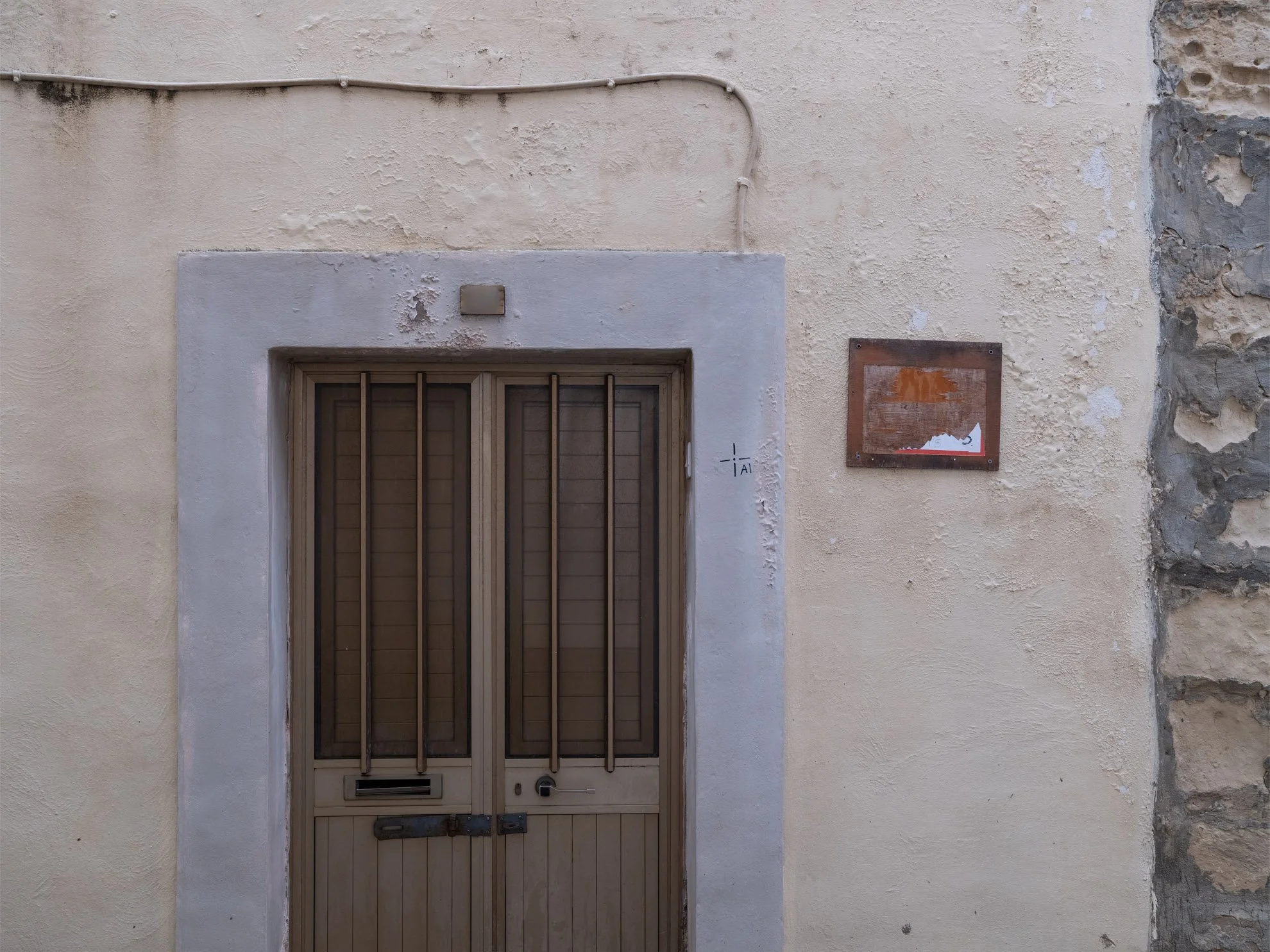
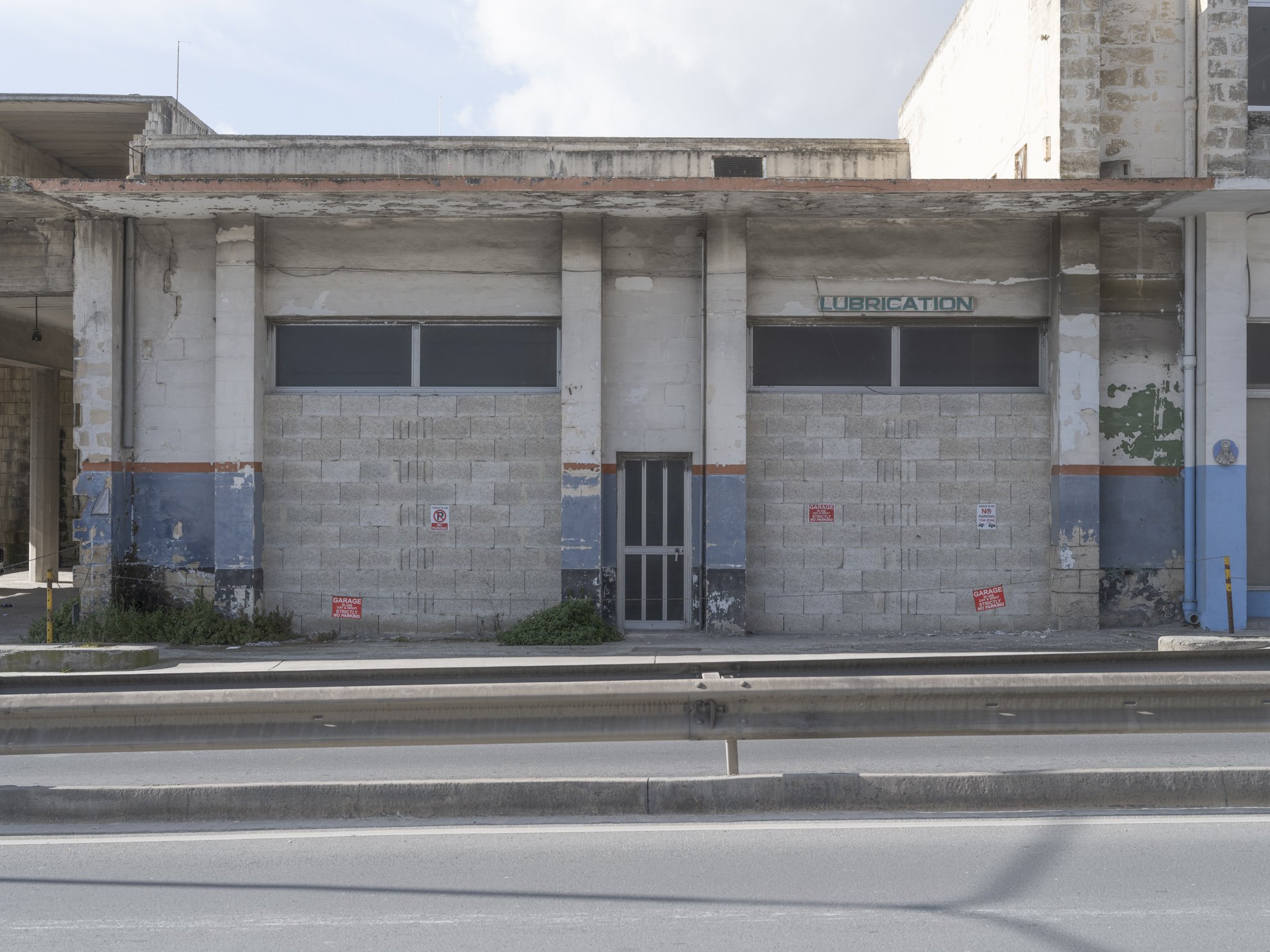
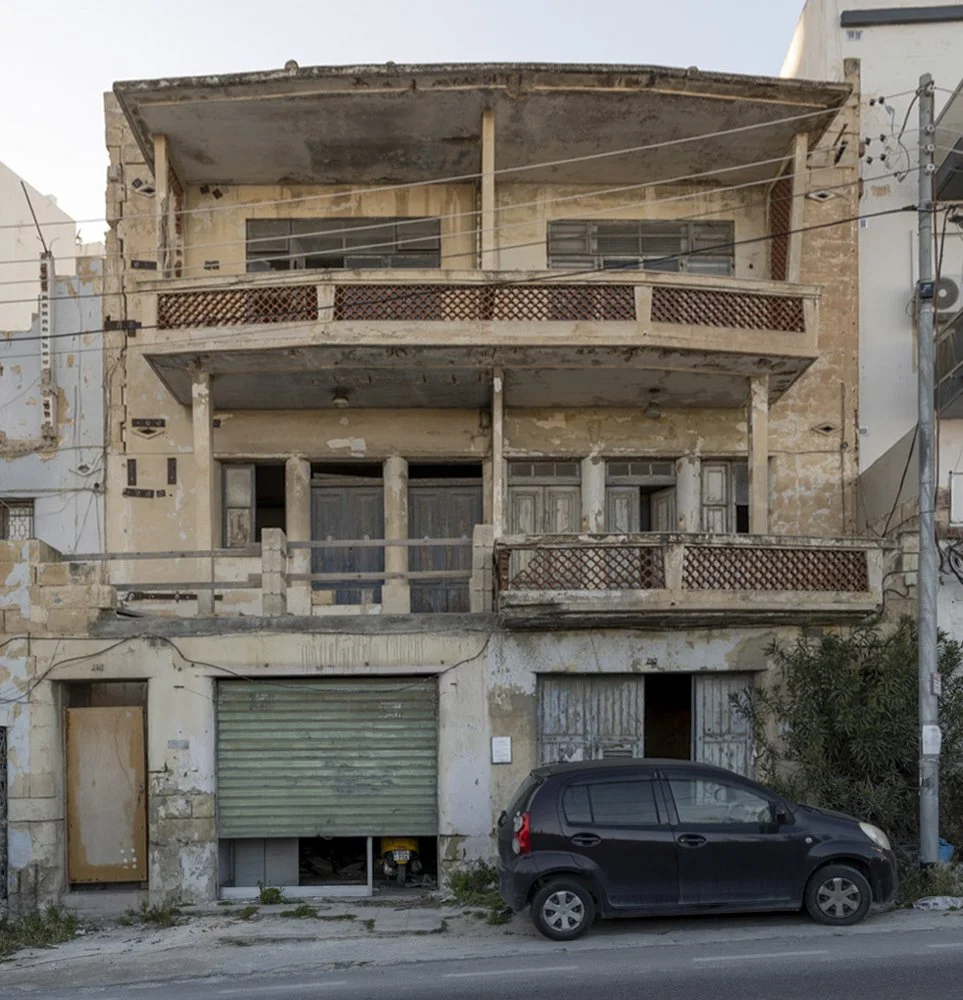
This body of work examines architectural structures that remain physically present while undergoing gradual deterioration over time. Rather than focusing on demolition or immediate transformation, the work engages with buildings that persist in a state of prolonged neglect, where no visible intervention is made to preserve, restore, or remove them.
These structures exist in a suspended condition between architecture and ruin. Their material surfaces erode, peel, and weaken, yet their form continues to stand. In this state, presence and absence coexist: the building remains visible and intact, while its function, care, and future are increasingly withdrawn.
The work does not approach these sites through an aesthetic of decay, nor through documentary or activist frameworks. Instead, it considers deterioration as a temporal condition, where time, in the absence of intervention, acts upon the structure. This process produces a slow, visible transformation in which the building begins to transition into its own disappearance.
Within this context, the landscape holds a form of pending trauma. The structures are not yet erased, yet their trajectory suggests an inevitable loss. What is observed is not destruction as an event, but erosion as a duration, thus becoming an extended moment in which architecture is allowed to expire in plain sight.