Investigating the Self
2013, revisited 2026
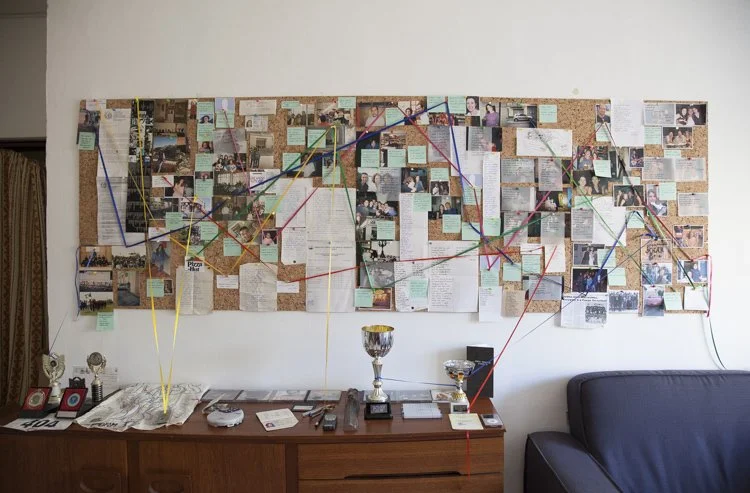
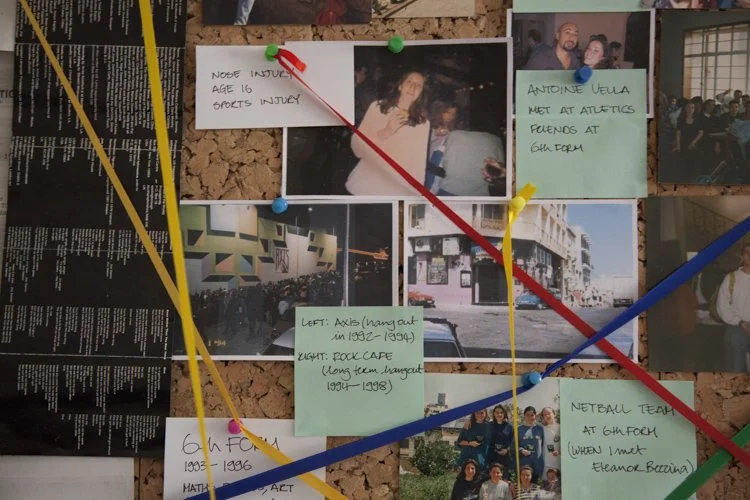
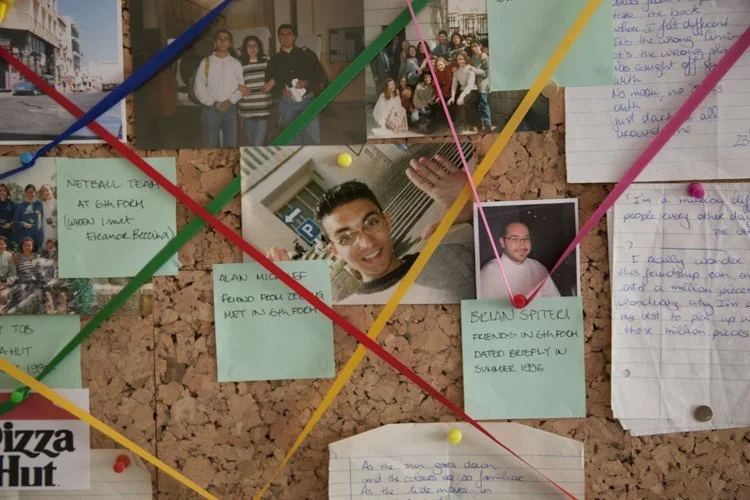
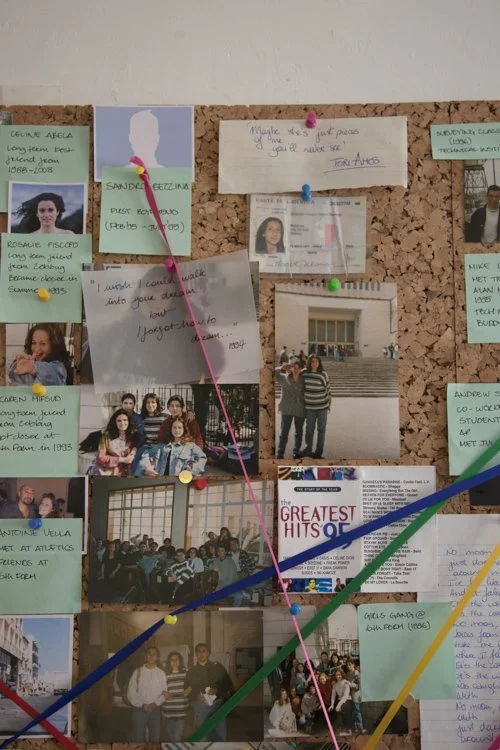
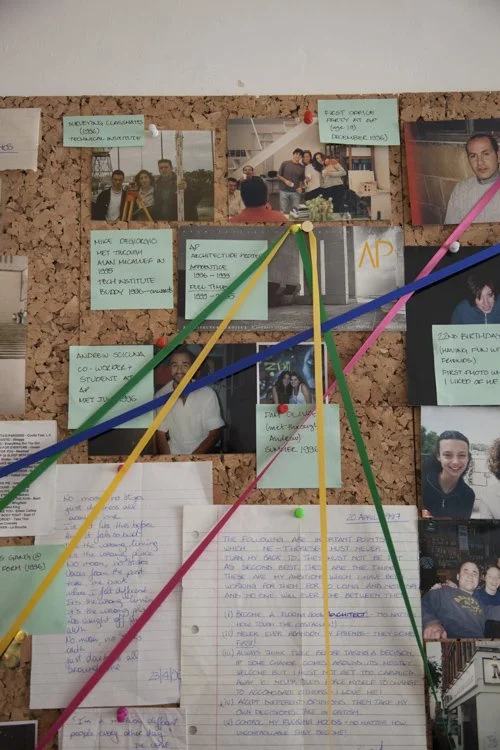
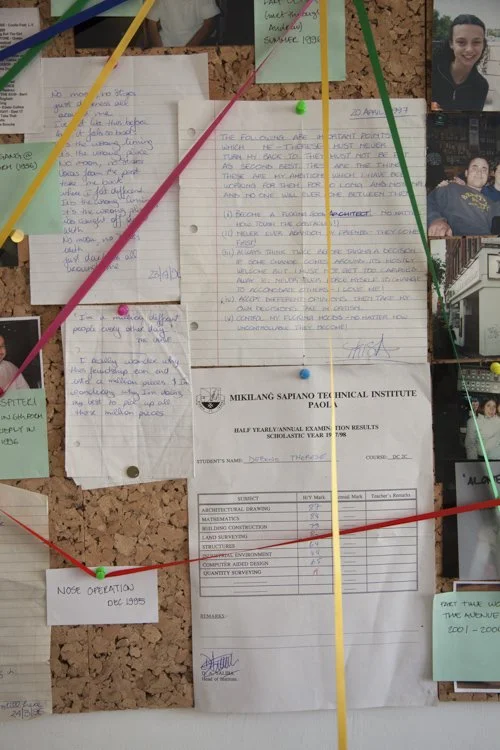
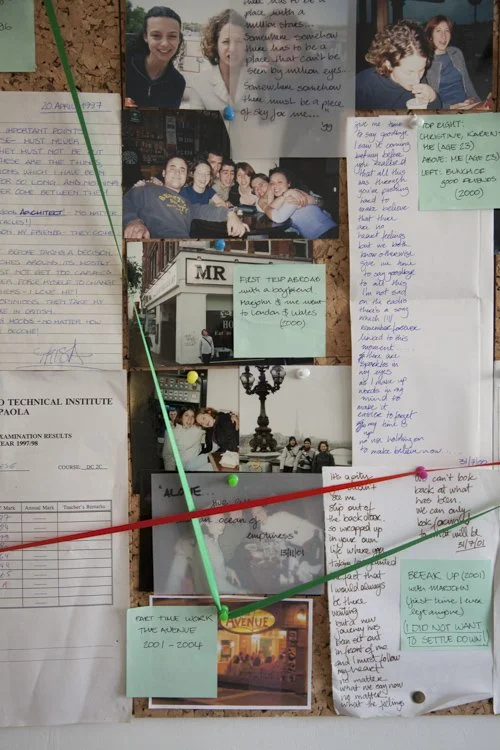
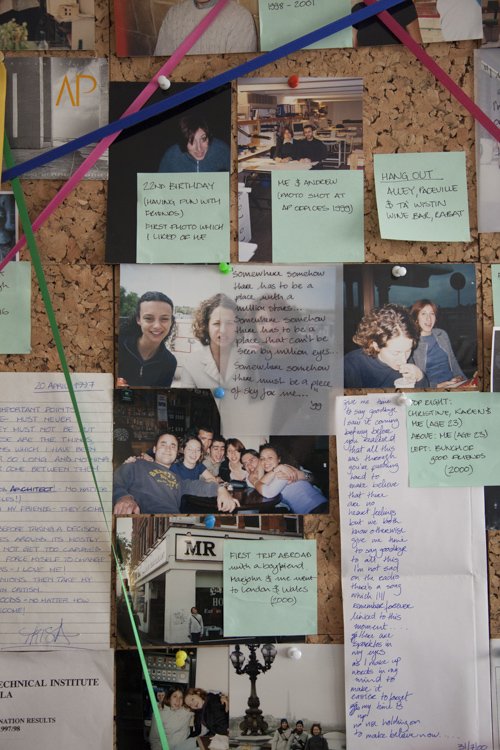
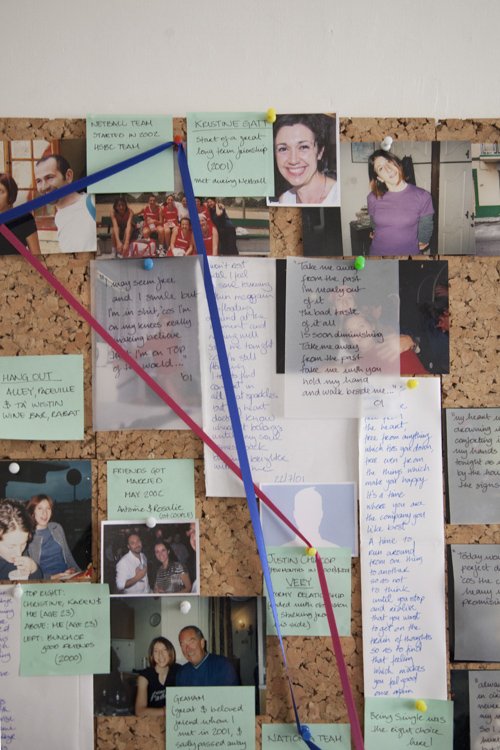
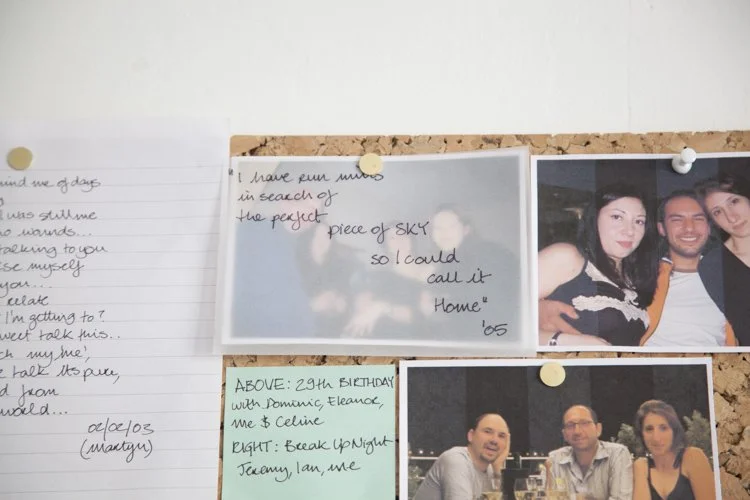
This work began as a search for proof. Between 1992 and 2007, from the age of fifteen to thirty, I have almost no photographs of myself. Before social media made documentation effortless and continuous, those years passed largely unrecorded in images. I asked friends for photographs, searched negatives, retrieved fragments. What accumulated was not a biography but an assembly: surviving evidence of a self that had existed without being seen.
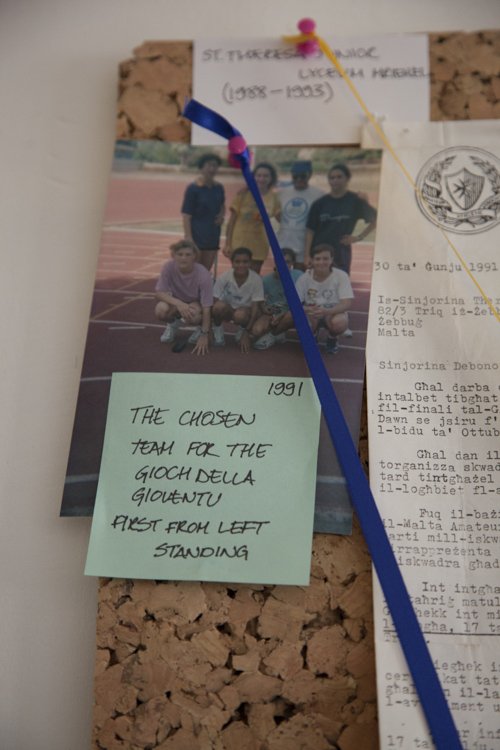
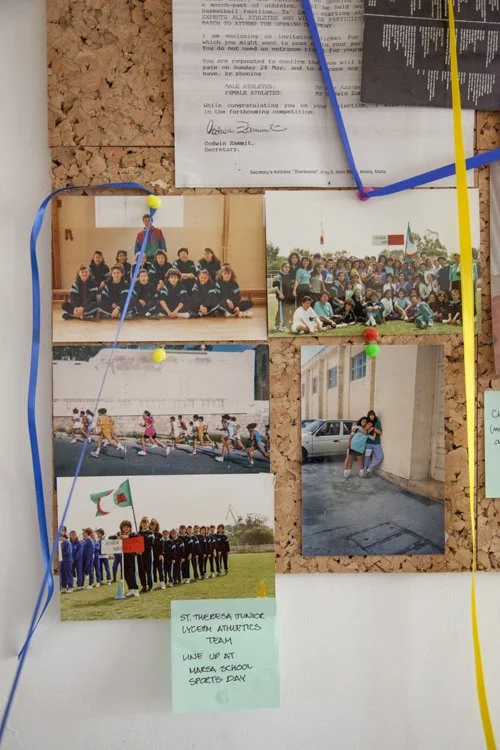
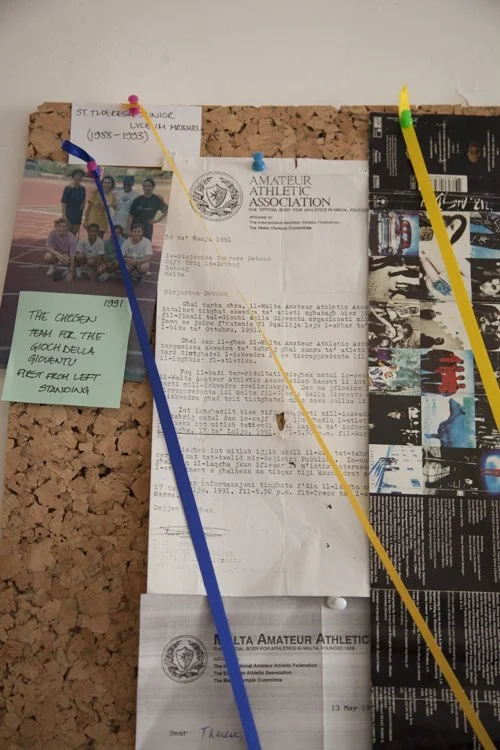
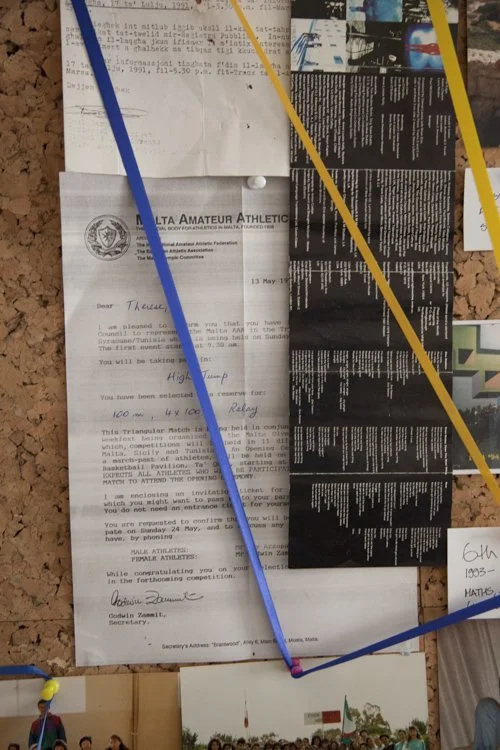
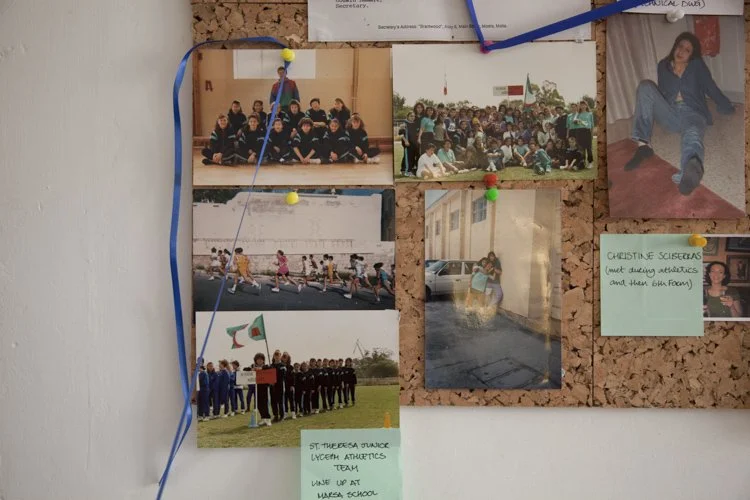
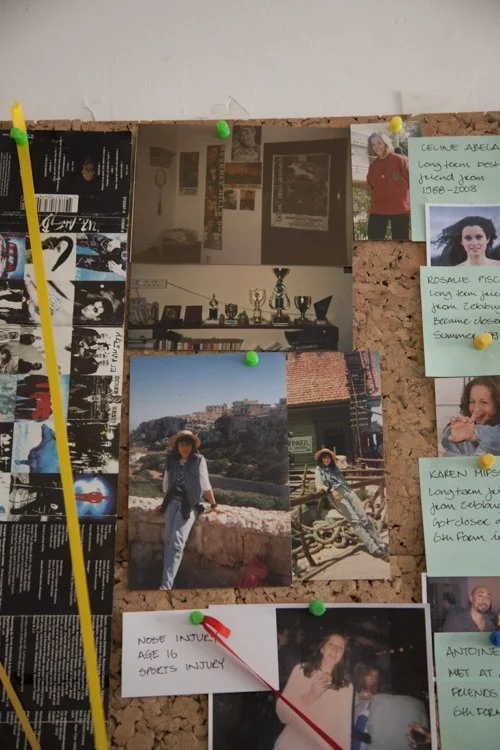
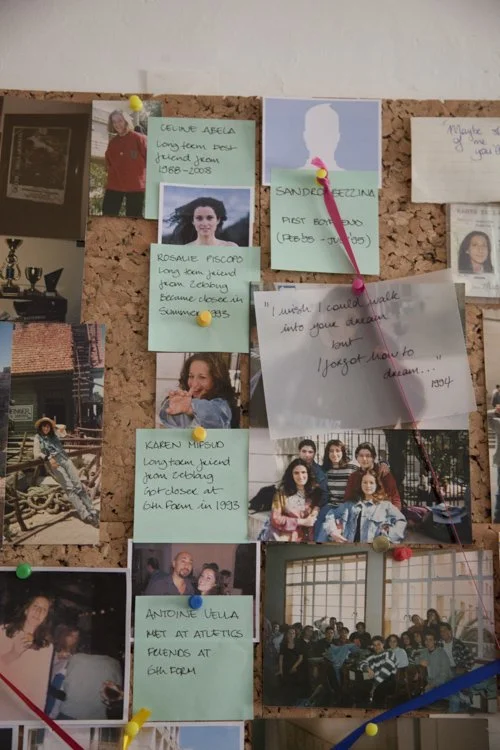
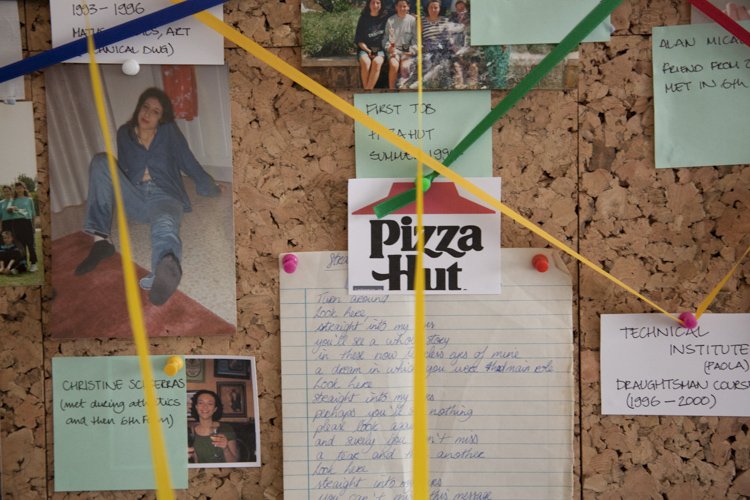
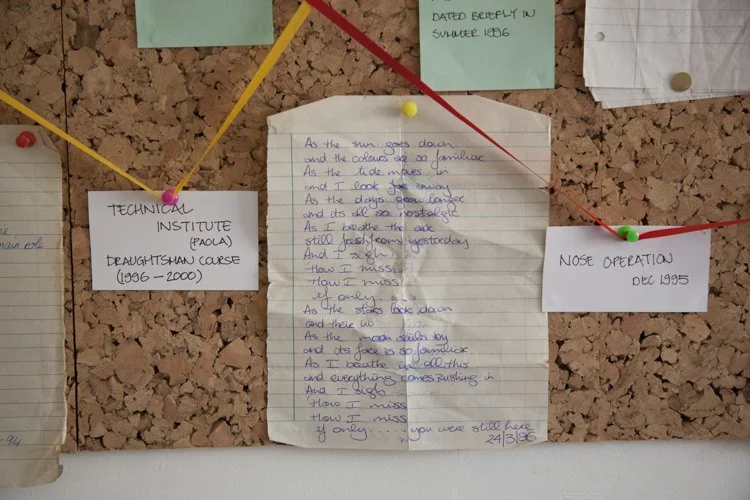
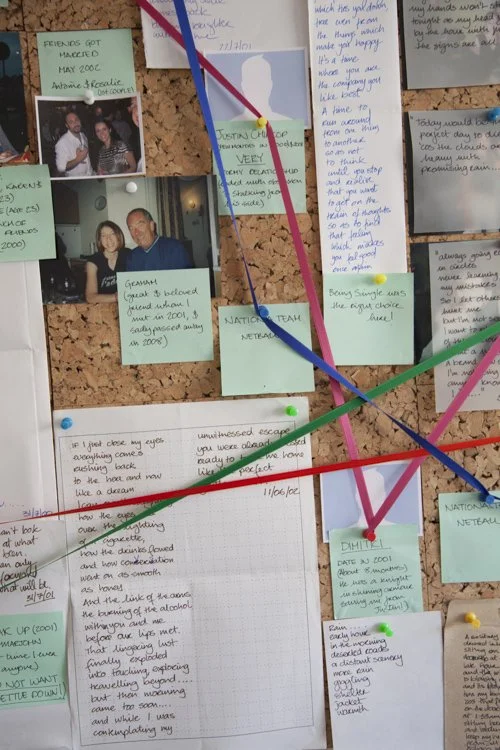
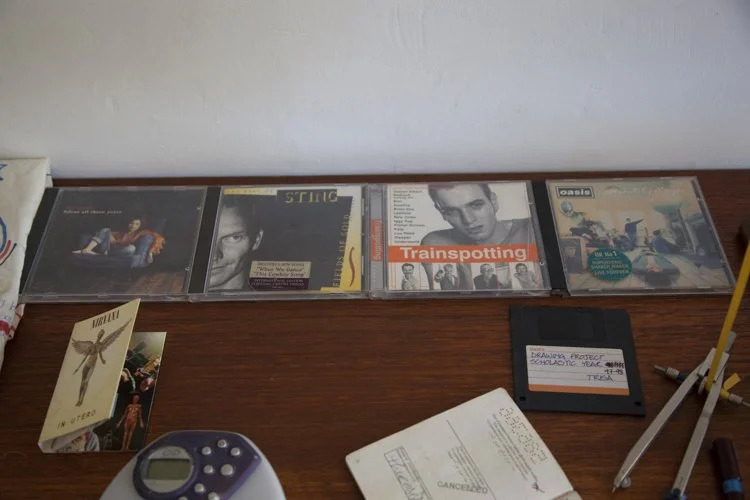
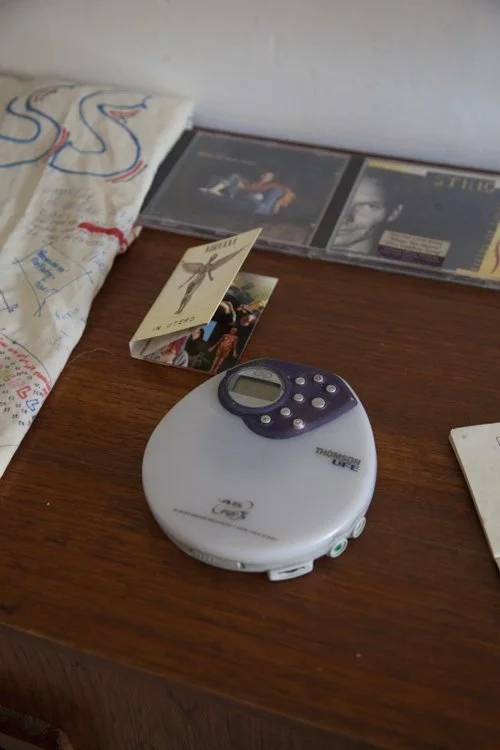
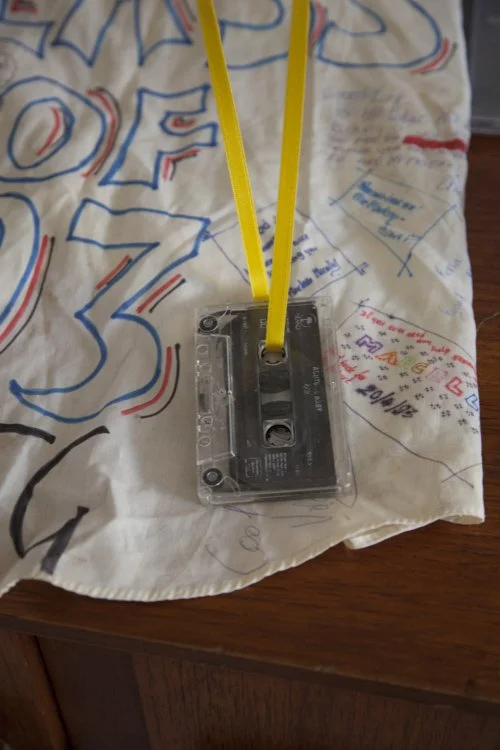
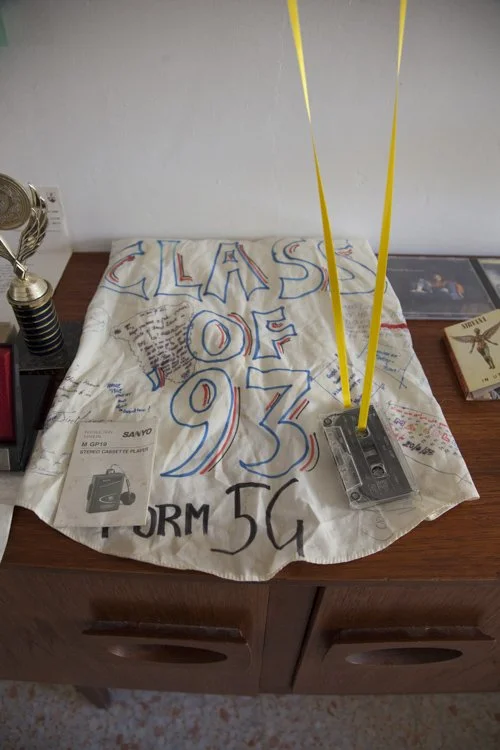
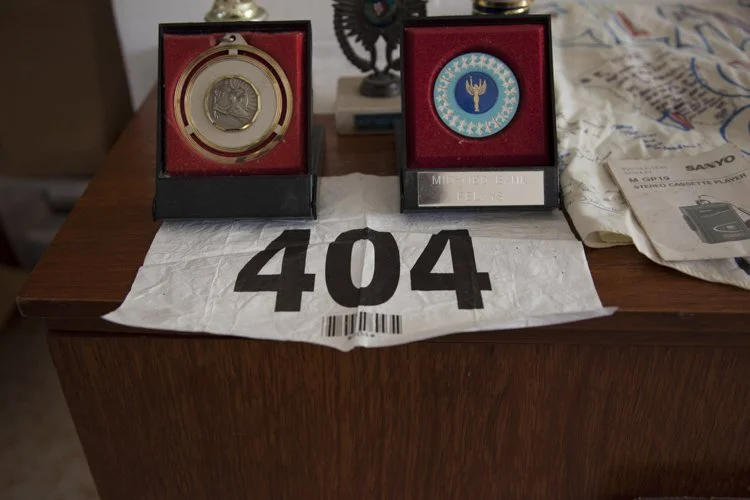
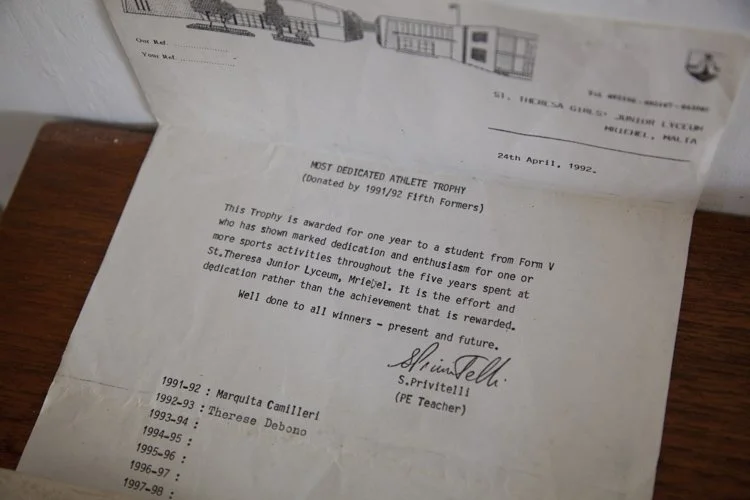
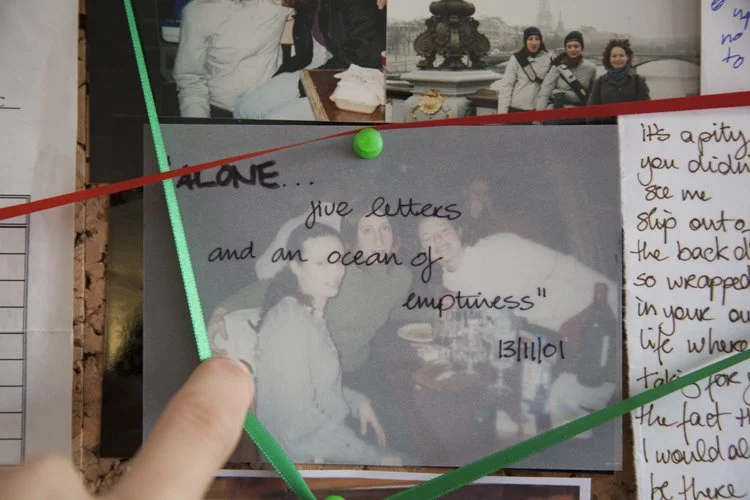
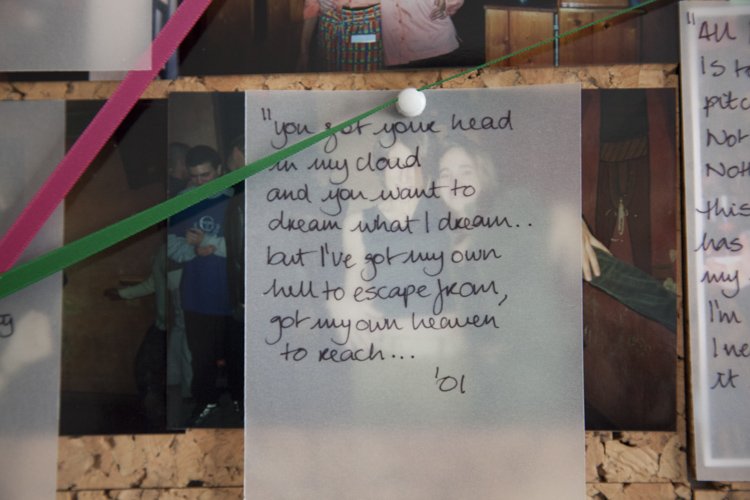
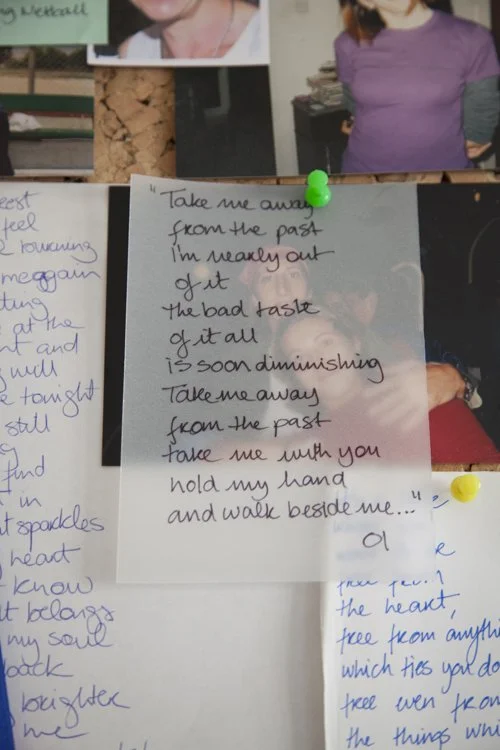
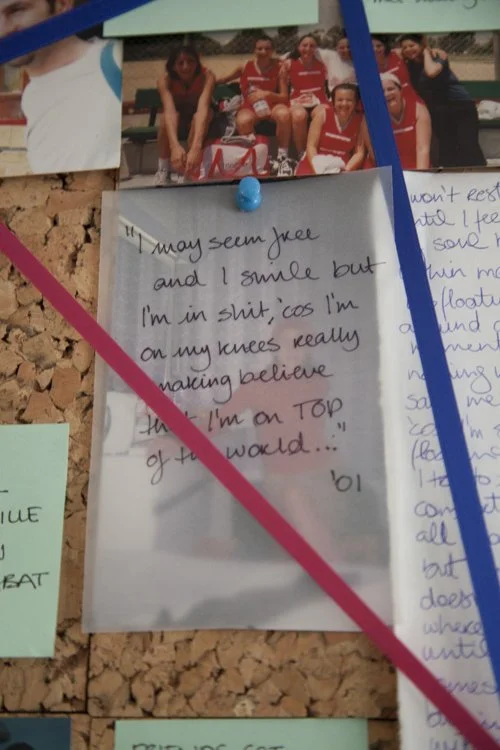
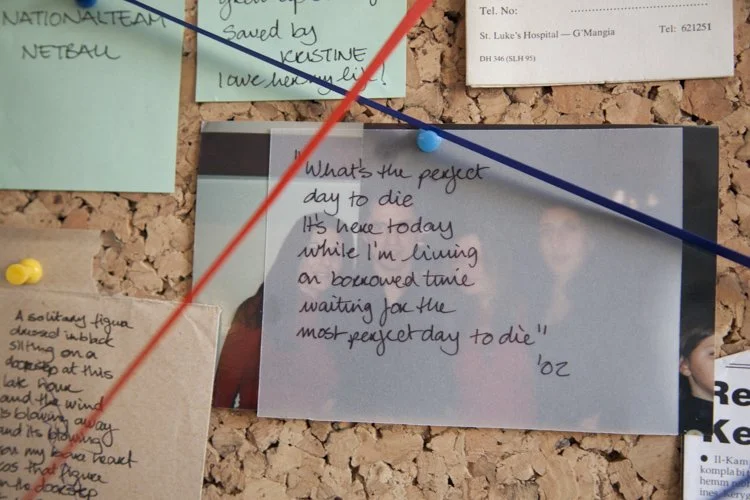
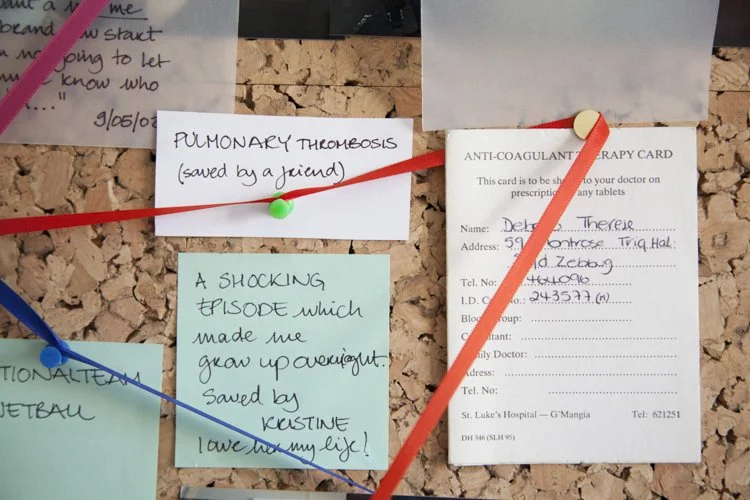
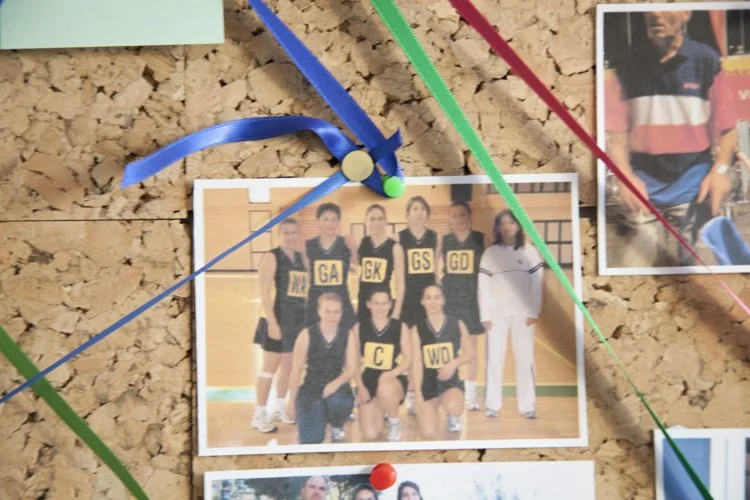
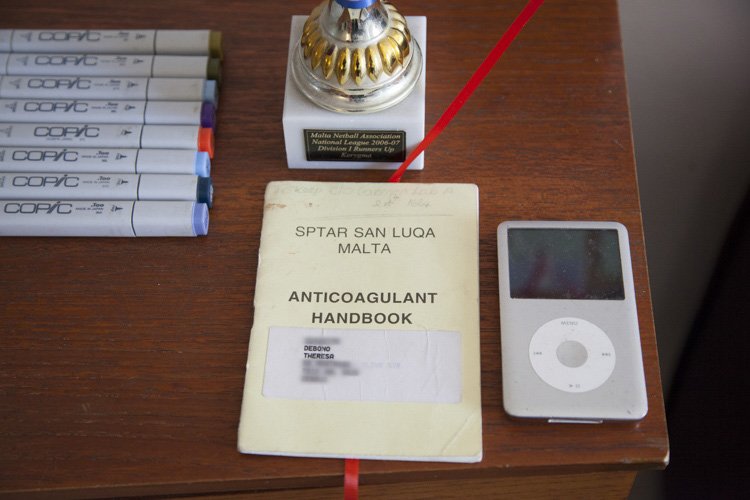
The installation takes the form of an evidence board spanning fifteen years. It holds photographs, handwritten poems displayed in full, medical documents, memorabilia, trophies and letters, connected by coloured threads that trace the invisible structures of a life. Yellow for education. Blue for sport. Red for health. Green for work. Pink for love. The threads do not explain these connections. They assert them.
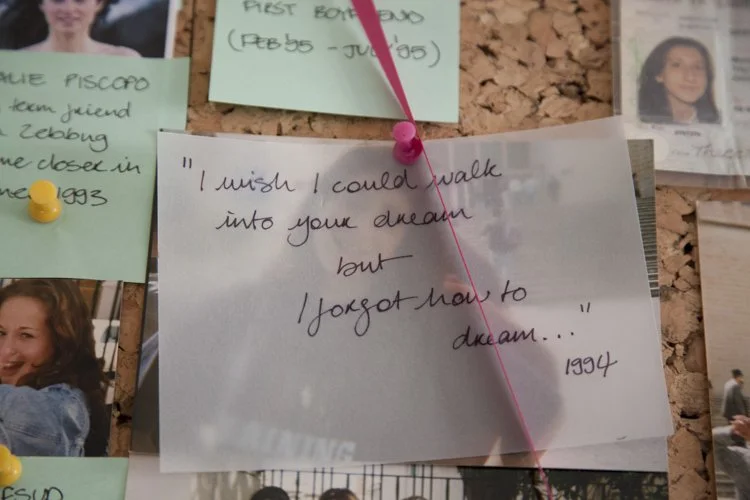
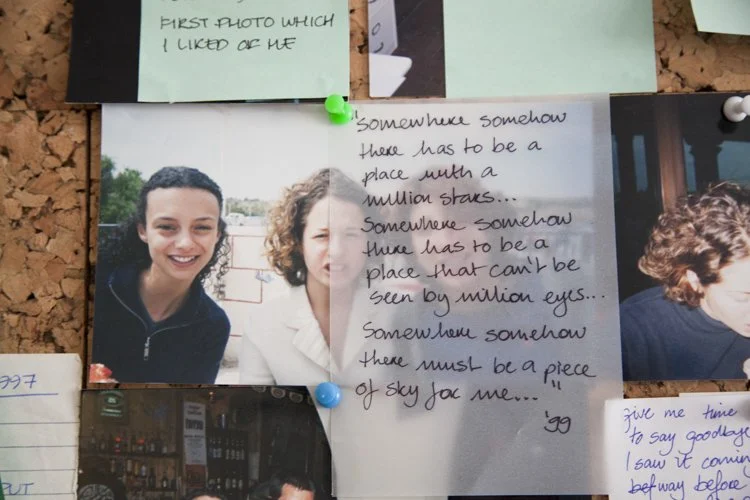
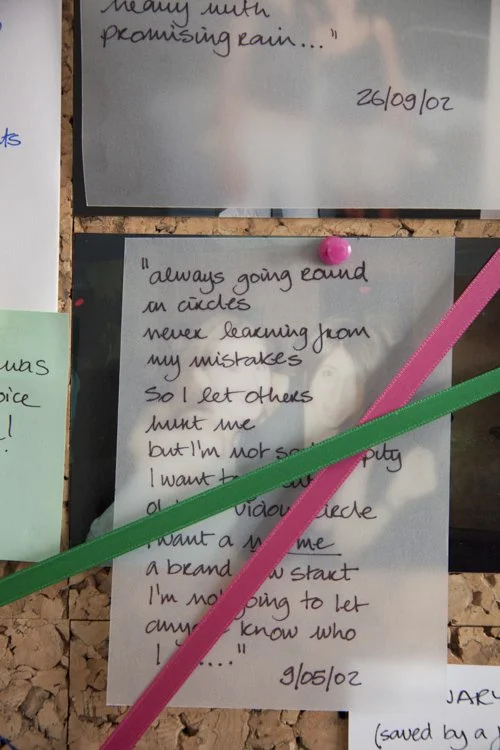
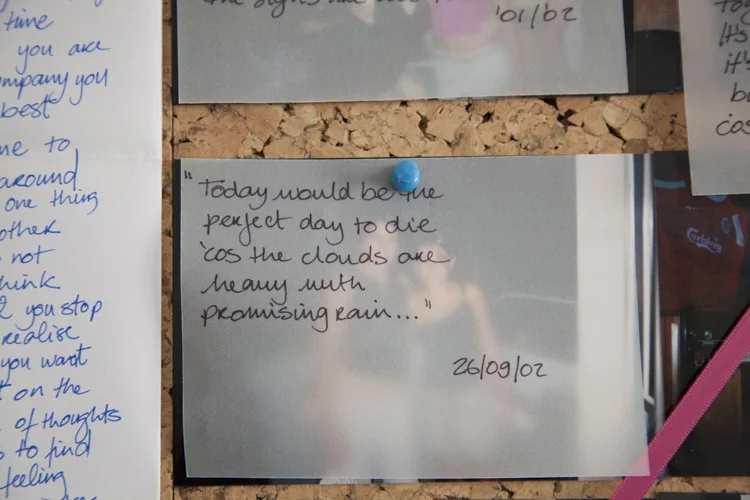
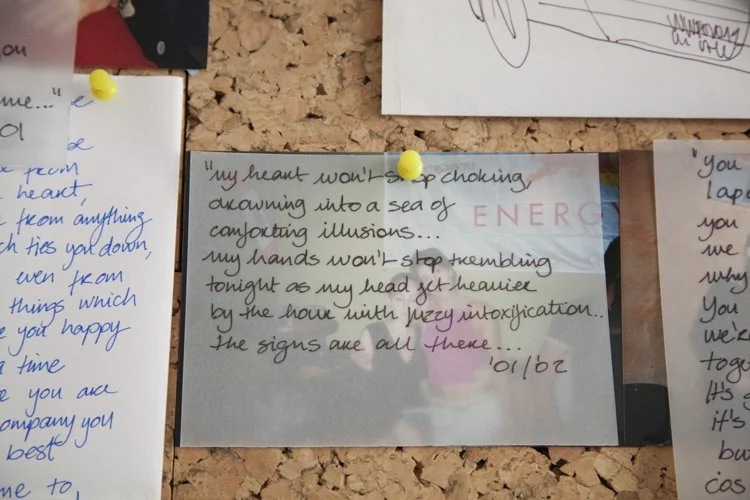
The poems are not fillers. They are the interior life of those years made visible, standing alongside the photographs as equal documents. Where the photographs record the surface of a body moving through time, the poems record what that body was carrying.
But even the photographs were never enough on their own. The smiling girl in the images was not always the person writing at night. To hold both truths simultaneously, I layered translucent vellum over many of the photographs, printing fragments of my own poems onto the surface. The photograph indexes the body as it appeared. The poem indexes the interior life the photograph could not reach. Where the two overlap, neither cancels the other. The gap between them is where the actual self lived.
What the board also reveals, and what I could not have fully understood in 2013, is that curation is itself an act of identity construction. What was kept, what was discarded, what was named and what was withheld: these choices belong to a self in 2013 looking back at a self between 1992 and 2007. The board is not a neutral archaeological deposit. It is an argument about who I was, made by who I had become.
Revisiting this work thirteen years later adds a third temporal frame. The lived years. The construction of the board. And now this rereading, which understands that identity is not found in evidence but assembled from it, always partially, always under the pressure of the present moment doing the assembling.
A person is not only how they appear or what they say. The inner life remains under cover unless deliberately surfaced. These poems were how I purged what could not be shown. Putting fragments of them back onto the photographs, literally overlaying the interior onto the surface, was the most honest thing the work did.
The installation no longer exists. These photographs are its only remaining index, a final layer in a work that was always, at its core, about what survives and what disappears.
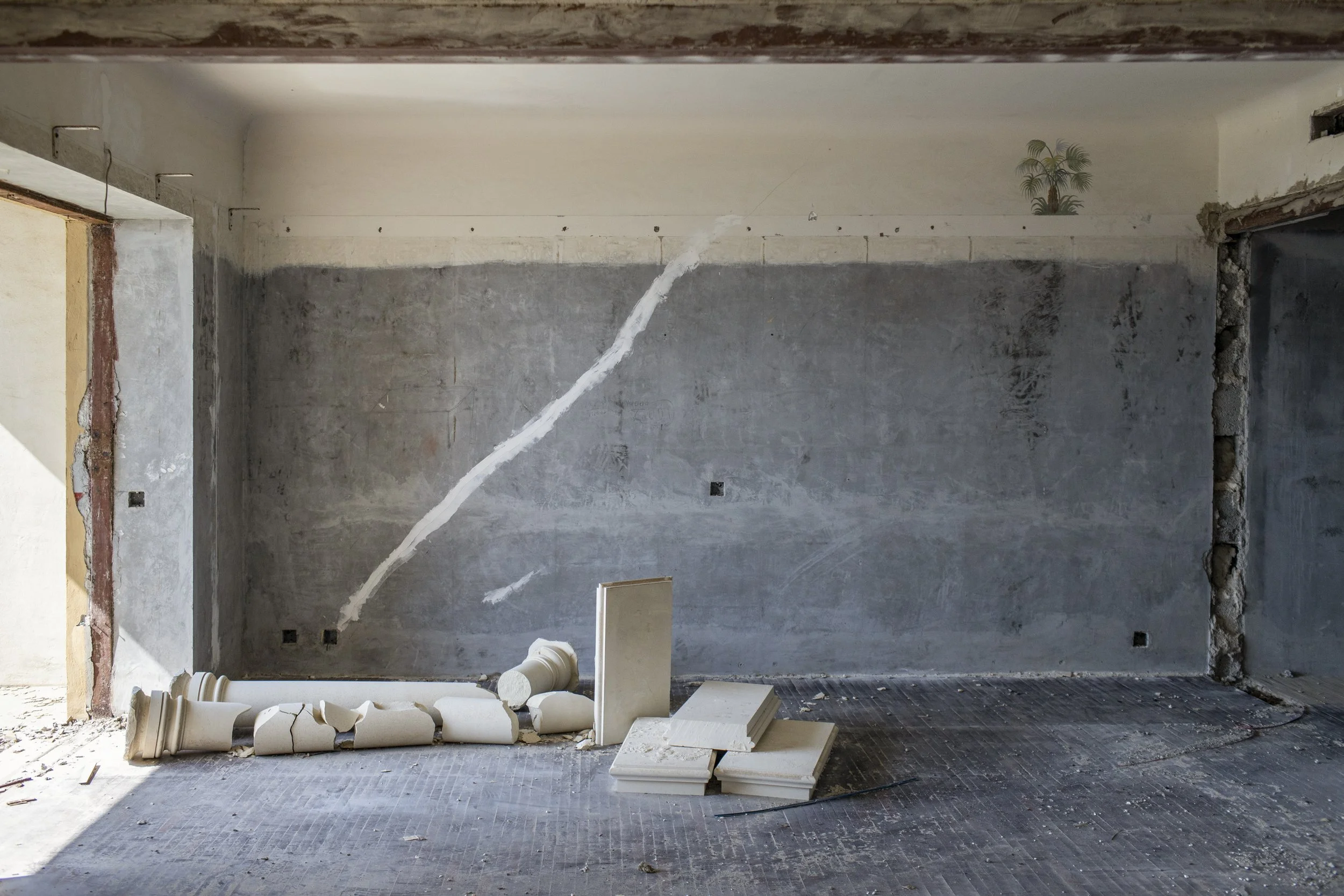
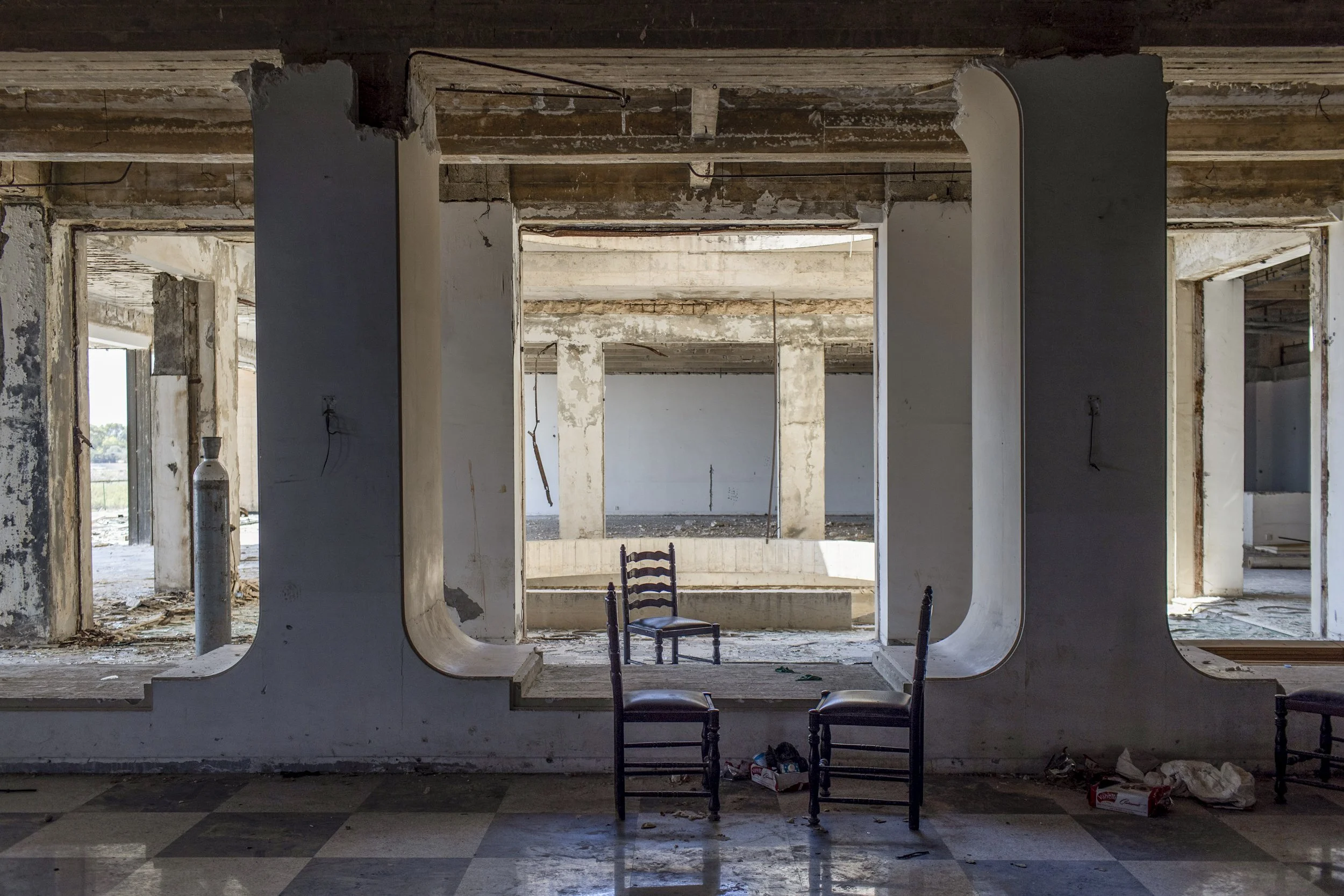
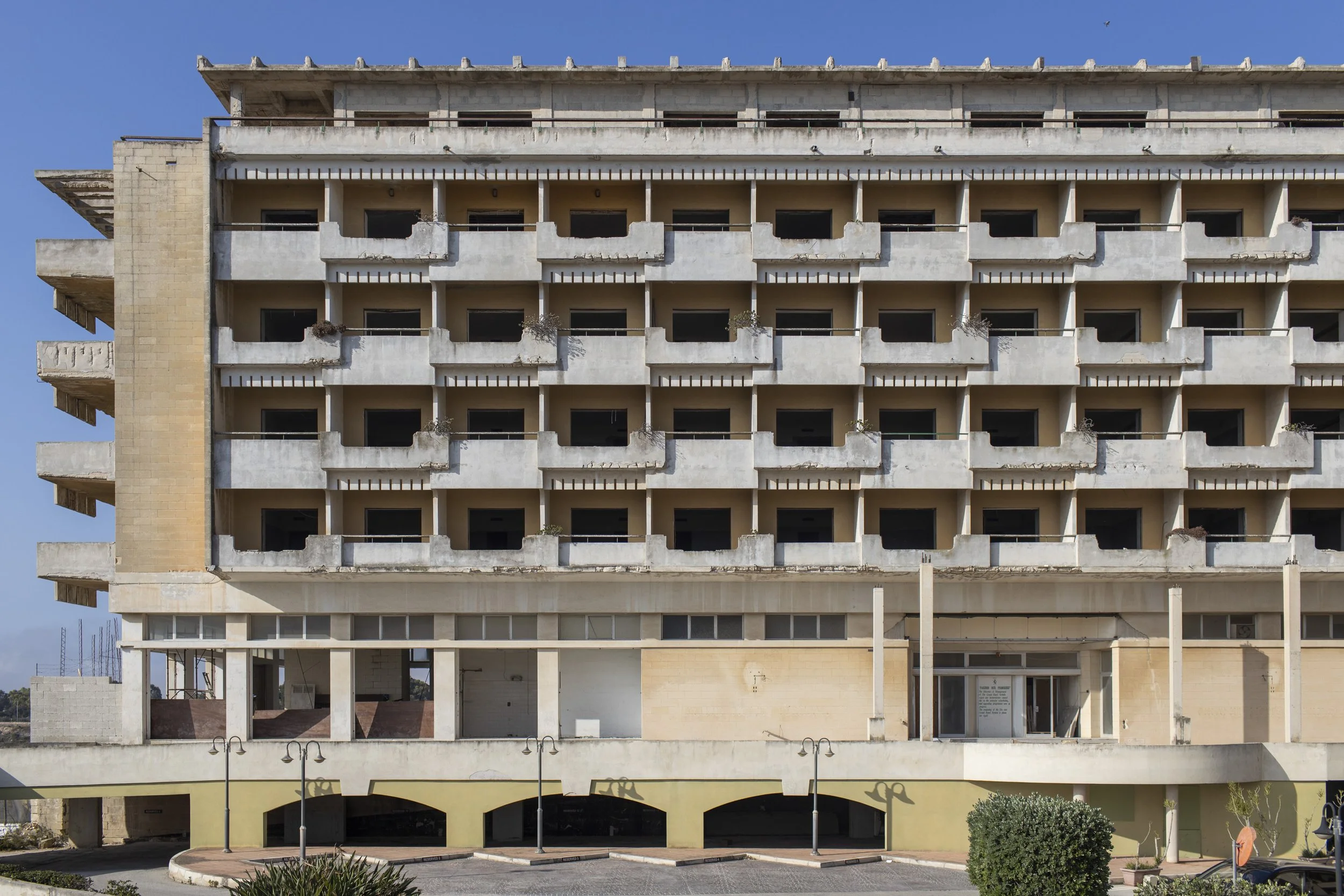
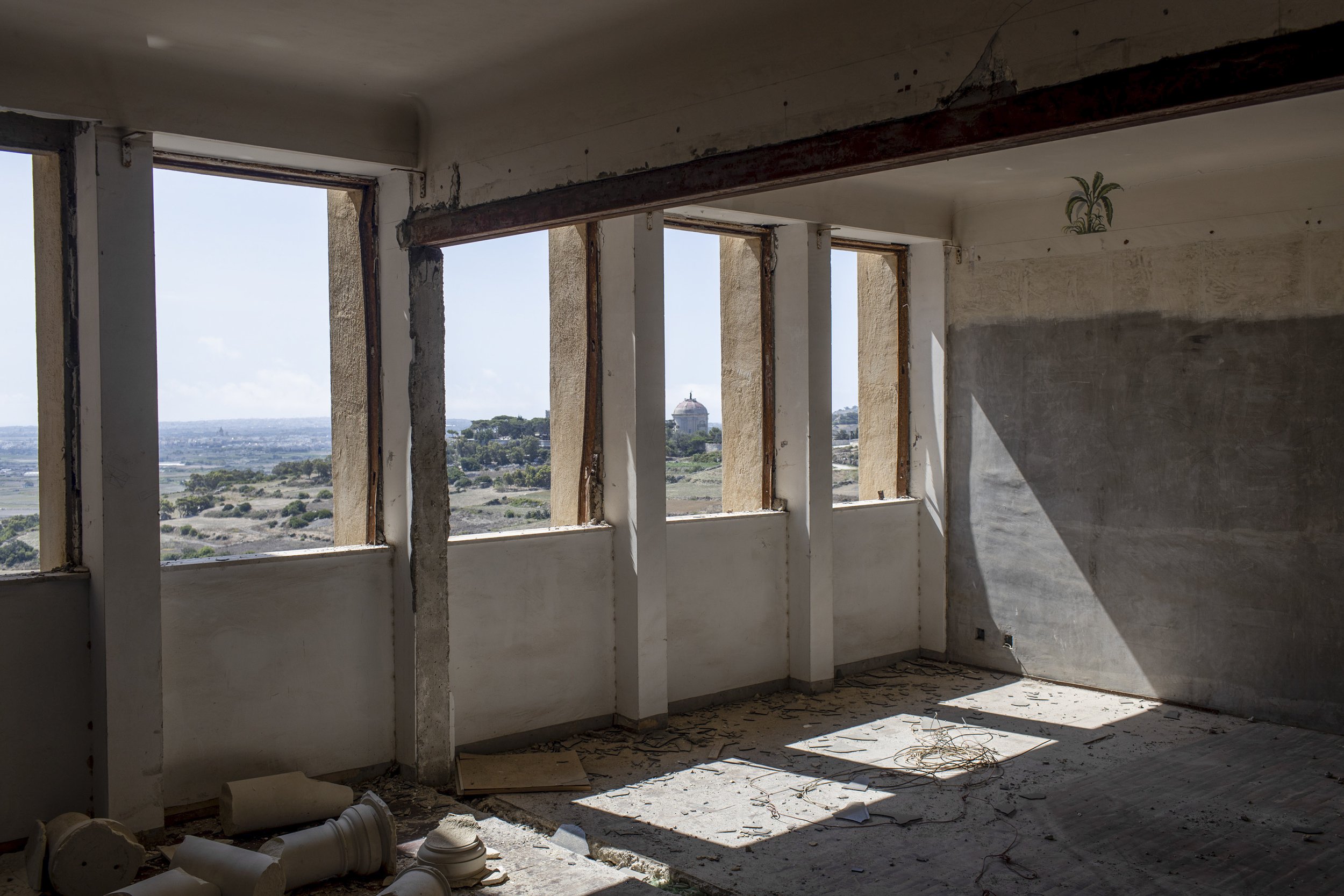
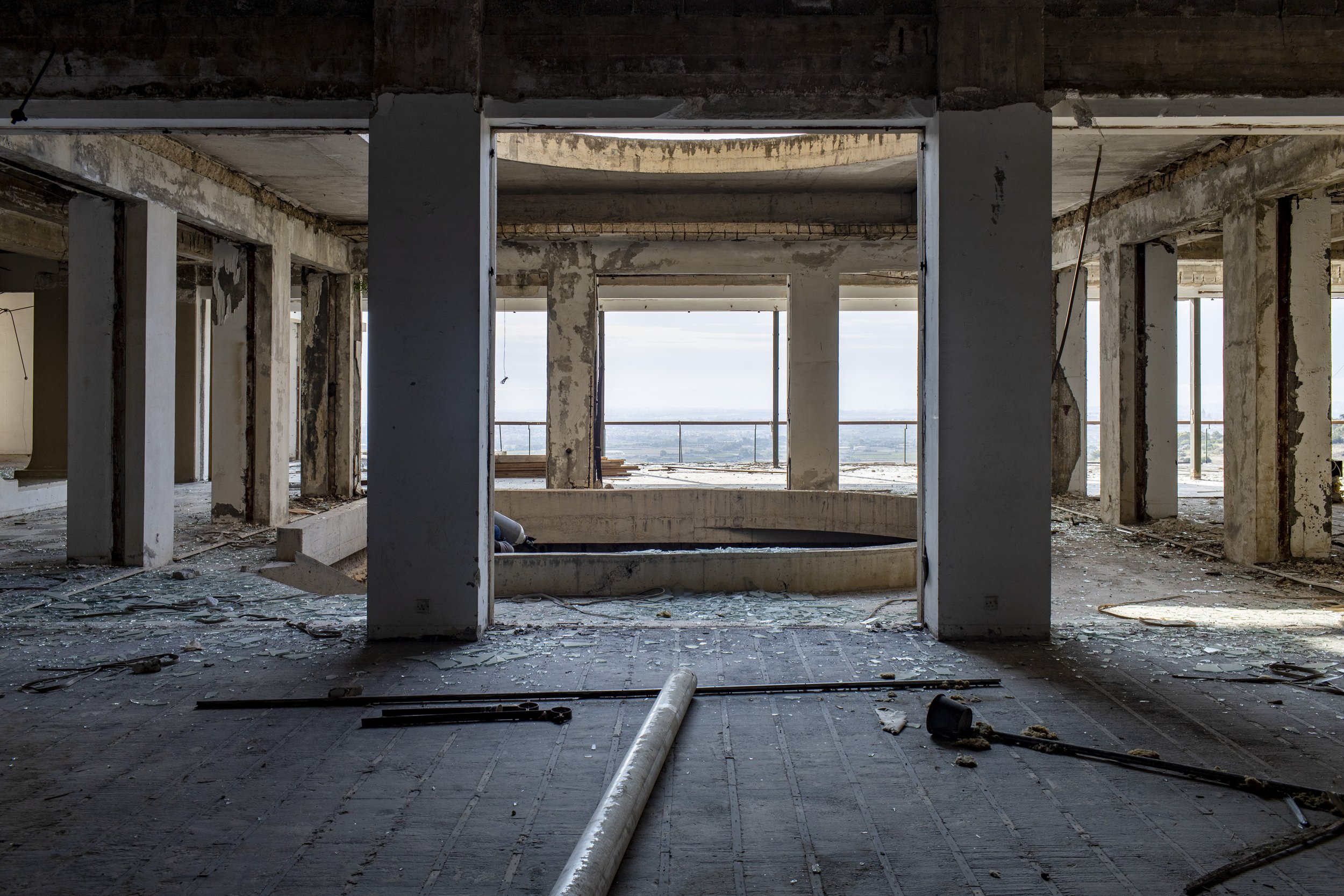
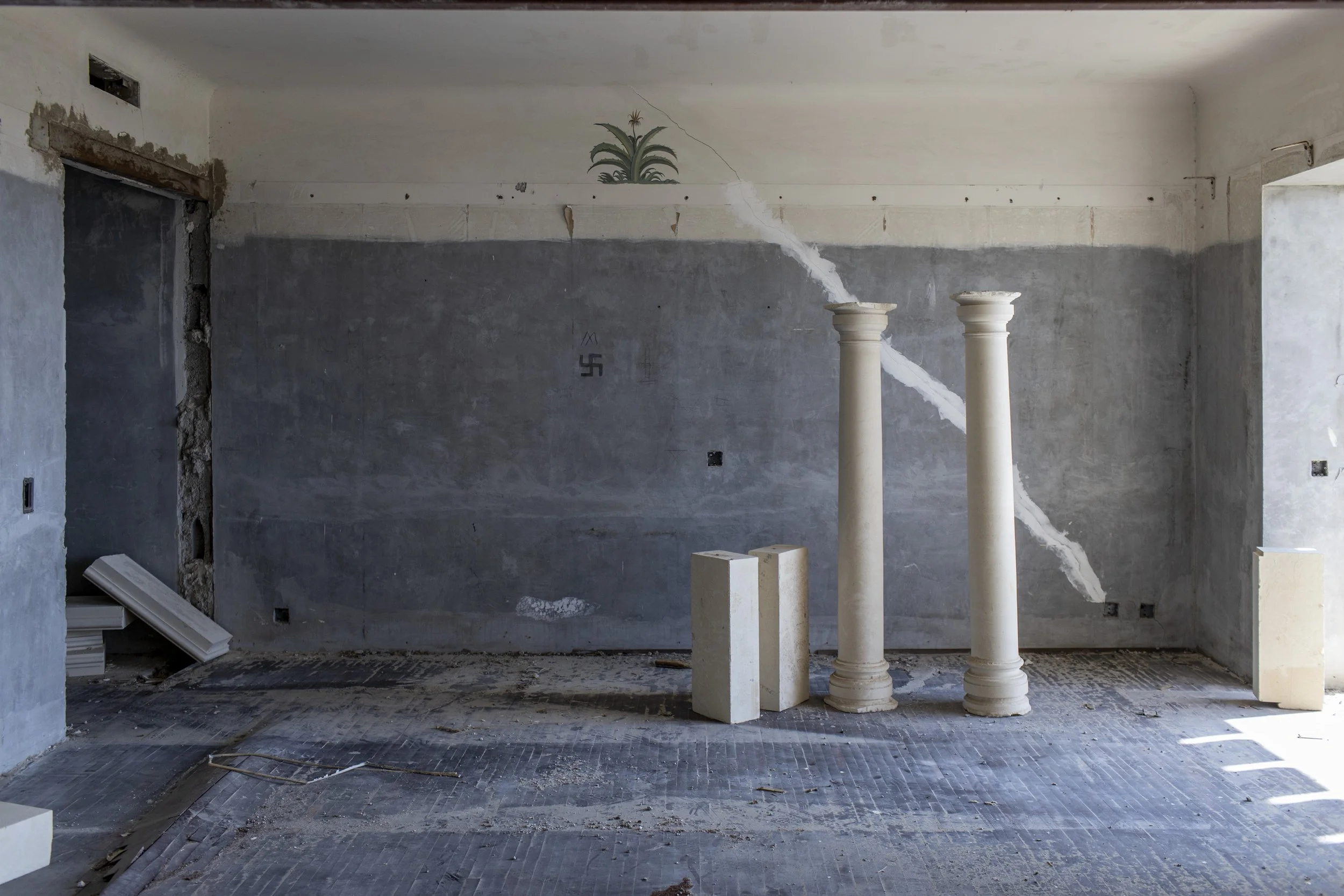
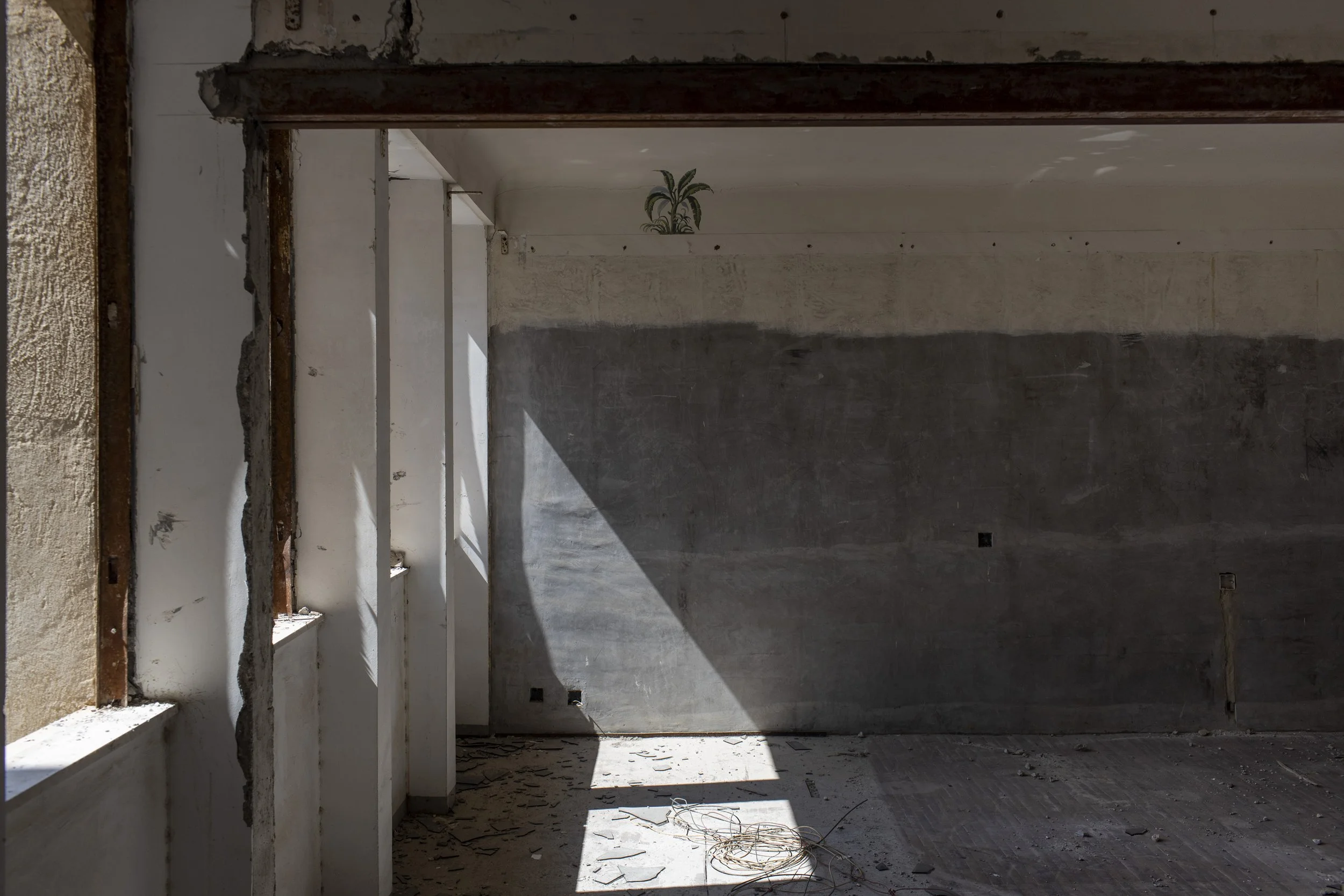
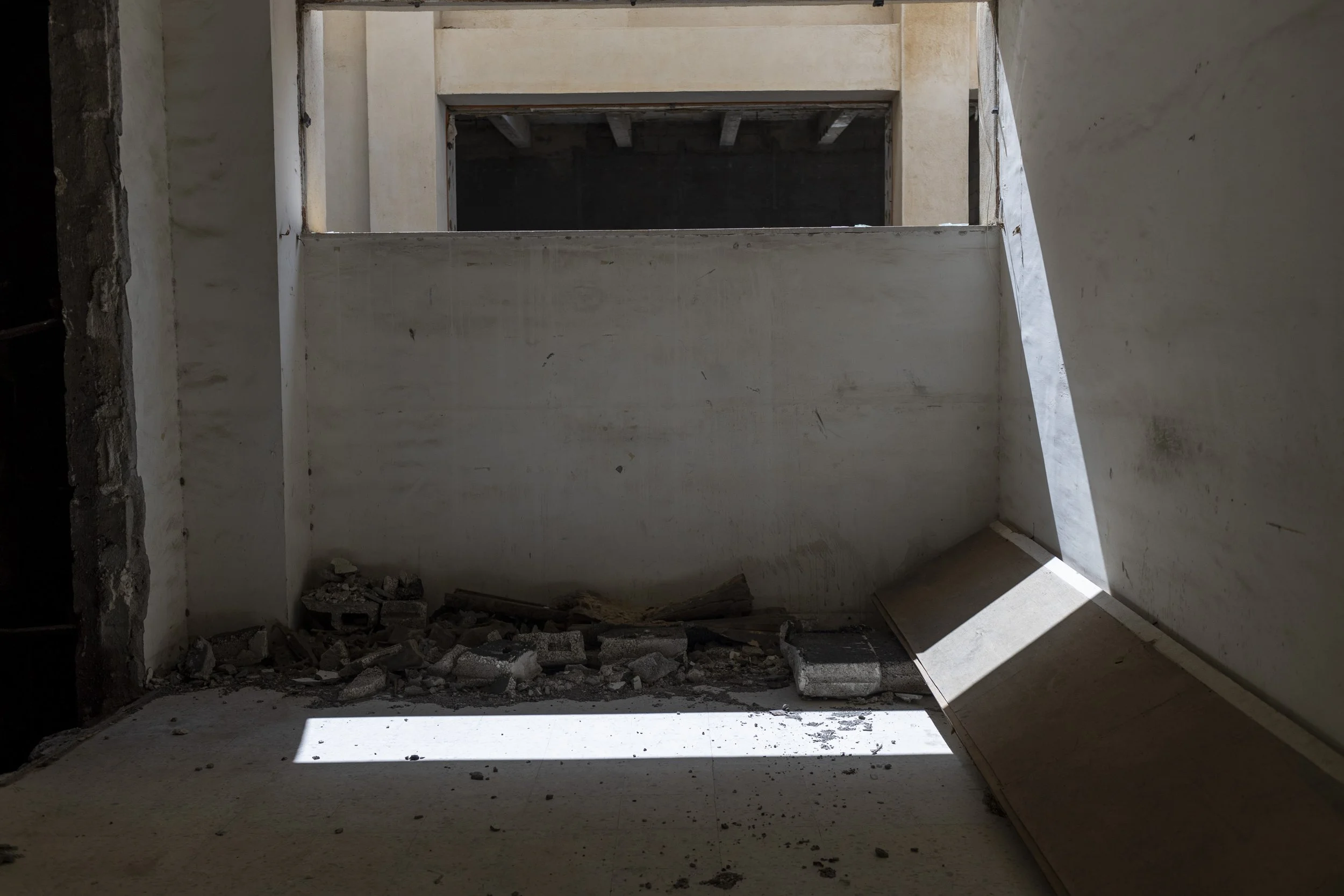
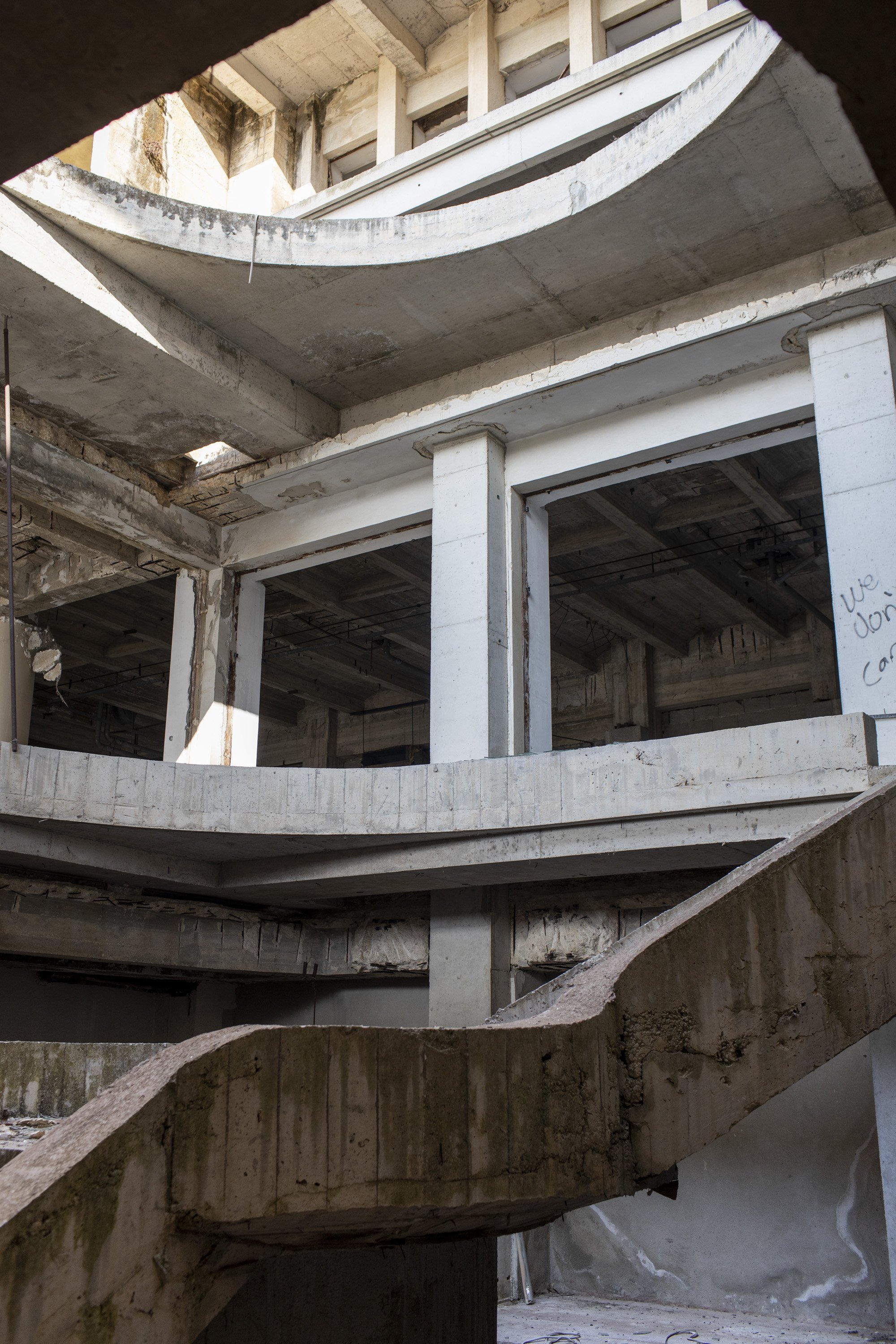
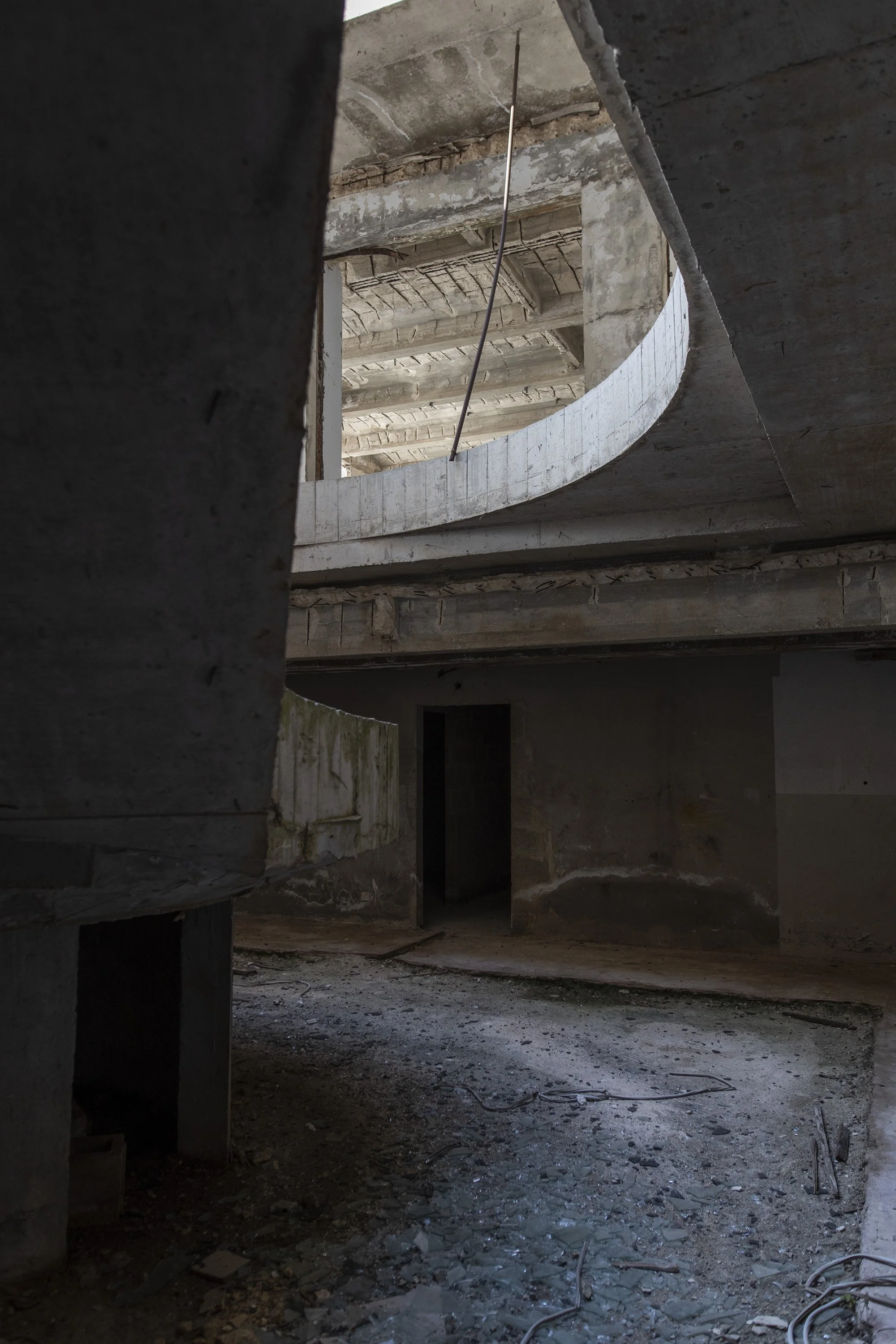
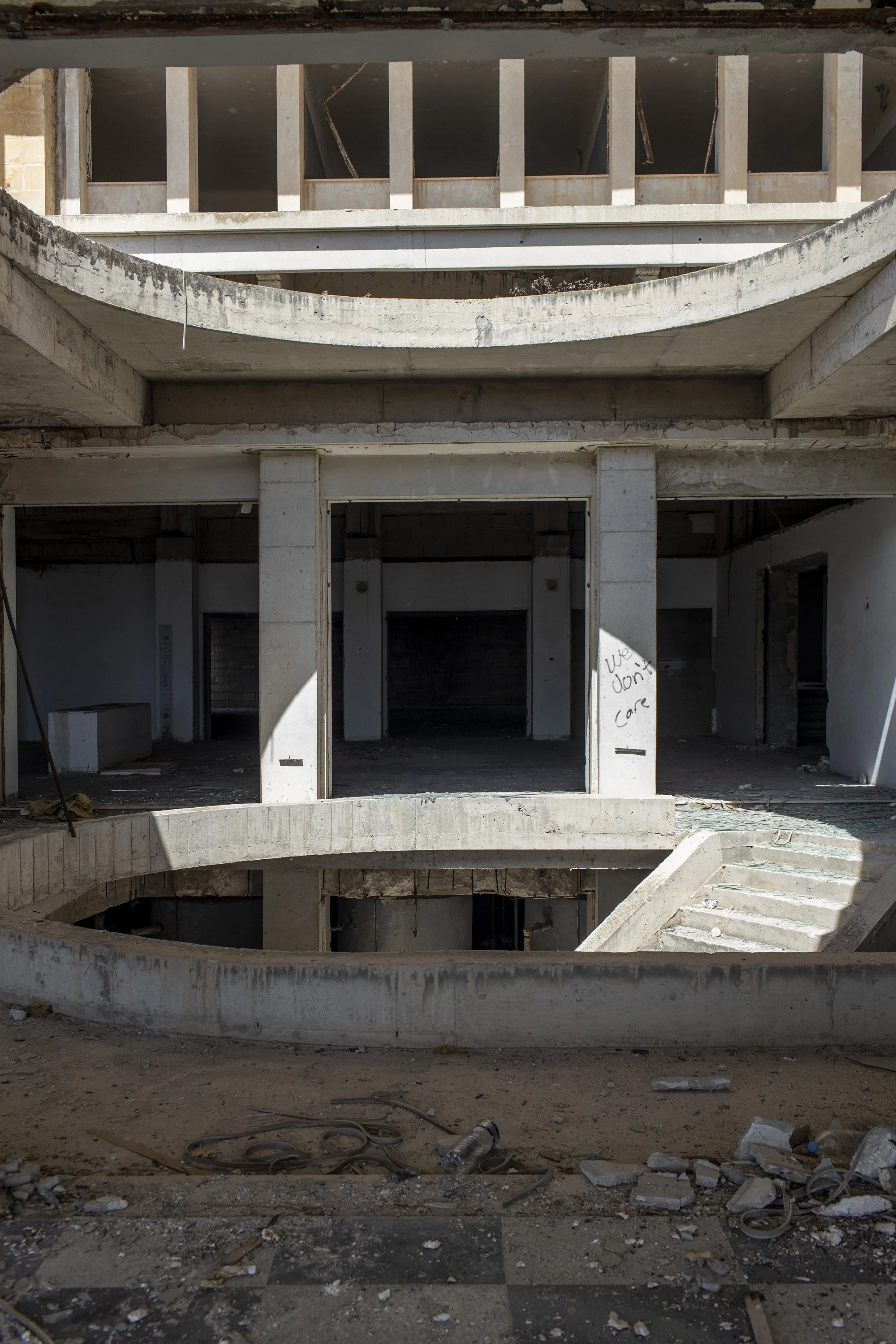
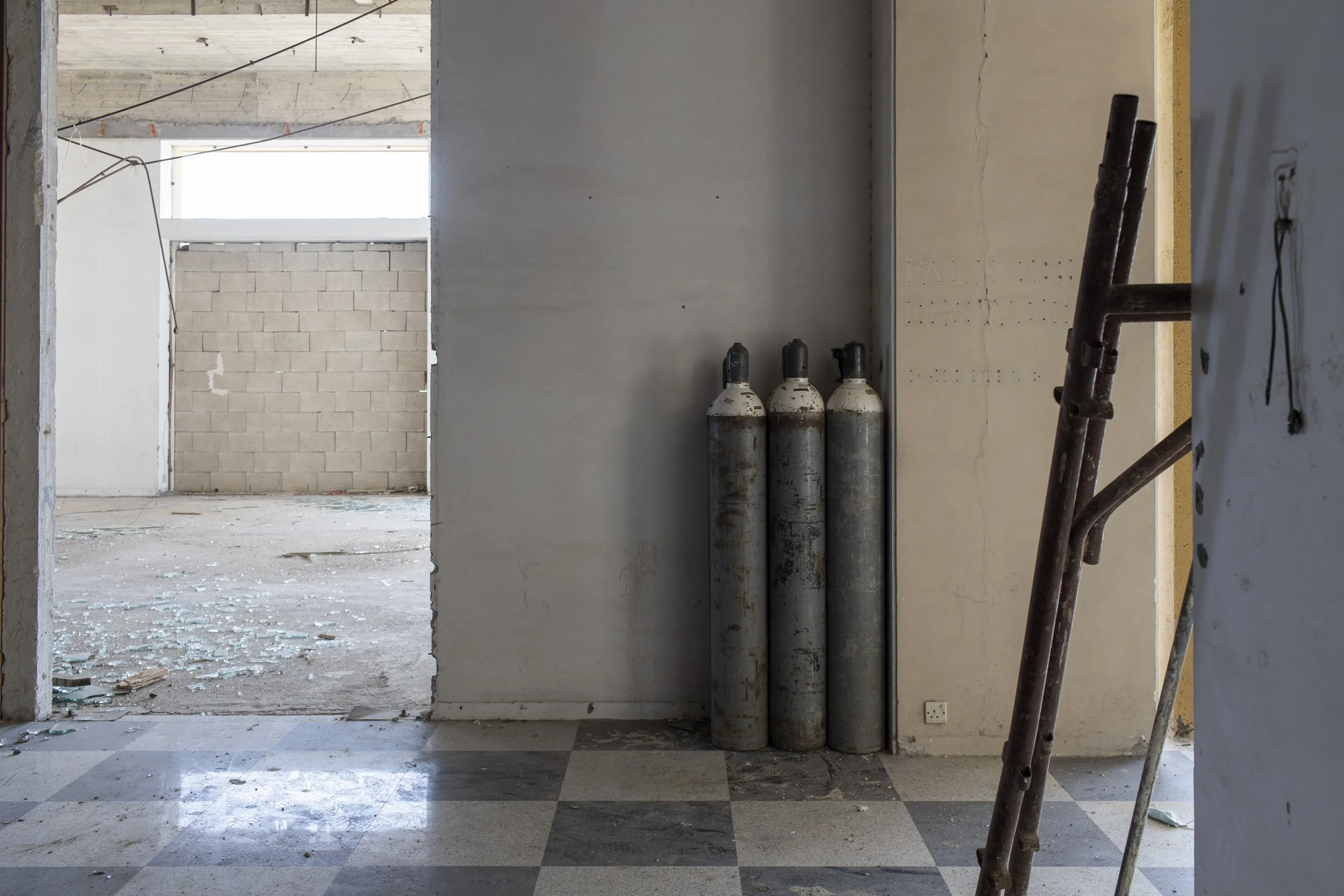
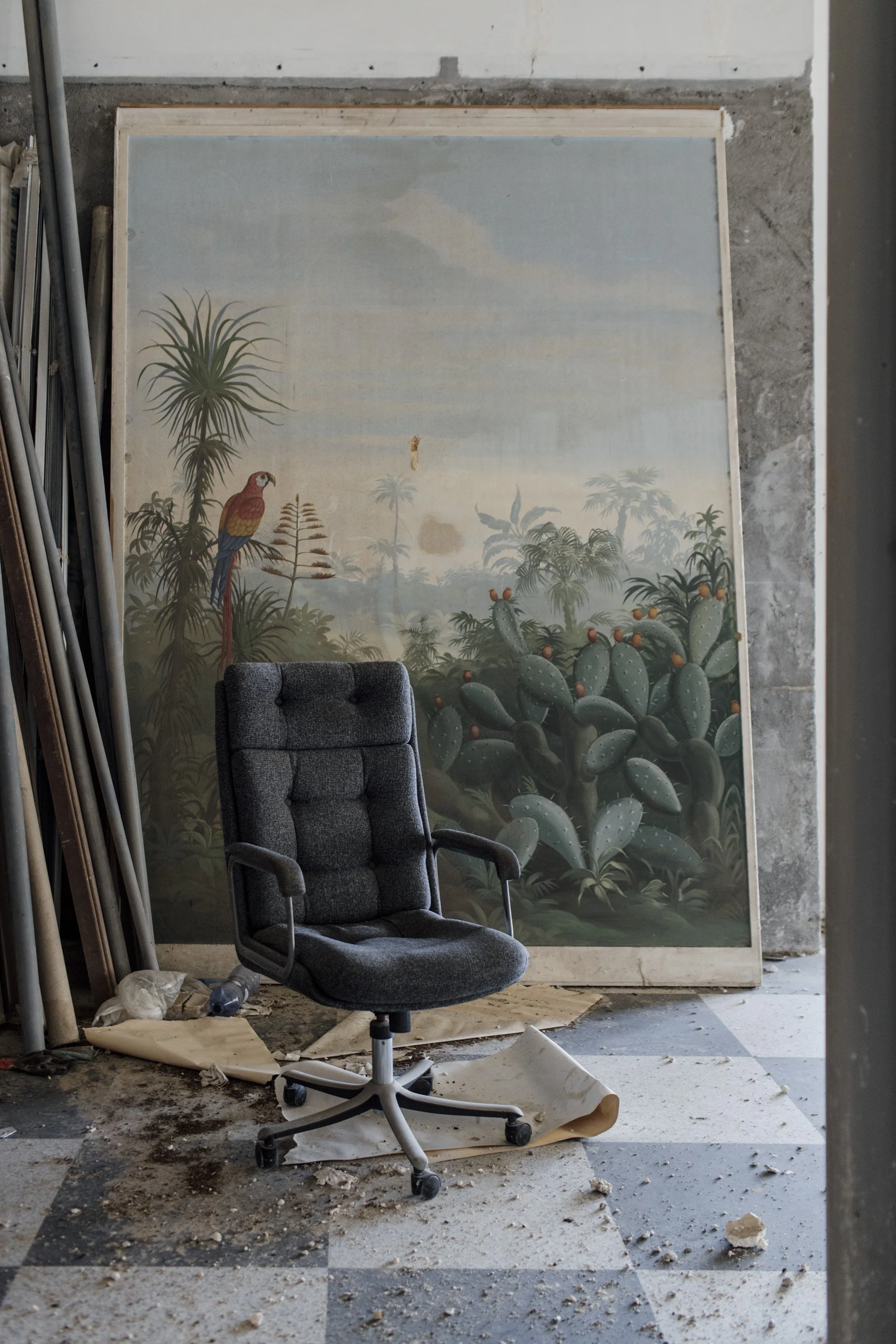
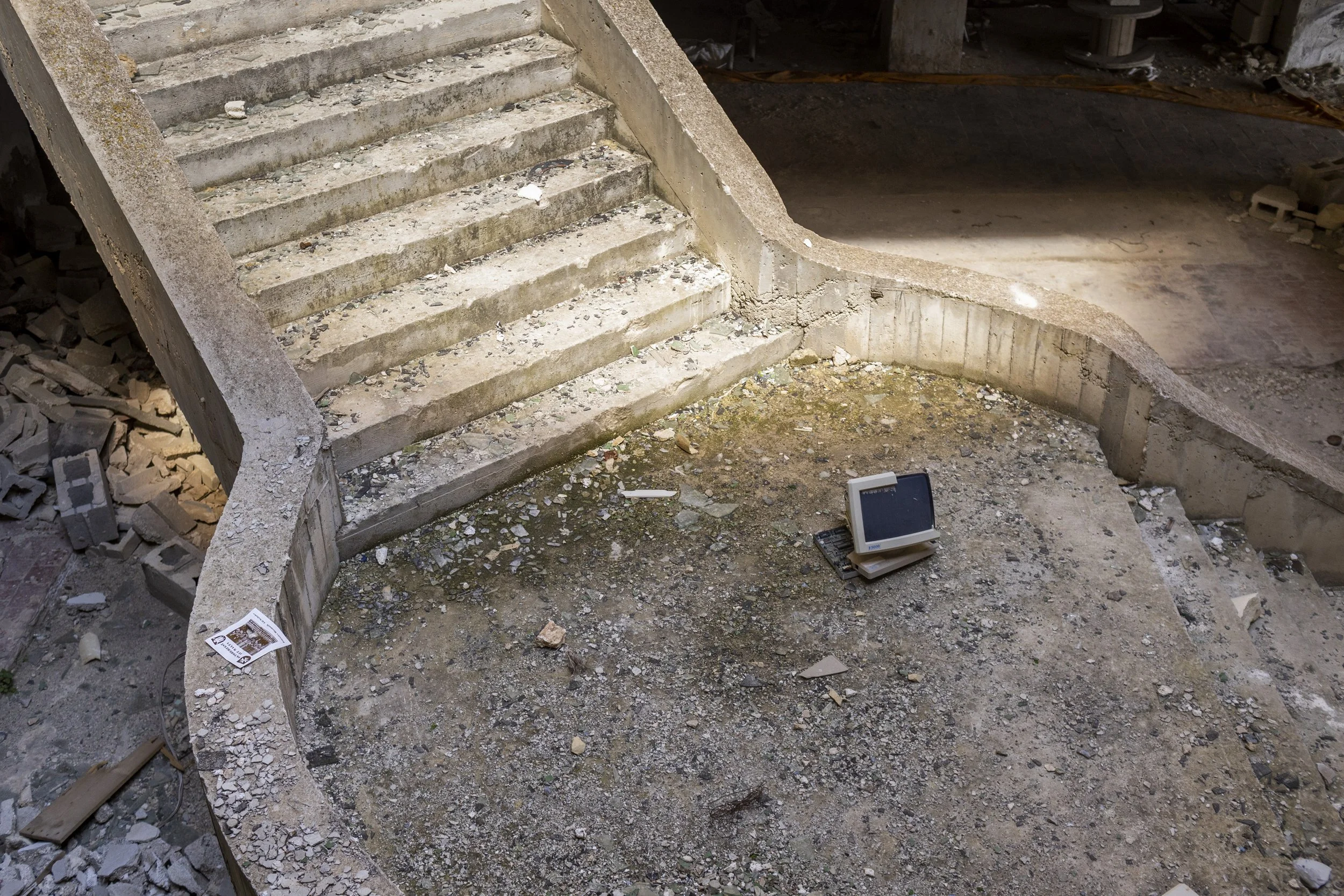
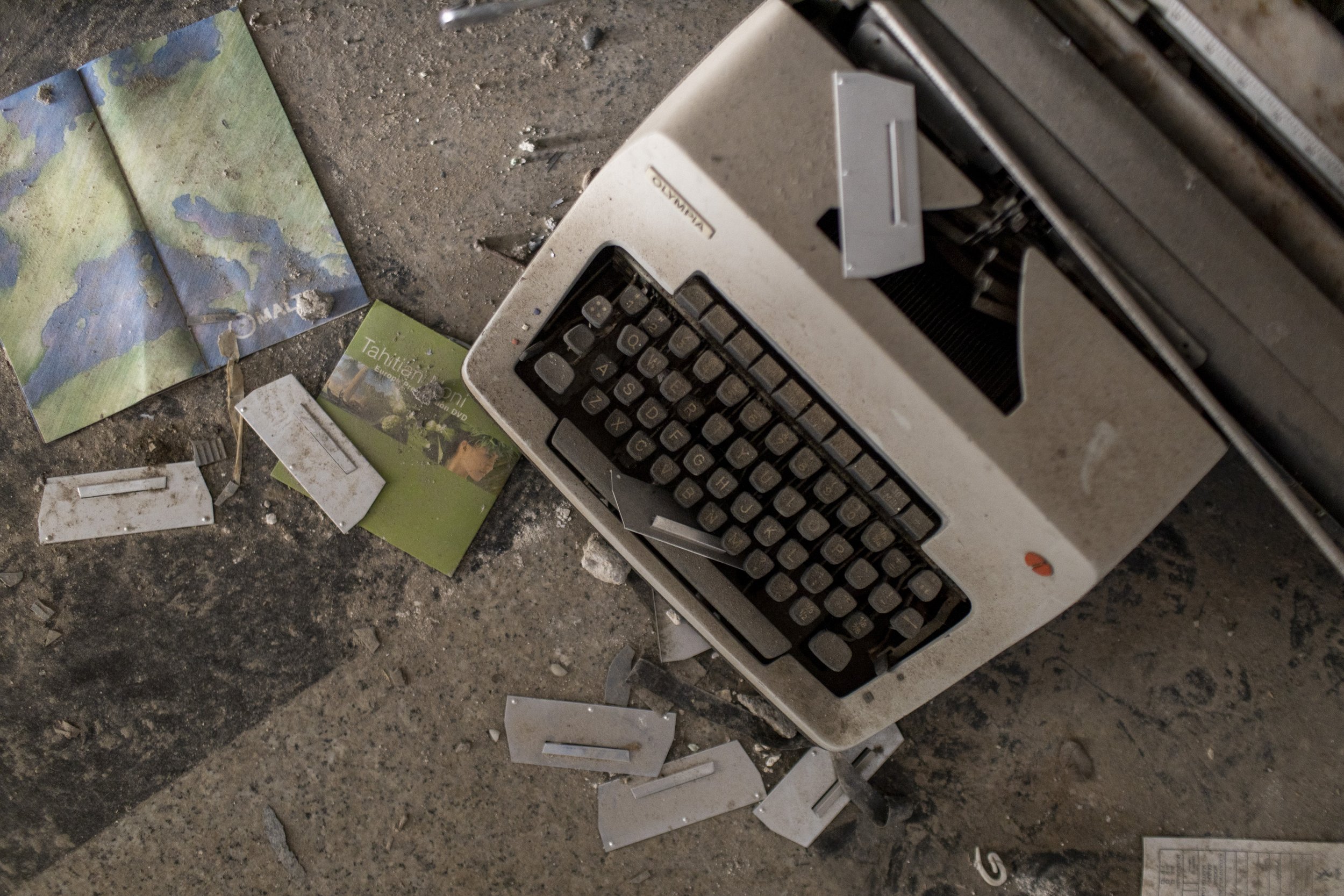
This collaborative photographic project by Therese Debono and Joseph P. Smith documents the abandoned structures of the former Grand Hotel Verdala in Rabat, Malta. Once a prominent site within Malta’s mid-twentieth-century tourism landscape, the hotel now stands in a state of quiet suspension. Its corridors, atriums, terraces, and service areas remain physically present yet detached from the social and economic activity that once animated them.
Constructed during a period when Malta was actively shaping its identity as a Mediterranean tourist destination, the hotel represented a particular architectural and cultural moment. Today, its deteriorating interiors reveal not only the passage of time but also the shifting trajectories of development, tourism, and urban transformation on the island. What remains is a structure that exists between past and present: neither fully erased nor actively inhabited.
The project approaches this space through a restrained and observational photographic methodology. Rather than emphasizing spectacle or dramatic ruin, the images focus on the architectural language of the building itself: structural rhythms, repeating columns, fractured surfaces, empty rooms, and fragments of former decorative elements. By paying close attention to light, perspective, and spatial organisation, the photographs attempt to register how the building continues to hold the traces of its previous life.
Throughout the site, small details reveal evidence of human presence. Abandoned furniture, faded murals, discarded objects, and remnants of workspaces quietly indicate the labour that once sustained the building’s operation. Uniforms left hanging in service areas, chairs positioned within large interior openings, and fragments of interior décor suggest the rhythms of hospitality that once unfolded within these spaces. These elements do not function as nostalgic props but rather as subtle indices of human activity embedded within the architecture.
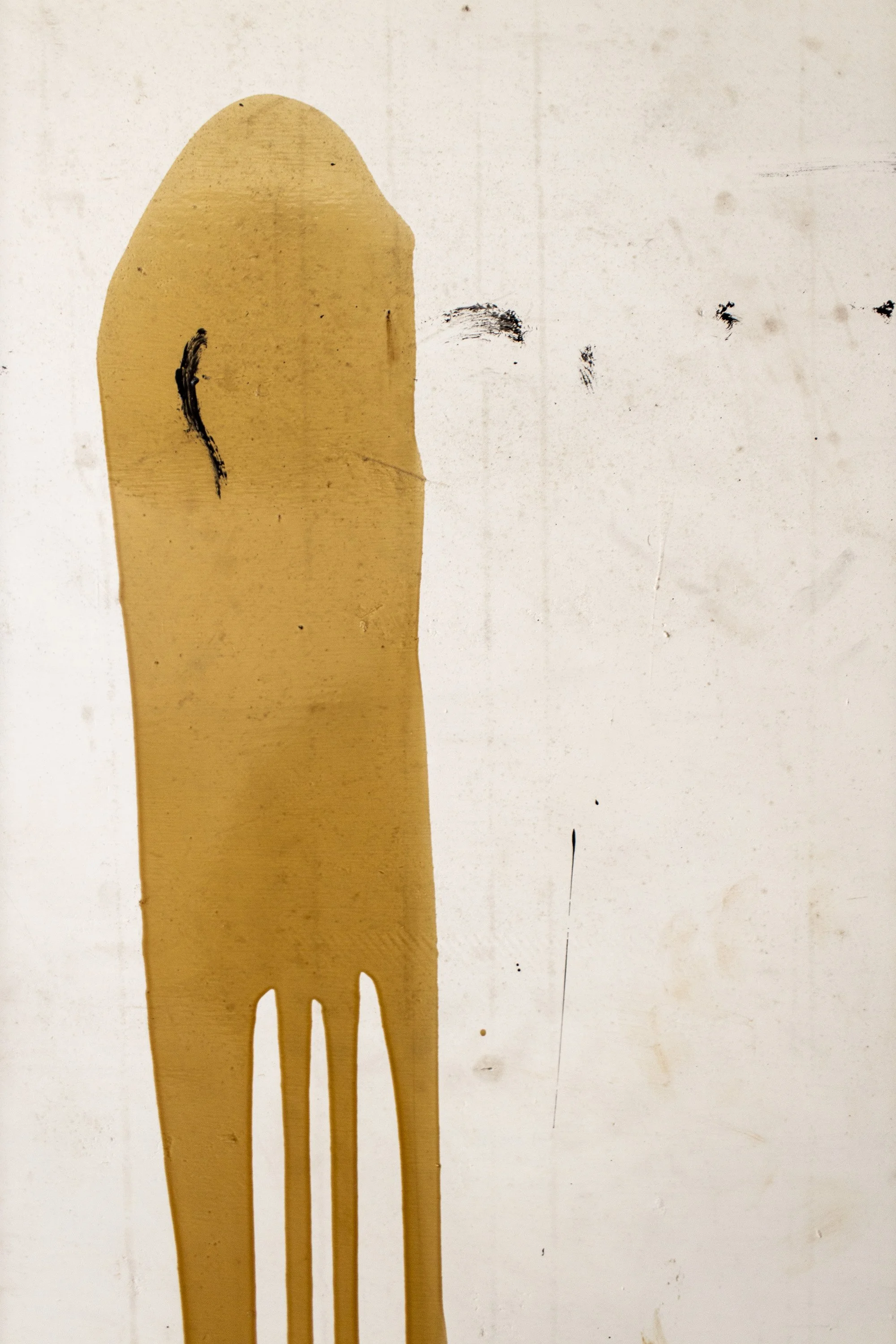
At the same time, the photographs deliberately avoid re-enactment or staged narrative. The absence of people is central to the project’s approach. Without visible figures, the viewer is invited to consider how architecture itself can hold and transmit memory. Surfaces become carriers of time: peeling plaster, exposed concrete, and damaged floors reveal layers of alteration, maintenance, abandonment, and gradual decay.
The building’s spatial organisation plays an important role in shaping the photographic sequence. Atriums open vertically through the structure, connecting multiple levels through circular voids and curved staircases. Long corridors extend into shadow before dissolving into light. Windows frame the surrounding landscape, where the Mediterranean environment continues unchanged while the interior spaces slowly deteriorate. These architectural relationships create a visual rhythm within the series, allowing each photograph to reveal a different aspect of the building’s spatial logic.
In this way, the project is not only concerned with abandonment but with duration. The photographs examine how built structures persist over time, accumulating layers of presence and absence. While the hotel once functioned as a site of leisure and hospitality, its current condition exposes another phase in the life of the building—one defined by stillness, erosion, and the gradual transformation of material surfaces.
Working collaboratively allowed the project to develop through an extended process of exploration and dialogue. Debono and Smith revisited the site multiple times, observing how light moved through the building and how different spaces revealed themselves through changing vantage points. The act of photographing became a way of studying the architecture itself: understanding its proportions, its circulation routes, and the subtle ways in which time had altered its surfaces.
This approach emphasises attentiveness rather than intervention. The photographs do not attempt to impose interpretation on the space but instead create conditions for viewers to encounter it directly. By maintaining a measured distance from the subject, the project allows the architecture to emerge as both physical structure and historical witness.
Ultimately, the series reflects on how buildings continue to exist beyond the social systems that once sustained them. Even in abandonment, the structure remains active as a site of memory, carrying within its walls the accumulated traces of labour, hospitality, and human movement. The photographs invite viewers to consider how architecture endures within the present while quietly holding the histories embedded within its form.
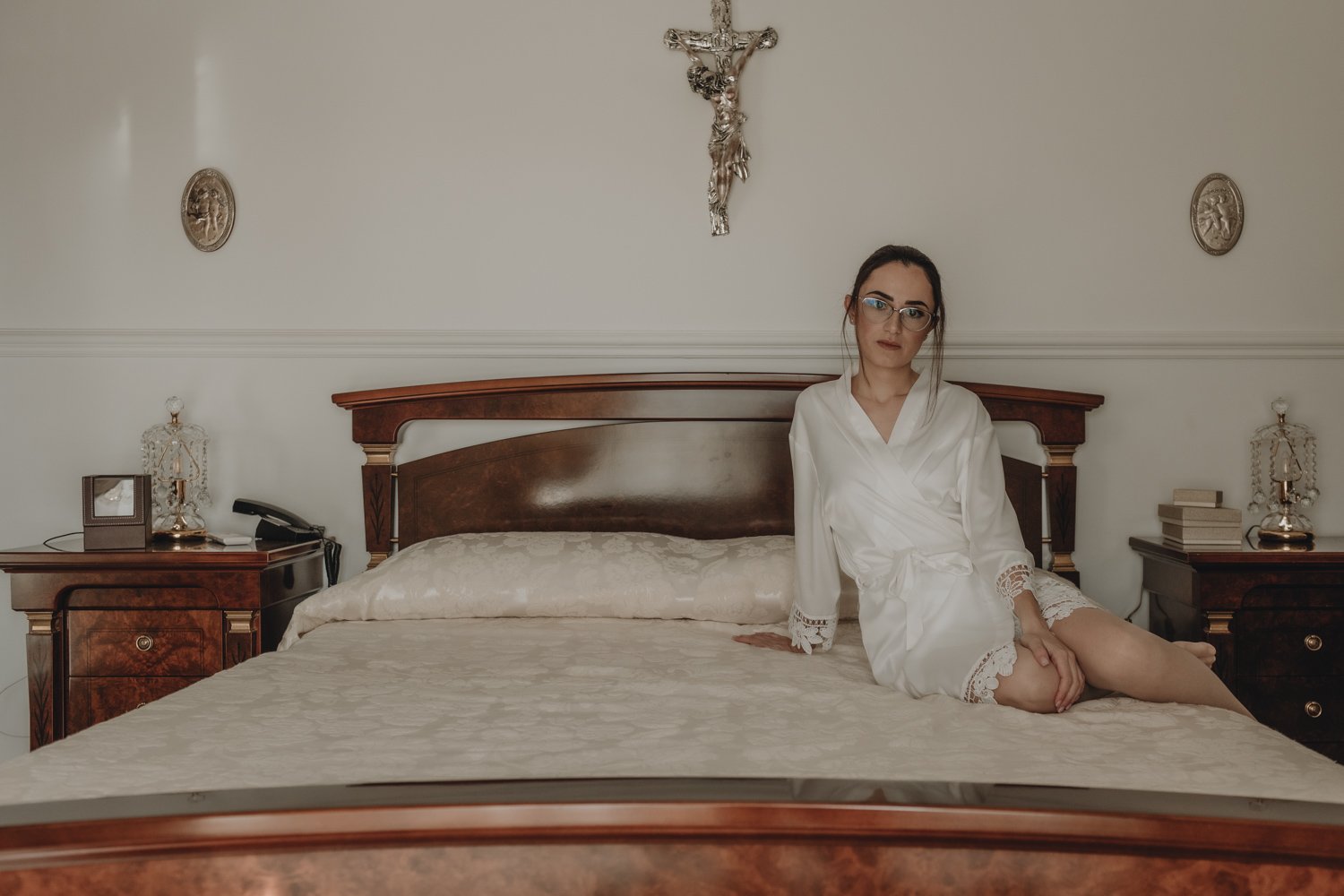
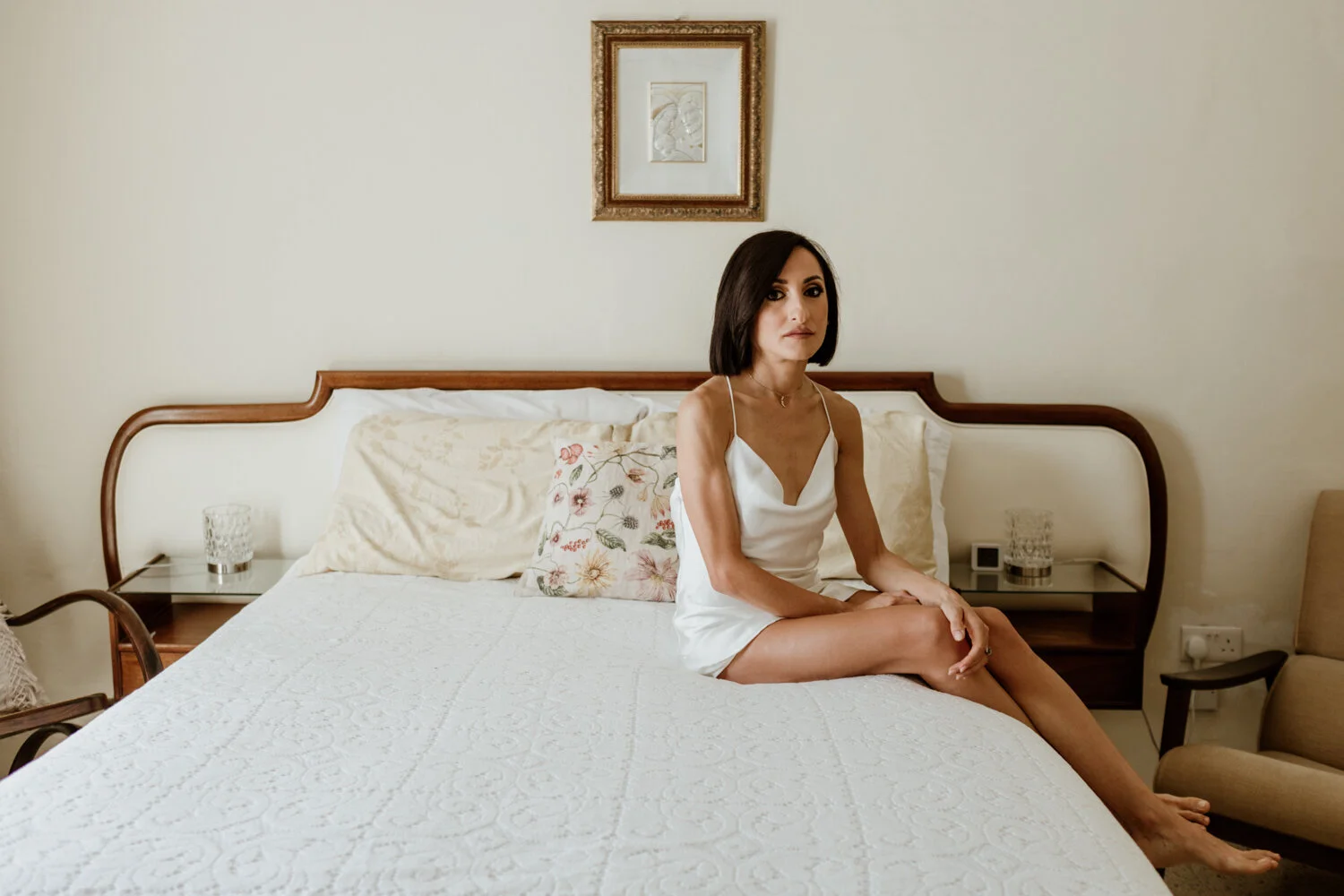
Krysta on bed, moments before she put on her wedding gown
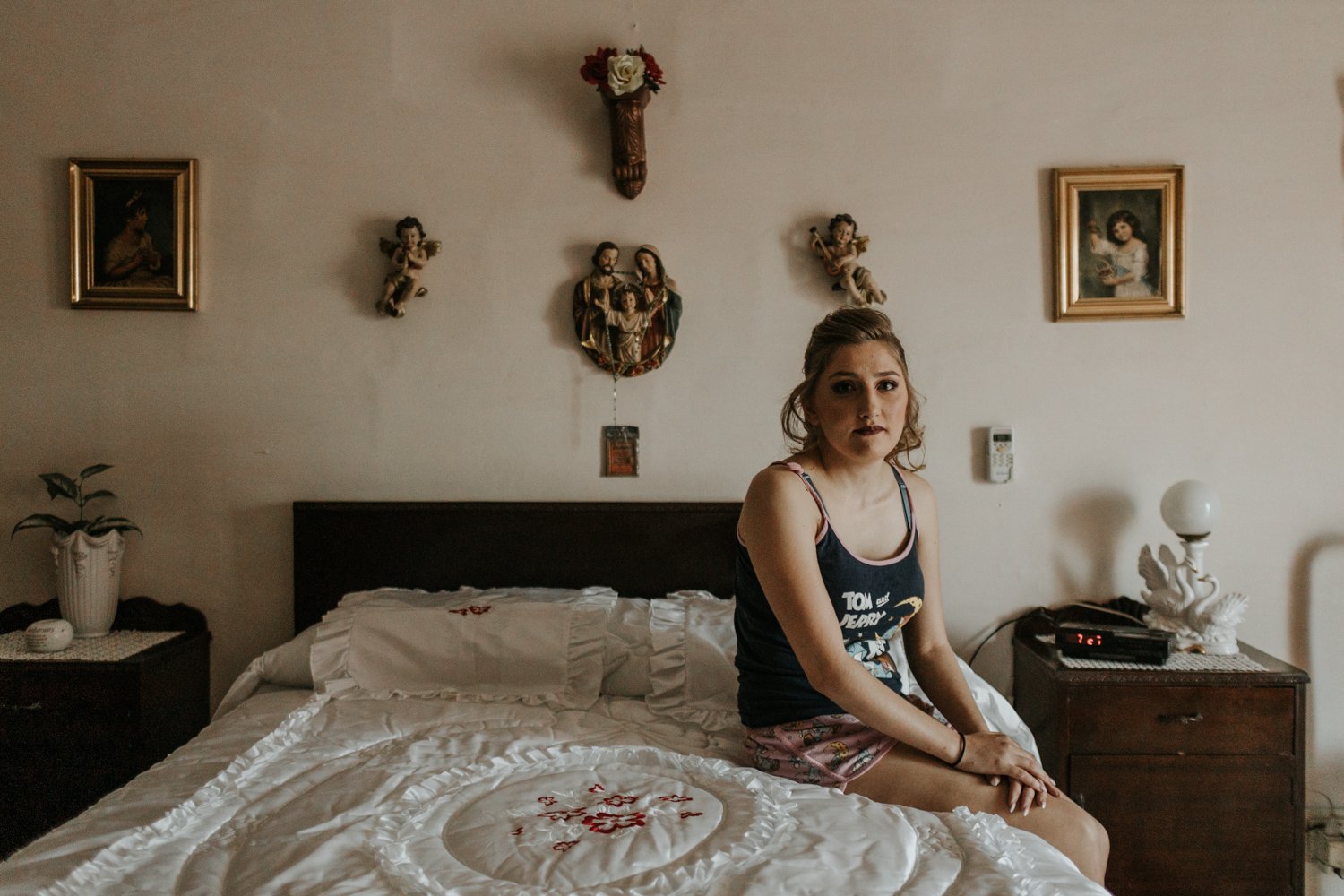
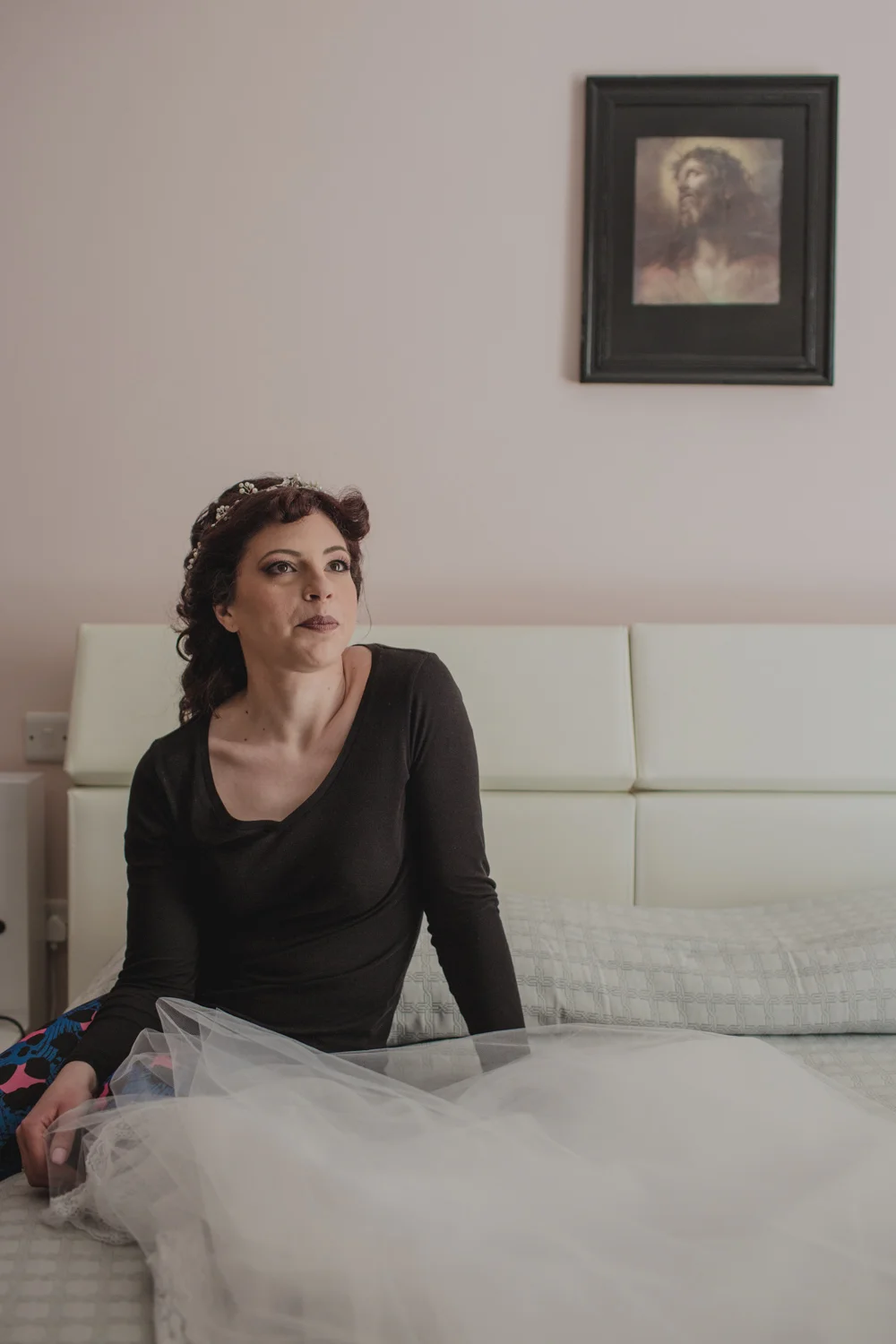
Cherise on her parent's bed looking at her wedding gown
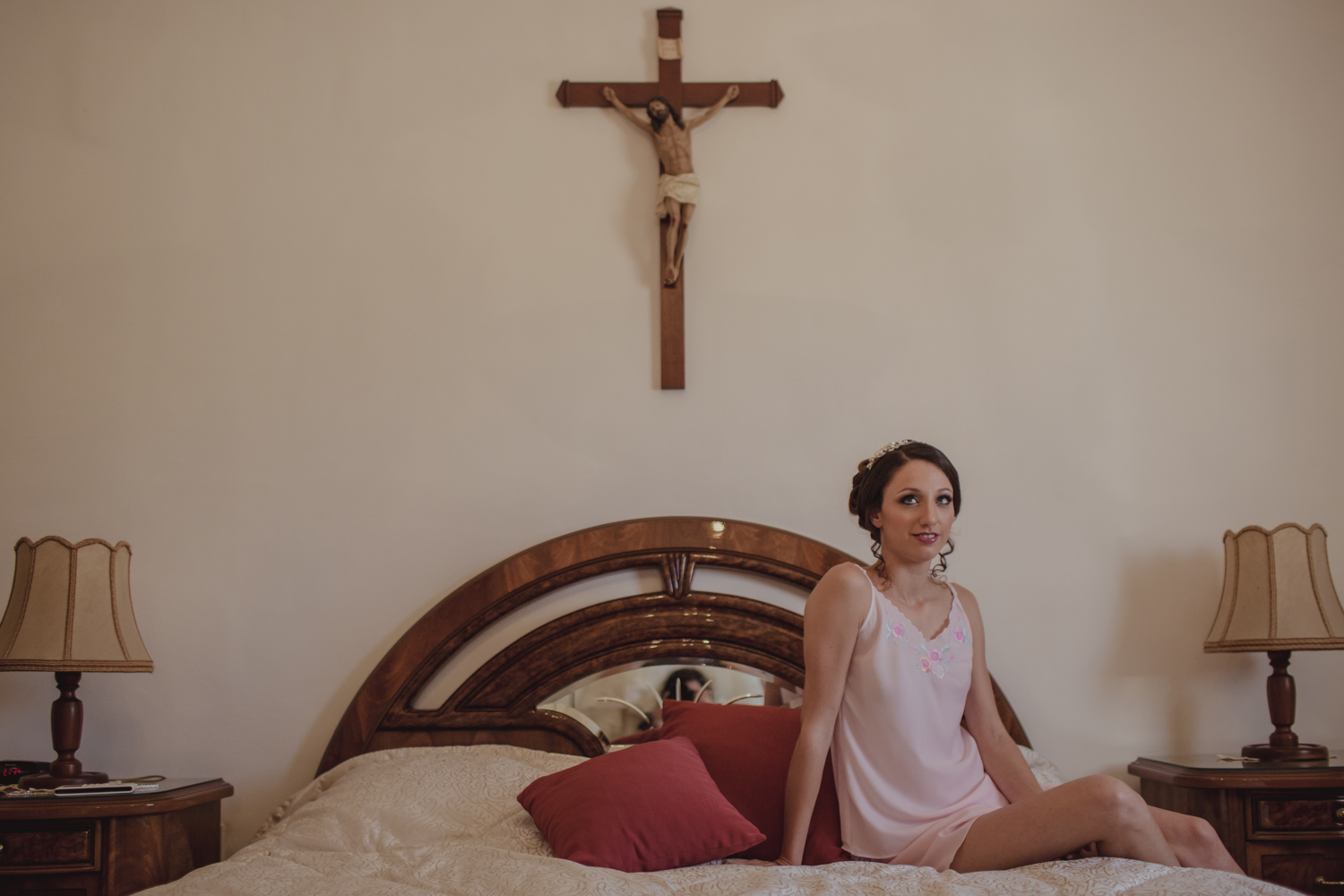
Steffi here really happy to put on her dress..
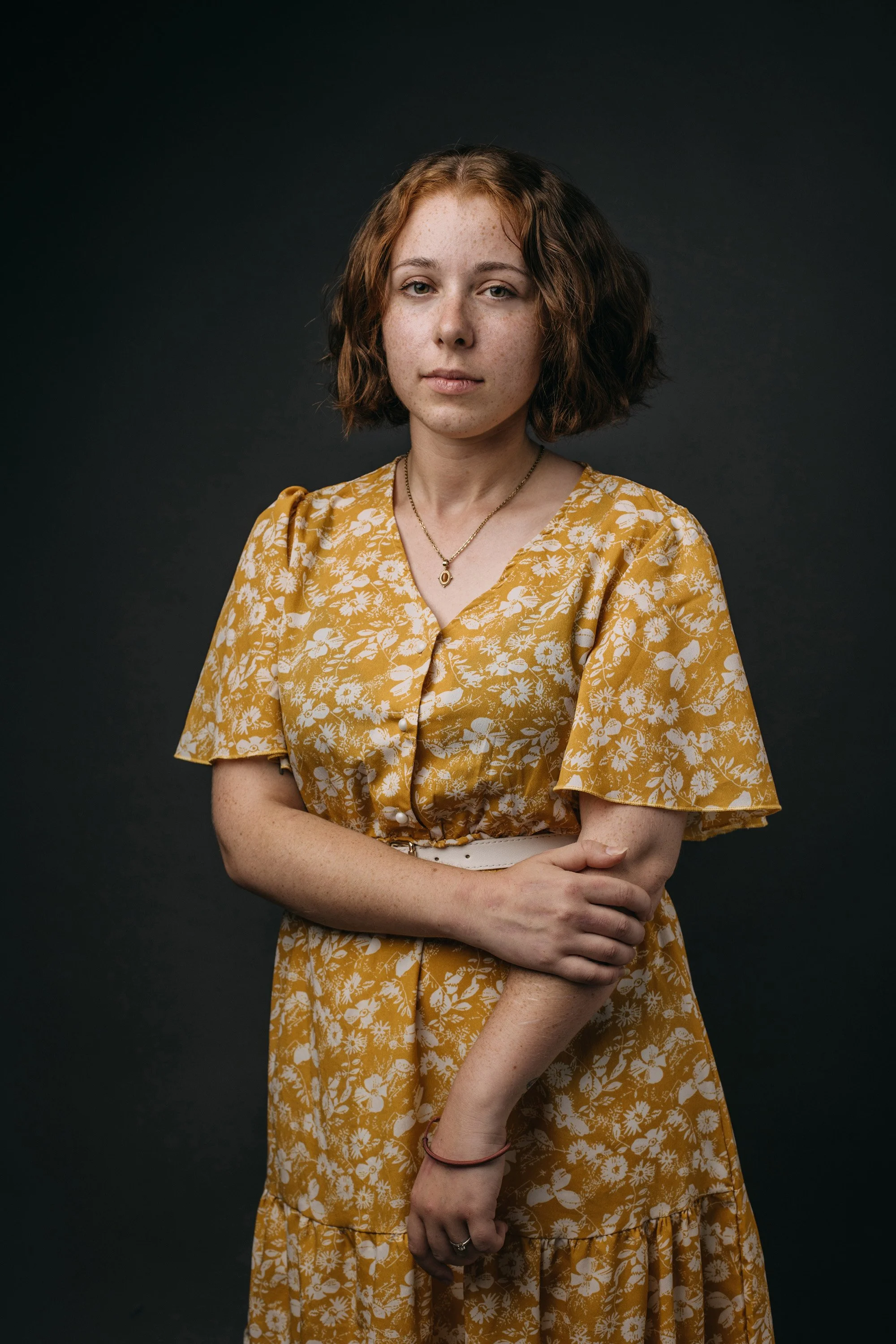
Emma is a single-image portrait created with Emma Attard, a rape survivor who chose to speak publicly about her experience.
Following Emma’s decision to make her story public, I approached her to produce a portrait that could a ccompany her testimony. During the shoot I directed Emma to adopt what I described as a “brave warrior look”—an expression of strength rather than victimhood, directed at both her attacker and the broader culture that often expects survivors to remain silent.
The portrait was produced through a process of conversation and trust. Emma entered the studio without preparation or stylisation, presenting herself as she was. The resulting image is restrained and direct, allowing the subject’s presence and gaze to carry the emotional weight of the work.
At the time the portrait was created, Emma had been waiting several months for her case to progress through the Maltese justice system. When the image was later shared publicly, it became a visual point of focus for her testimony and for wider discussions about sexual violence and justice in Malta.
The photograph received international recognition. It won the People’s Storytelling Award in the professional category of the Julia Margaret Cameron Awards for Women Photographers and was shortlisted for the Hellerau Portrait Award, competing with photographers from over twenty countries.
Although consisting of a single image, Emma stands as a collaborative portrait that transforms personal testimony into a public visual statement. By giving a face to a lived experience often hidden or silenced, the work positions portraiture as a space where individual narrative and collective awareness intersect.
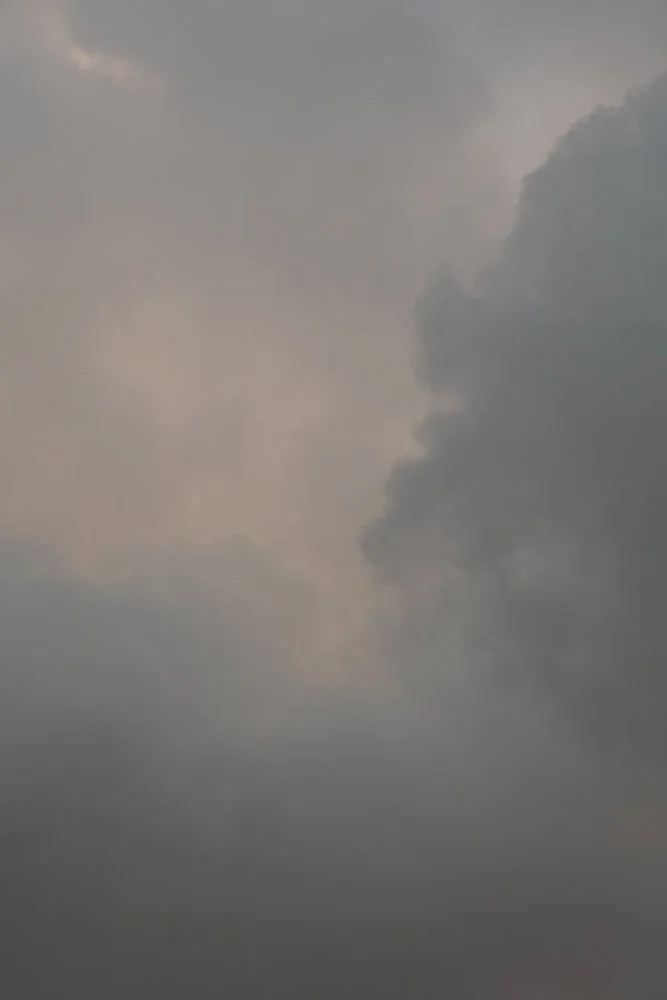
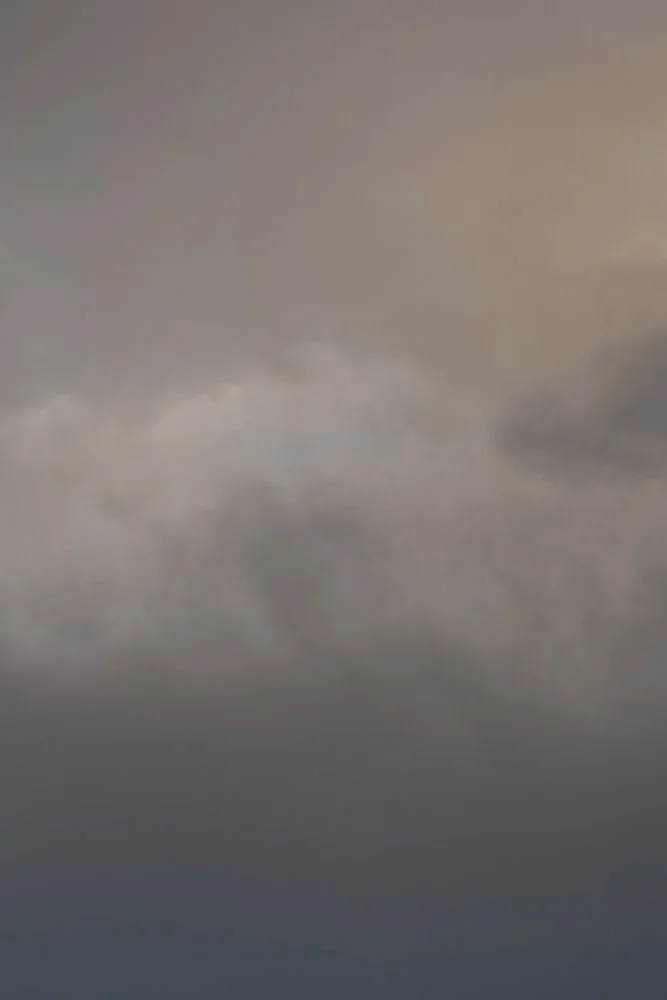
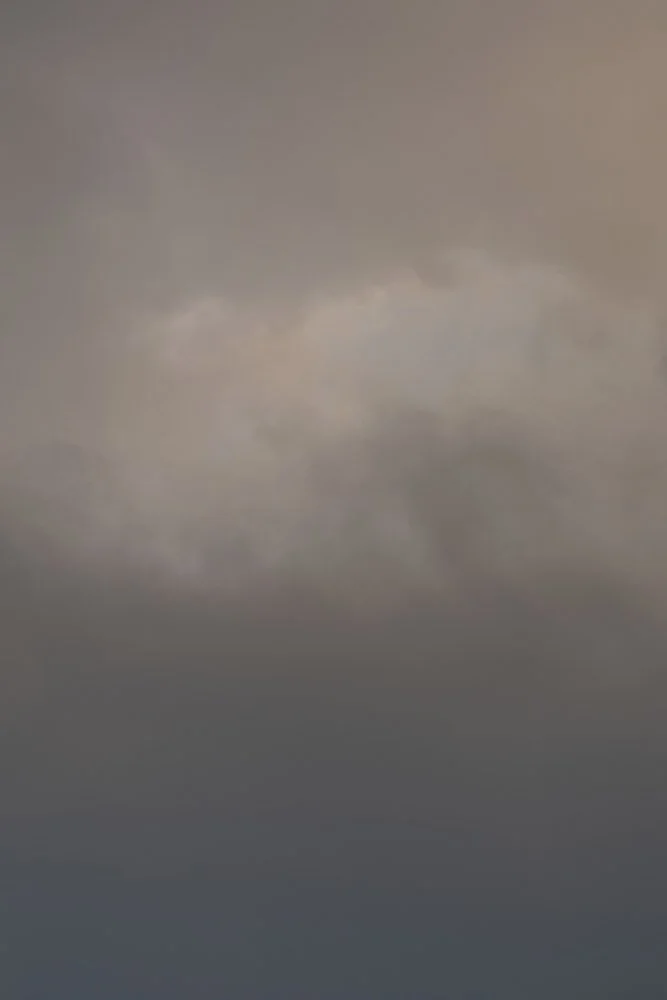
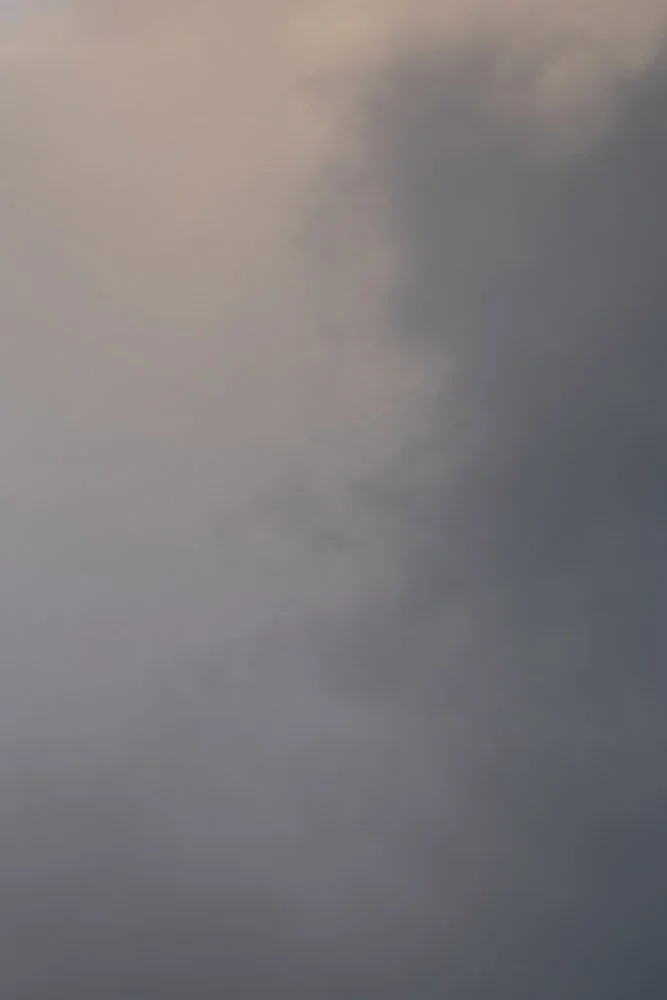
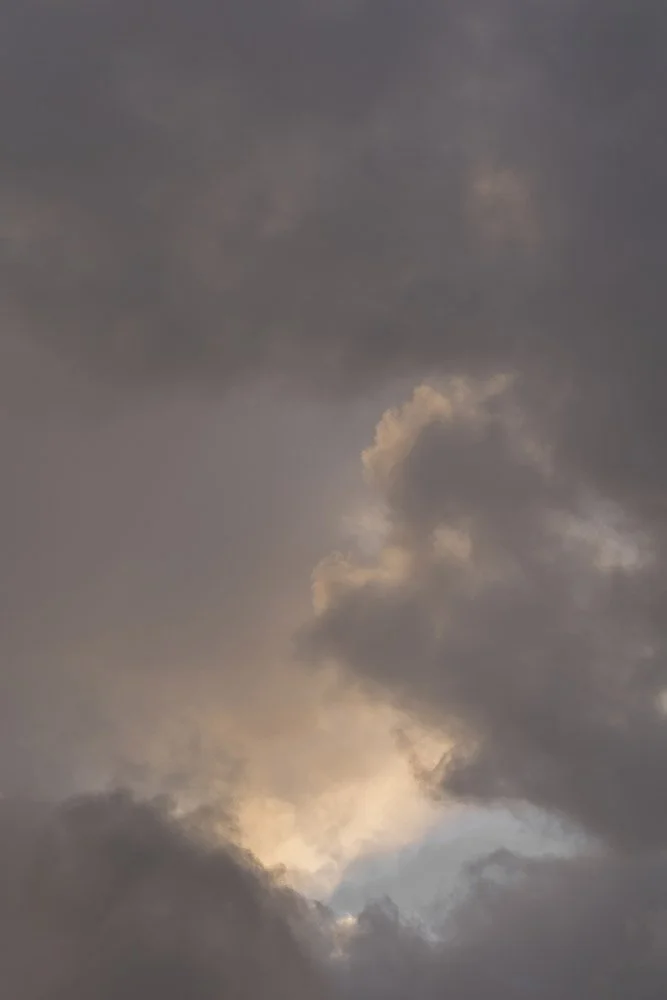
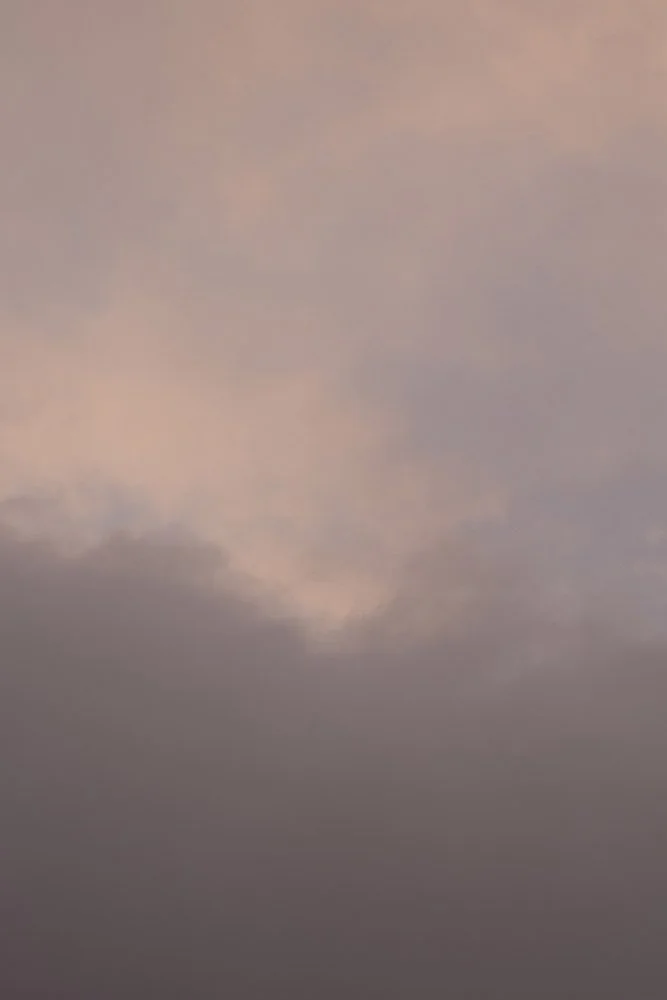
Suspended Return marks a return to photographing clouds after a prolonged absence. Once central to the formation of my photographic attention, clouds became a subject I stepped away from as my practice moved elsewhere. This work does not attempt to resume that earlier relationship, but to re-enter it with experience, distance, and a recalibrated sense of looking.
The photographs do not describe skies or locations. They isolate cloud formations as surfaces of pressure, density, and suspension, removing horizon and scale in order to slow perception. Light appears intermittently. It is held, contained, and never resolved, while colour remains restrained, emerging as residue rather than expression. The clouds are encountered not as symbols or metaphors, but as conditions: shifting, ungraspable, and resistant to permanence.
Homecoming here is understood not as return to an origin, but as a renewed engagement with a foundational subject; one that once shaped my way of seeing and now tests it differently. The return is partial, deferred, and ongoing: a holding rather than a reclaiming. The sequence moves through compression and release without climax, allowing continuity to surface quietly rather than being declared.
Suspended Return reflects on how a practice can revisit its own foundations without repetition, and how familiarity does not guarantee certainty. By returning to a subject that initially trained attention, the work considers how time, absence, and experience reshape perception. What remains is not a reinstated past, but a steadier, more deliberate encounter suspended between recognition and change.
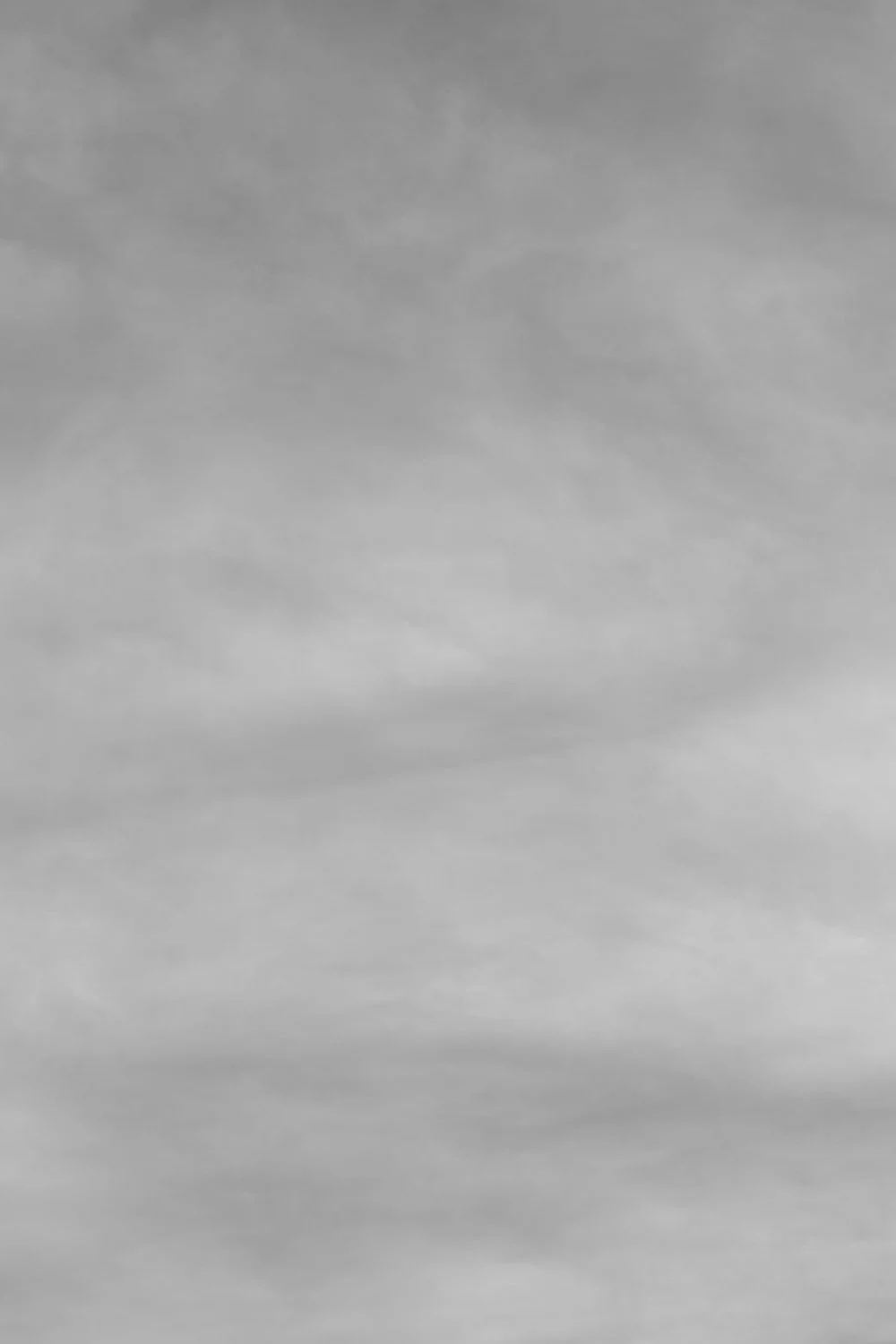
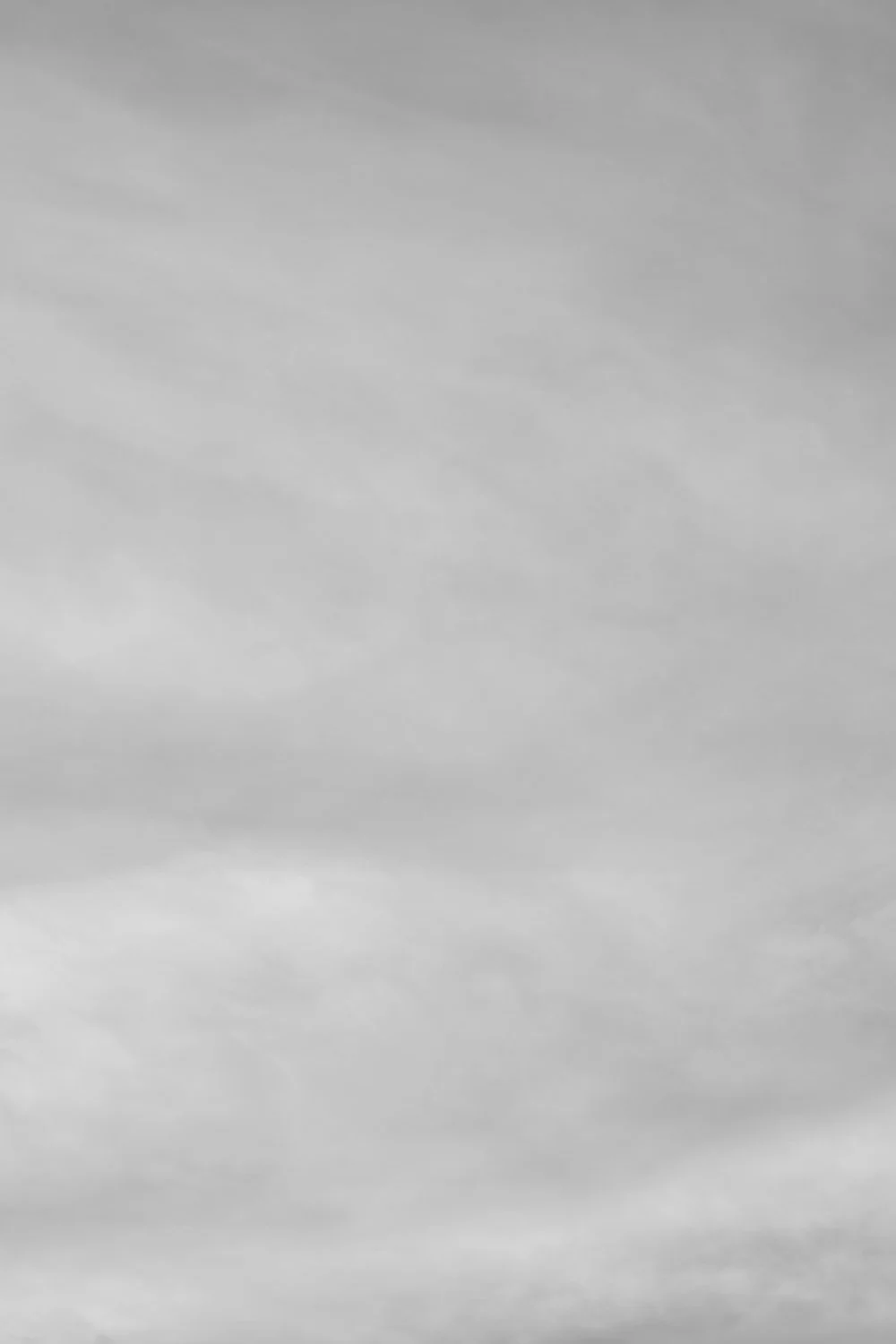
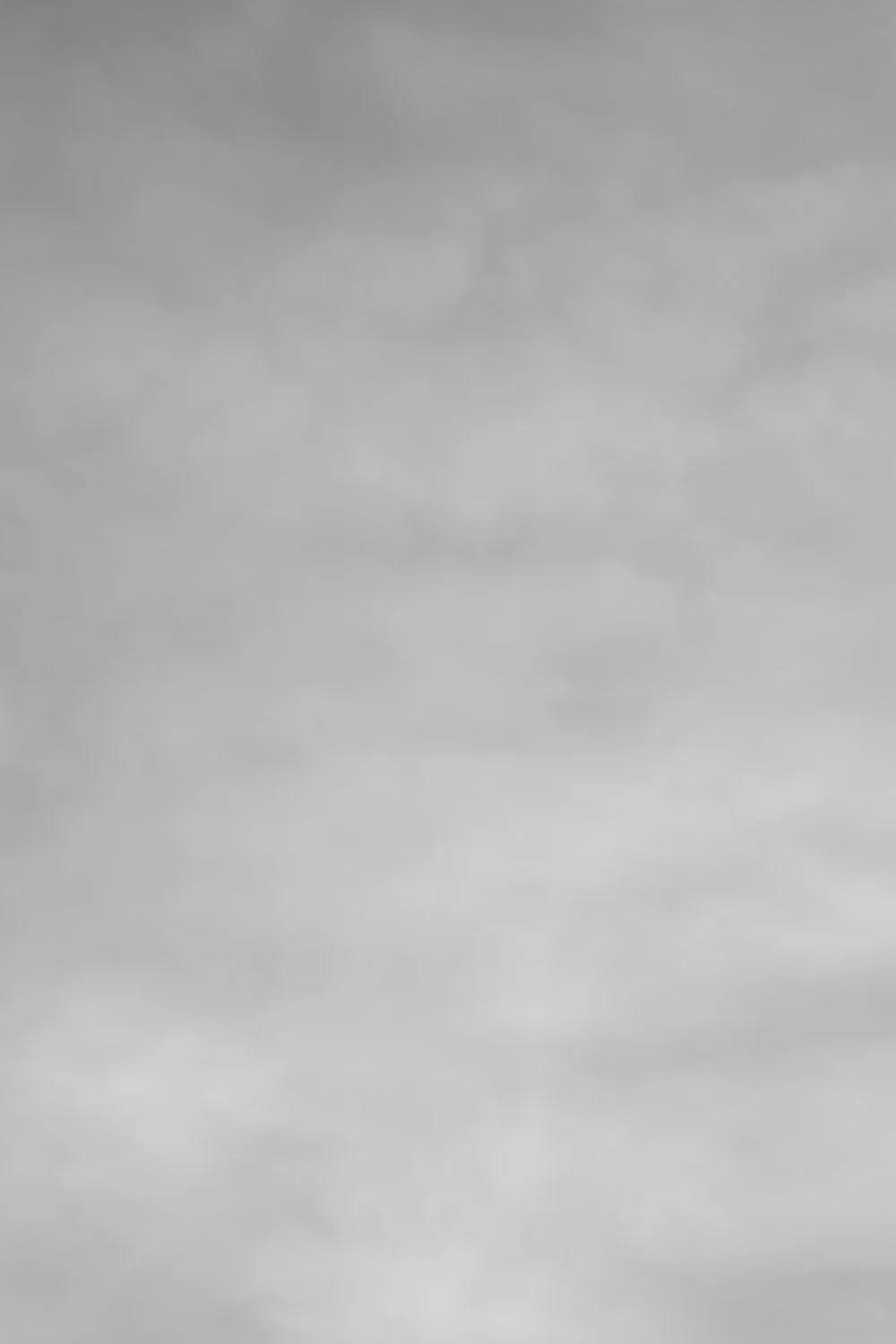
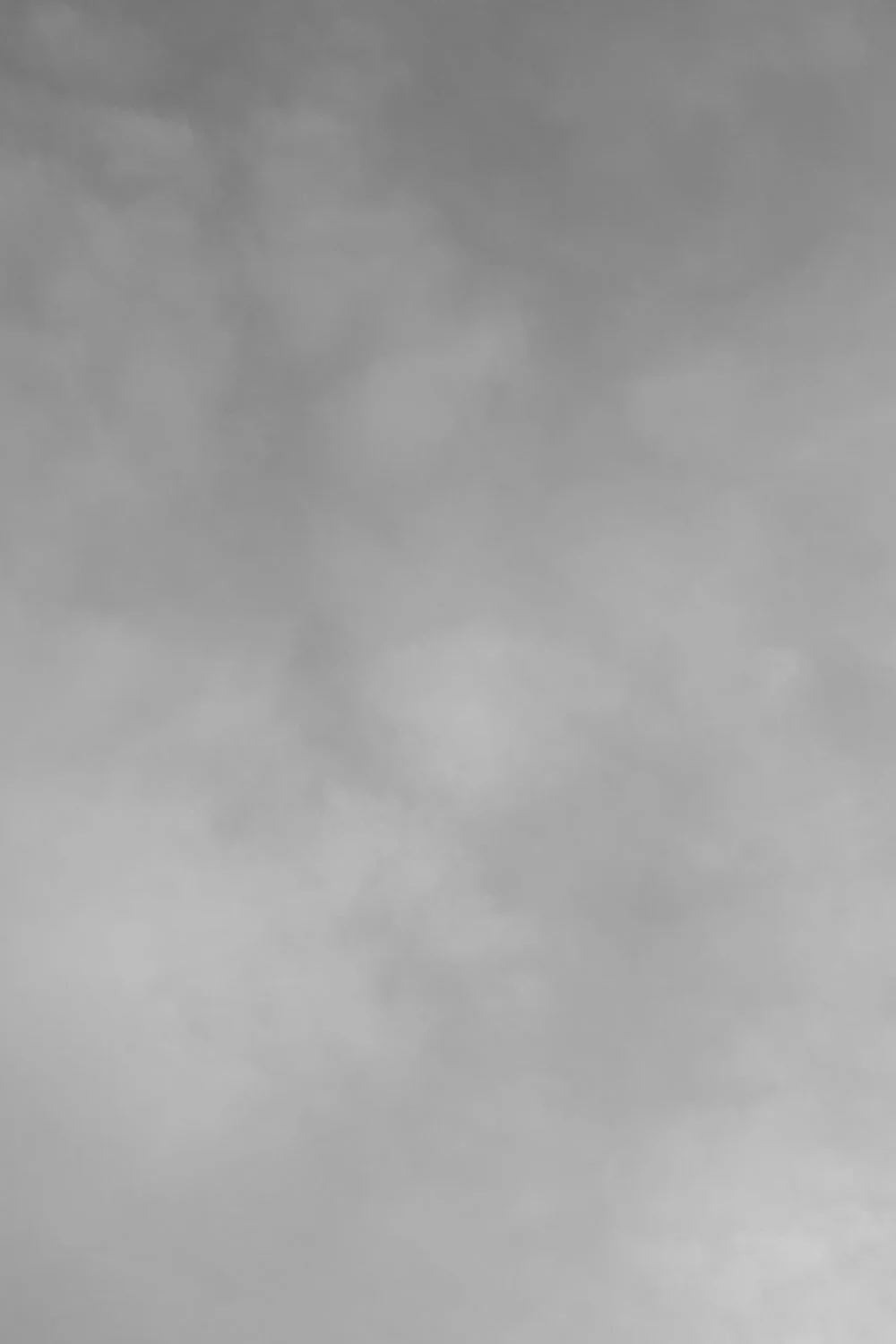
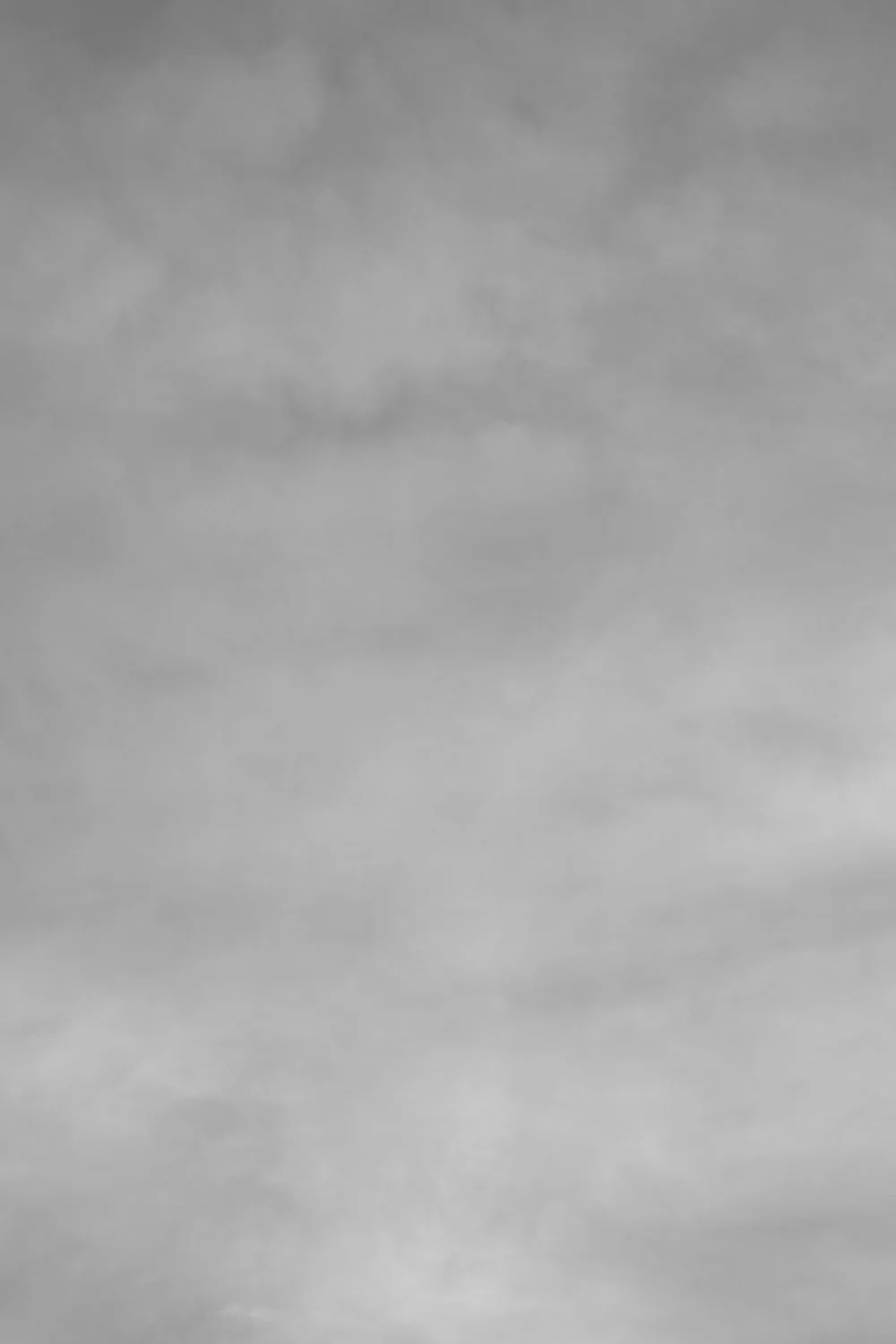
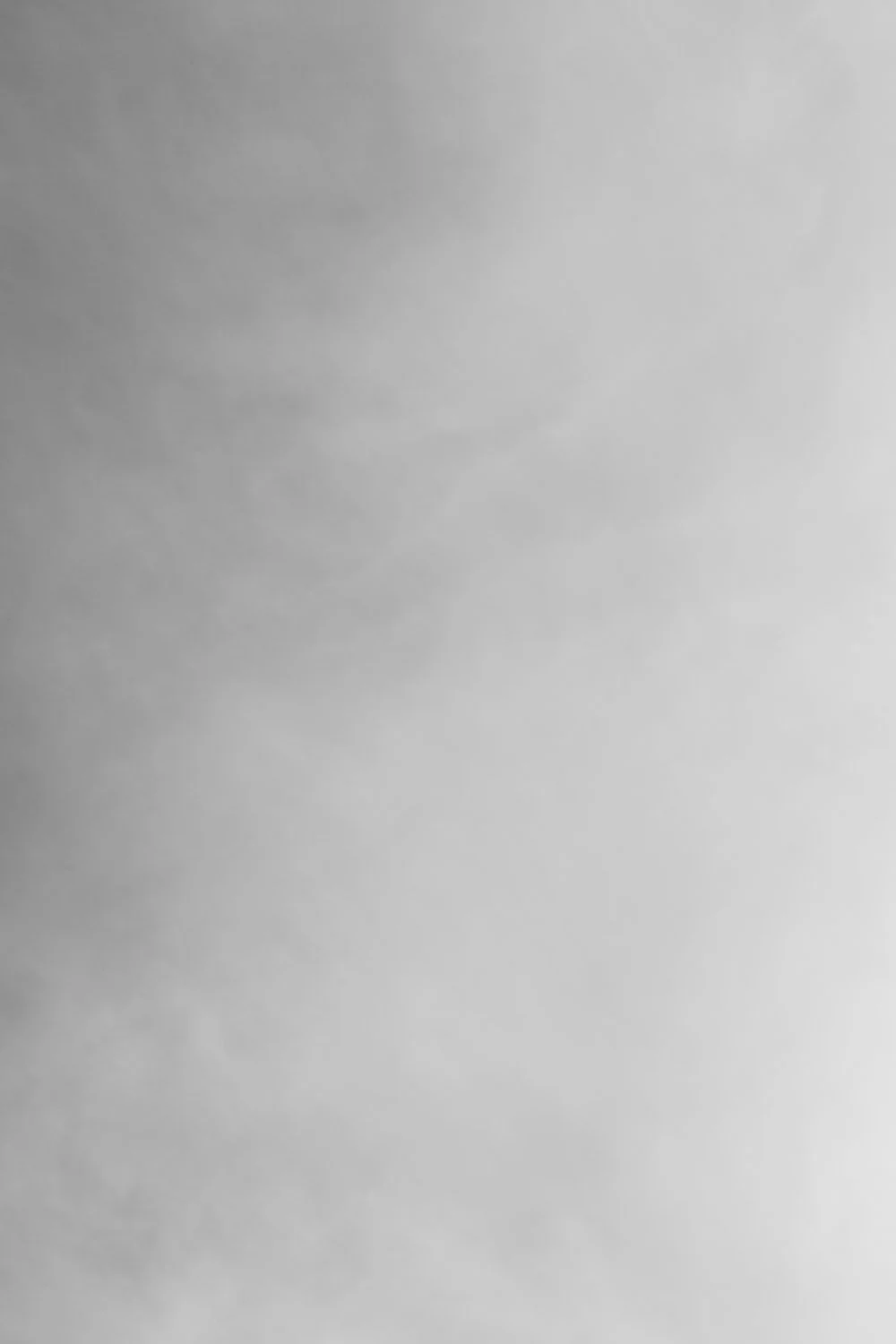
This work emerges from long-term observation and a practice-led way of working. The images were made during a single, quiet moment, yet they are informed by years of looking, pausing, and returning. What appears immediate is, in fact, the result of accumulated attention; a moment that arrived rather than one that was sought.
Working in black and white, the series resists spectacle, atmosphere, and expressive gesture. The images do not describe the sky, nor do they function symbolically in a direct way. Instead, they hold a condition: flattened, opaque, and unresolved. Through tonal restraint and repetition, no single image claims importance over another; they merge, echo, and remain deliberately indistinct.
The work reflects an inner state shaped by distance from conflict rather than direct witnessing. It considers what it means to carry tension, uncertainty, and psychological weight from afar, through media saturation, collective memory, inherited unease, or quiet personal unrest. Conflict here is not an event to be shown, but something that settles slowly into perception.
There is no linear sequence and no image that asks to be remembered. Each photograph exists in relation to the others, forming a field rather than a narrative. Meaning is not offered or resolved, but held back, leaving the viewer without clear orientation.
The images function as an afterimage rather than a record: a space of suspension, repetition, and silence. They invite a form of looking that is durational and inward, where conflict is felt not as spectacle, but as an internal atmosphere: present, persistent, and unresolved.