Spirit of Place
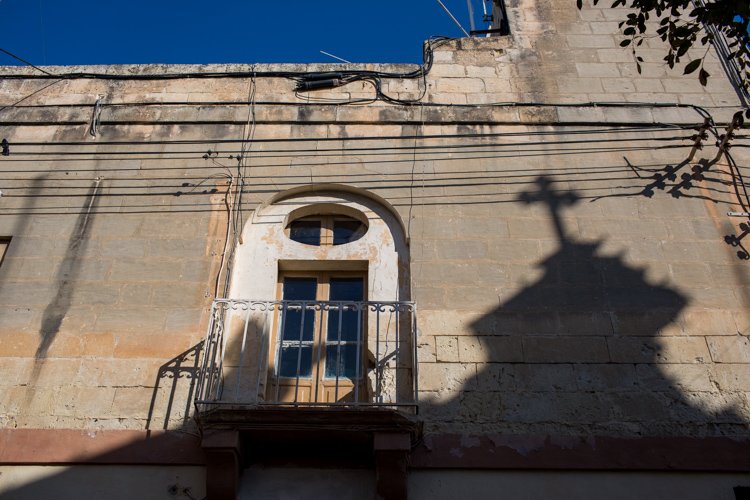
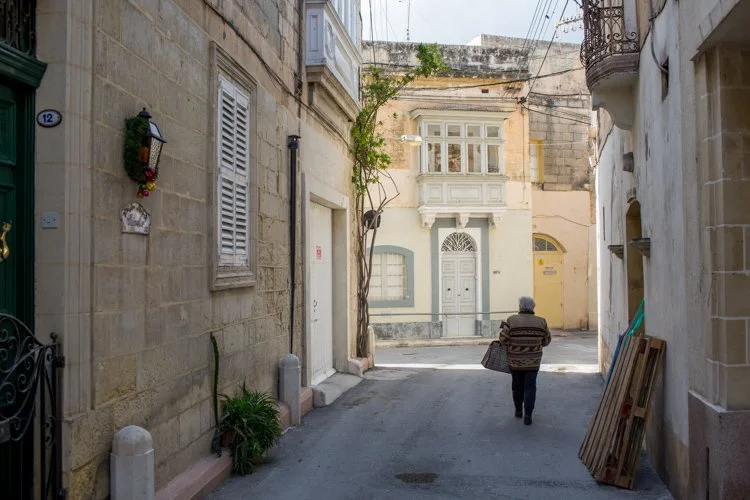
A church shadow crosses a domestic façade, tangled in telephone wire and the reach of a tree — sacred, secular, and modern life sharing the same stone. Main Street, Haz-Zebbug
In 2018, as part of my MA in Cultural Heritage Management at the University of Malta, I set out to answer a question that had no obvious method attached to it: can photography document something that can't be seen or touched?
The Spirit of Place — what the classical world called genius loci — is by definition intangible. It isn't the building, the street, or the person standing in the doorway. It's whatever those things add up to when people have lived among them long enough to call the place theirs. I chose my own town, Ħaż-Żebbuġ, as the case study — not despite my closeness to it, but because of it. Walter Benjamin's observation that to truly depict a city "calls for the motives of the person who journeys into the past" gave me permission to treat my own birthplace as a research site, rather than assuming distance was a precondition for seeing clearly.
The project moved through three stages. First, one-to-one interviews with locals and non-locals, to find out what "spirit of place" even meant to different people before I photographed anything. Then a photographic survey — three walking routes through the town's historic core, shot on a 35mm lens chosen to match the human eye's own field of attention, with no filters and minimal post-processing, so that whatever the images captured, they captured it as encountered rather than as improved. Finally, focus groups — one of locals, one of non-locals — who looked at forty-one of the resulting images and told me, often disagreeing with each other, which ones carried something more than documentation.
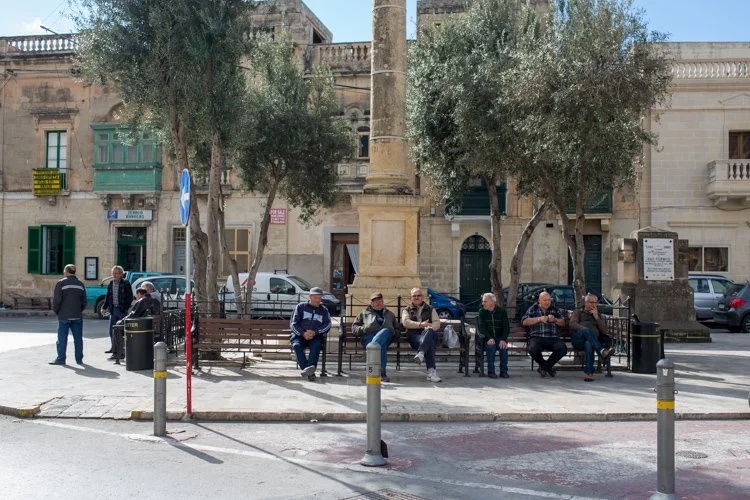
The third space. The Pjazza of Haz-Zebbug
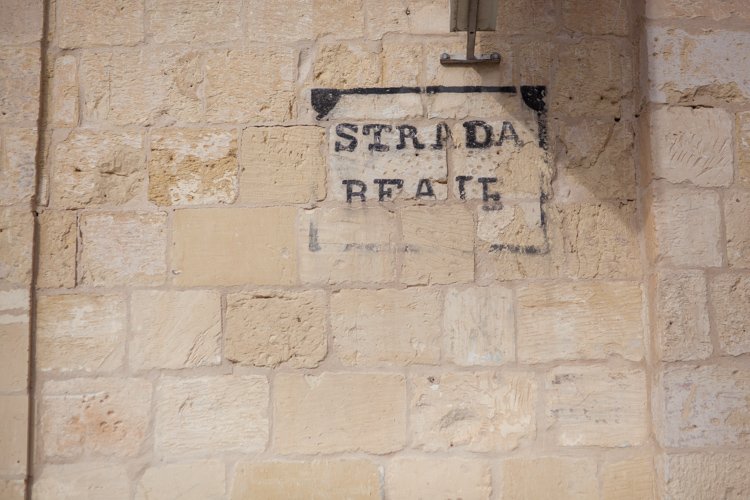
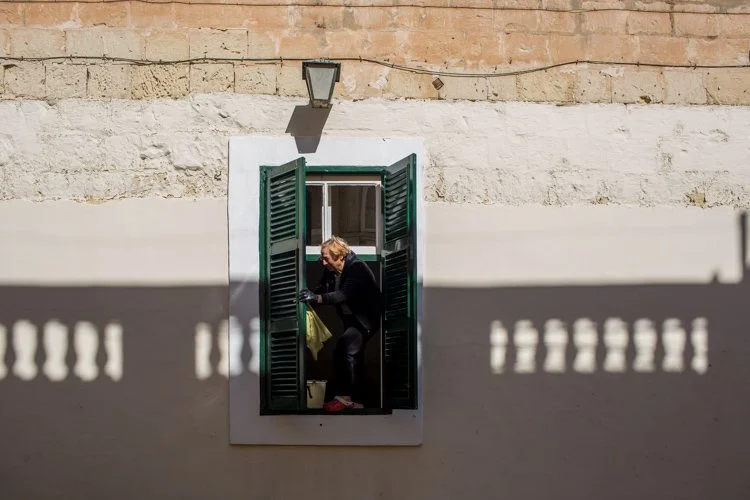
Old sign of Strada Reale (Main street).
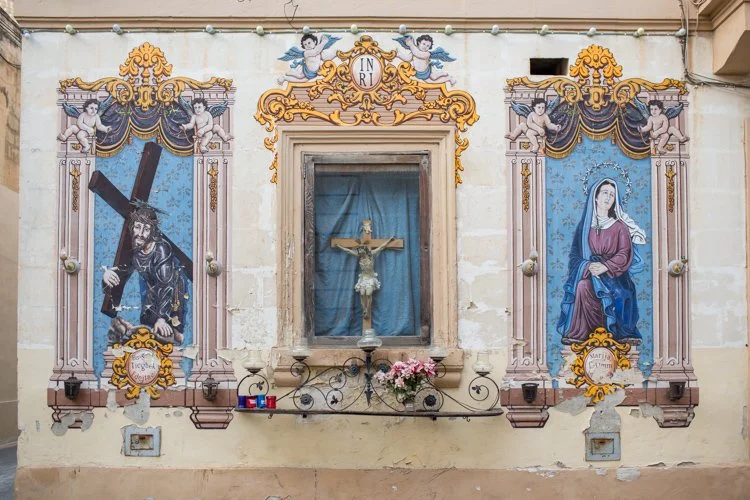
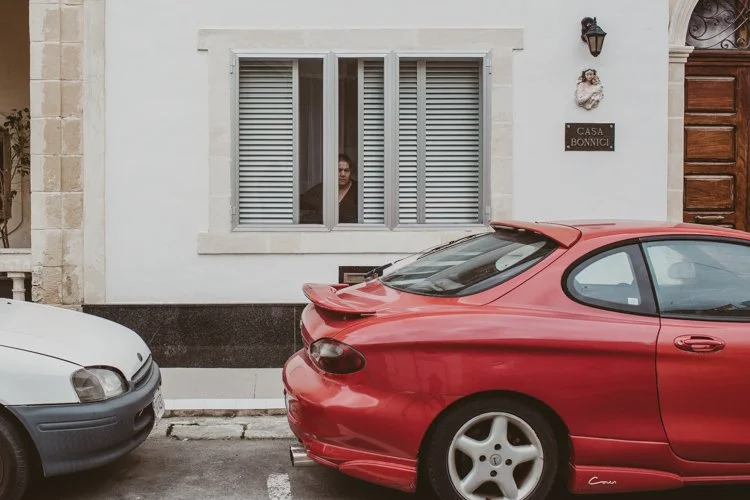
What emerged was less a single answer than a map of where people disagree. Locals converged around images tied to memory and community; a band club entrance, a parish church, the hum of a town square. Non-locals, with no personal history to draw on, still found the spirit in certain images through composition and visual attention alone, even without knowing what they were looking at. Neither group agreed with the other, which was, in its way, the finding: the spirit of a place turns out to be as much a property of the viewer as of the place itself.
This dissertation was where I first started asking questions I'm still asking now,about what a photograph can hold onto when its subject is not a thing but a felt condition, and about my own presence, as the person behind the camera, in what gets called documentation. Eight years and a good deal of reading later, my doctoral research has taken that same question somewhere darker and more specific: not the spirit of a place that's still lived-in, but what a landscape holds when what happened there has been erased. But this is where that thinking began.
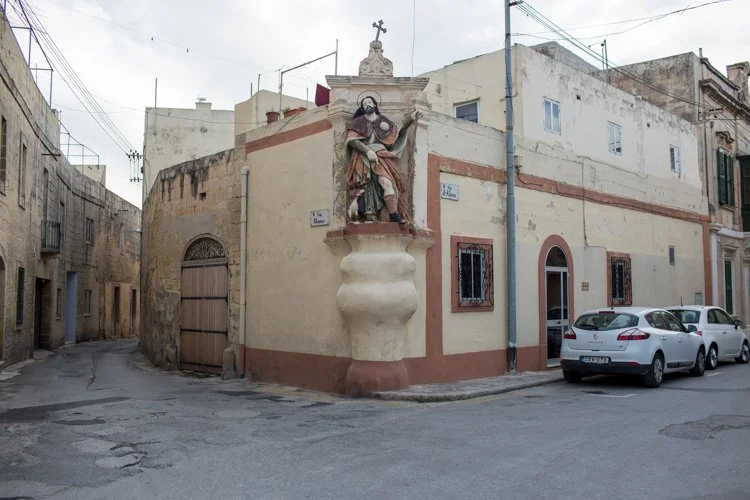
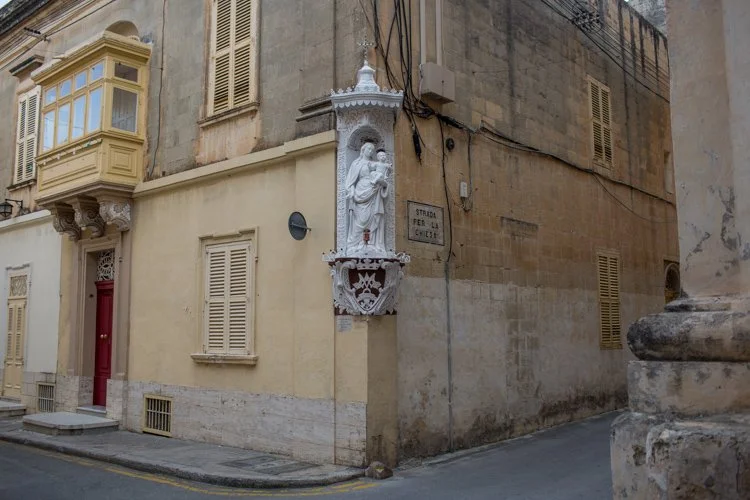
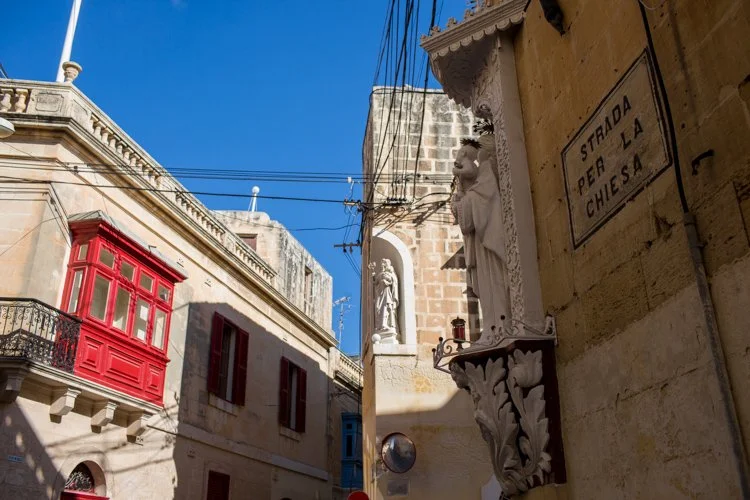
St Roque, Main Street, Haz-Zebbug
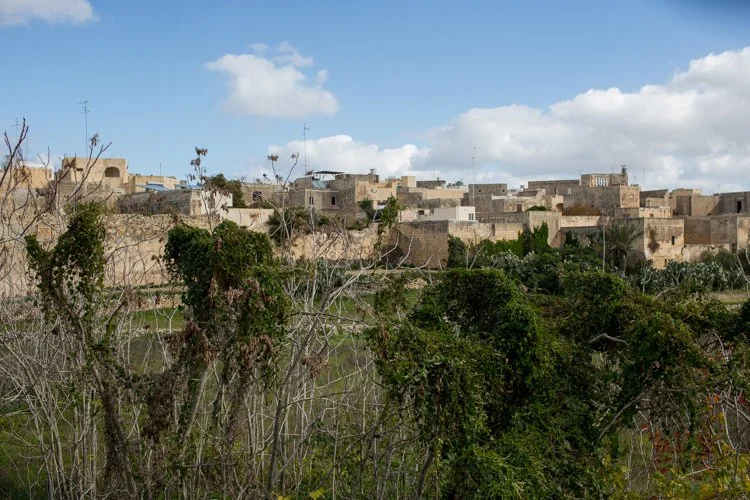
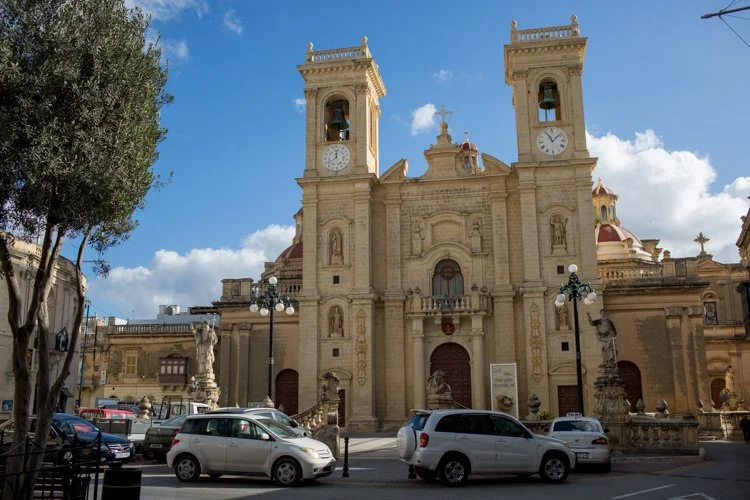
The main church of Haz-Zebbug dedicated to St Philip of Agira